
10 Day of the Dead Celebrations in the West
Honor loved ones with music, costumes, and altars at these festivities in California, Arizona, and beyond.


On a warm fall afternoon, people spill into the streets of Oakland’s Fruitvale district. Colorful altars line East 12th Street, as kids and adults move through the crowd with their faces painted like sugar skulls; others are dressed in intricate catrina (skeleton) outfits. Aztec dancers perform in a circle, wearing feathered headdresses and ankle rattles called chachayotes. The air is filled with the aroma of copal, a sacred incense used to cleanse and welcome spirits from another realm.
This is Dia de los Muertos, or Day of the Dead, a time for people of Mexican descent to honor loved ones who have passed. The holiday has a rich history of evolution: After originating in Mexico in pre-Hispanic times, it eventually blended with traditions brought forward by the Spanish conquest of the Aztec Empire in 1521. In the United States, the holiday took root in the 1970s, thanks to Chicano activists. In the decades since, Day of the Dead has transcended borders. UNESCO (United Nations Educational, Scientific, and Cultural Organization) added the holiday to its Representative List of the Intangible Cultural Heritage of Humanity in 2008. Now, it is celebrated by communities throughout North America and in countries like Guatemala.
The festivities start on October 28. In the days that follow, according to spiritual tradition, the realm between the living and the dead opens up, allowing the souls of the departed to begin their descent onto this world. The celebrations continue through November 2, which is Day of the Dead. During this time, individual rituals vary from family to family, though some traditions are carried on through generations.
Colorful altars, or ofrendas, are a mainstay. They include photos of loved ones and offerings to guide them: aromatic bouquets of yellow and orange flowers called cempasuchil, a marigold variety native to Mexico and Central America; water to quench loved ones’ thirst; candles to light their way; incense and salt to purify; loved ones’ favorite foods, fruits, and the traditional pan de muerto, a sweet bread made with orange zest and anise. Altars are also decorated with sugar skulls that represent the dead and papel picado, tissue paper cut into intricate designs.
Public celebrations are full of regional specialties and reflect individual communities, and are usually family friendly and welcoming to all; expect a mood that’s festive yet reverent. Most of these gatherings are free and serve as a celebration of life as well as a way to remember those who have passed.
Here are 10 events in the West that you can join to honor loved ones.
Festival of Altars
San Francisco, California; Nov. 2
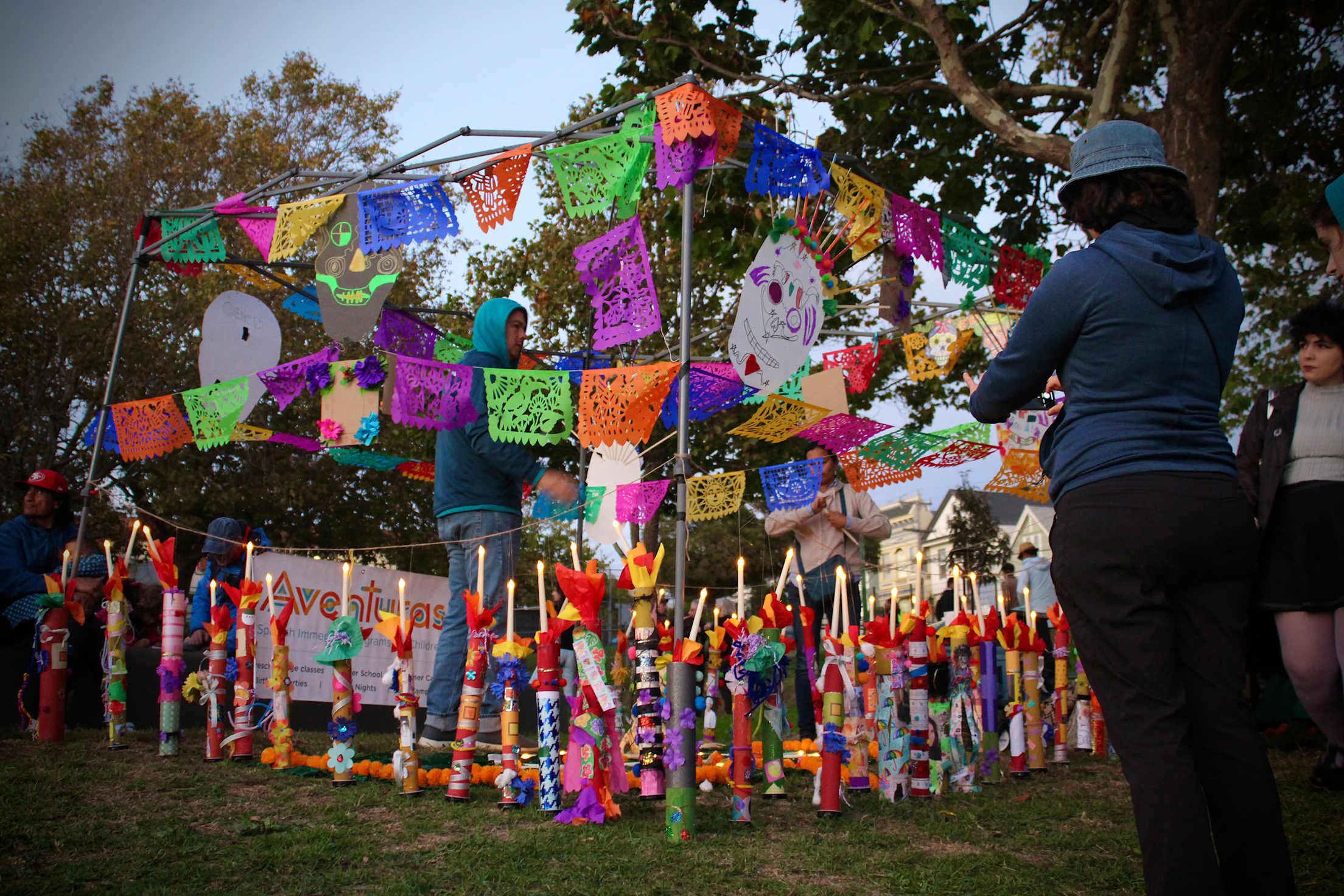
For one day each year, the San Francisco’s Potrero del Sol Park becomes a living memorial, as colorful altars of all shapes and sizes take over the sprawling green lawns beginning early in the morning. The creations pay tribute to not just loved ones but also to Earth’s elements: Altars facing north honor the Earth and all ancestors; those facing east honor the air and children; west, water and adults; south, fire and youth; and at the center, love and the universe.
The Festival of Altars, a local tradition since 1992, is organized by the nonprofit Marigold Project. Community members are invited to reserve a spot to contribute an altar, and they do so in increasingly impressive numbers. In 2023, there were about 80 altars; in 2025, there were 162.
The celebration includes ceremonial rituals, a moment of silence, and live performances by local Latin musicians and mariachi, all surrounded by the colorful ofrendas. Participants who have created altars stay past sunset, honoring loved ones’ memories until the celebration ends at 9 p.m. If you don’t reserve a spot, you are welcome to bring flowers, candles, or a personal item to add to the displays.
Mission District procession
San Francisco, California; Nov. 2
In the heart of San Francisco’s historic Latino neighborhood, Aztec dancers gather to begin the procession, their feathered headdresses a sea of color and motion. Families follow, carrying photos of loved ones as they walk down 22nd Street, some scattering marigold petals as they stroll.
For nearly 50 years, this Day of the Dead celebration in the Mission District has been a point of local pride, but it holds extra-special meaning for the city’s LGBTQ+ community. That’s thanks to one of its earliest organizers, Juan Pablo Gutiérrez Sánchez, who saw the holiday, in part, as a space to honor community members impacted by AIDS—and as a site of protest. (An altar he created for a Day of the Dead event in 1984 featured the words “while society turns its back, we die by the thousands and thousands and thousands.”)
The grassroots organization El Colectivo del Rescate Cultural de La Mission keeps the event alive, with festivities that maintain a spirit of resistance: The nonprofit’s ethos is “our dead are not for sale,” and the event is fully funded by community donations, not corporate sponsors. With papel picado strung between streetlights overhead, participants wind through the neighborhood to the intersection of Mission and 24th streets, where people linger to admire the altars, get their faces painted, and gather in community to remember their loved ones.
“My favorite part is that people get to know our traditions and really respect them,” says Susana Rojas, executive director of Calle 24, a longtime merchants’ and community group in the Mission. “It’s an opportunity for all of us to grow as humans, to fall in love with another culture.”
Dia de los Muertos in Fruitvale
Oakland, California; Nov. 1
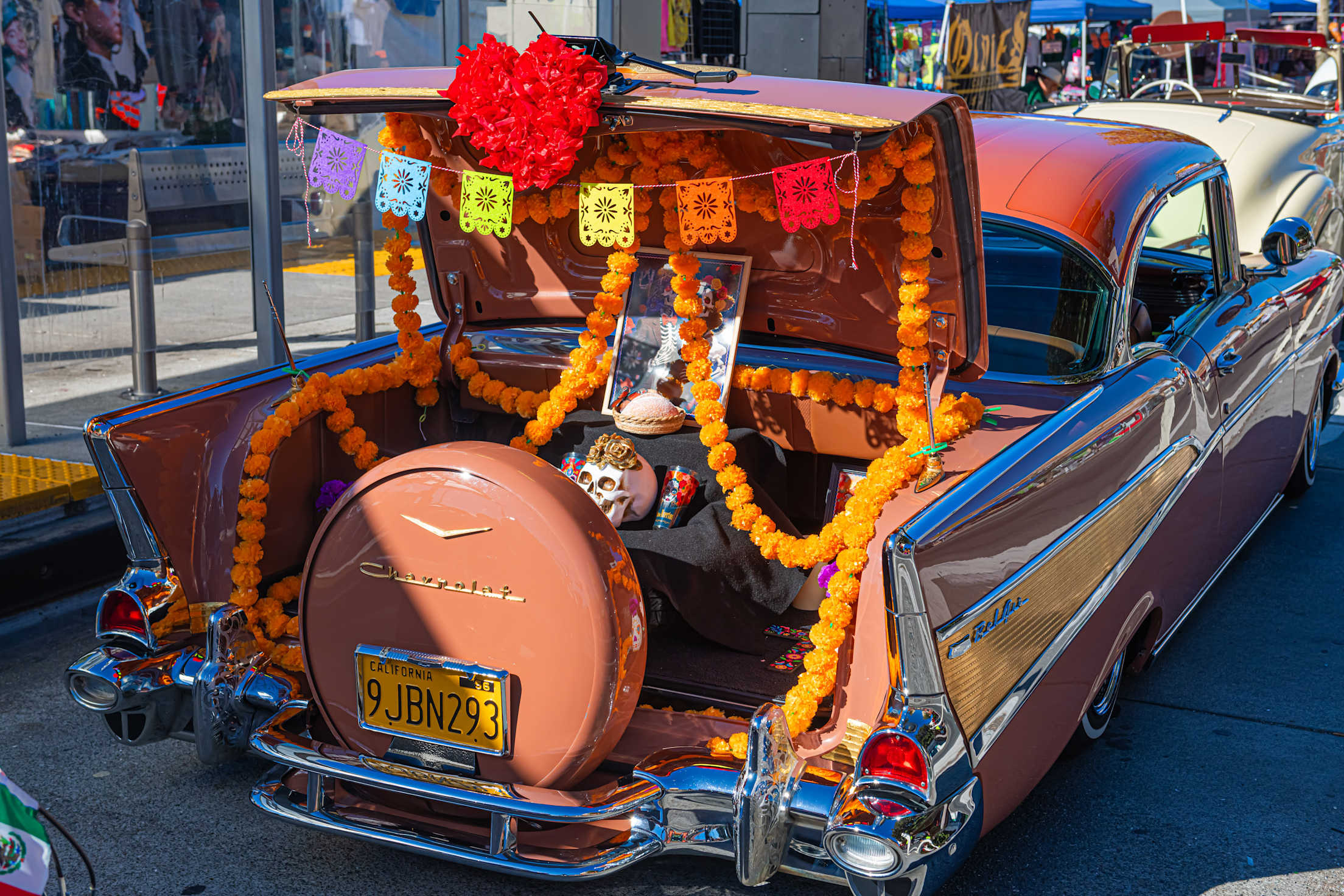
Gleaming lowriders, decked out in paper flowers, tapestries, and sugar skulls, line Oakland’s International Boulevard as kids in sugar-skull face paint choose their favorites. Now in its 31st year, the East Bay’s premier Dia de los Muertos event is also a neighborhood celebration: Fruitvale has been a vibrant hub of Latino culture in Oakland since the 1960s, when Chicano activists like the Brown Berets shaped the region.
Day of the Dead is a deeply embedded and popular tradition here. Last year the official festivities attracted more than 100,000 people, according to Caheri Gutierrez, the development and communications director at the Unity Council, the nonprofit that’s organized the event every year since 1996. This year’s theme is “The Struggle Continues: We are here and we’re not leaving.”
The festival features live music, the popular lowrider show, a kids zone, altars, and nearly 300 vendors selling food, art, jewelry, and clothing, as well as booths that offer social and legal services. In 2000, then-U.S. Rep. (and current Oakland mayor) Barbara Lee contributed photos from the 1999 festival to the Library of Congress’ American Folklife Center as part of its Local Legacies project. New this year: a 30-foot-tall catrina handmade by artisans in Mexico City, with a skirt design that pays homage to the history of Latinos in Fruitvale. The sculpture will travel from Mexico City to Oakland to be unveiled for this year’s festival.
If you have an extra afternoon, check out the Oakland Museum of California, which transforms its entire campus for Day of the Dead each October, and usually features live music, art projects, and family activities.
Dia de los Muertos at the Hollywood Forever Cemetery
Los Angeles, California; Oct. 24
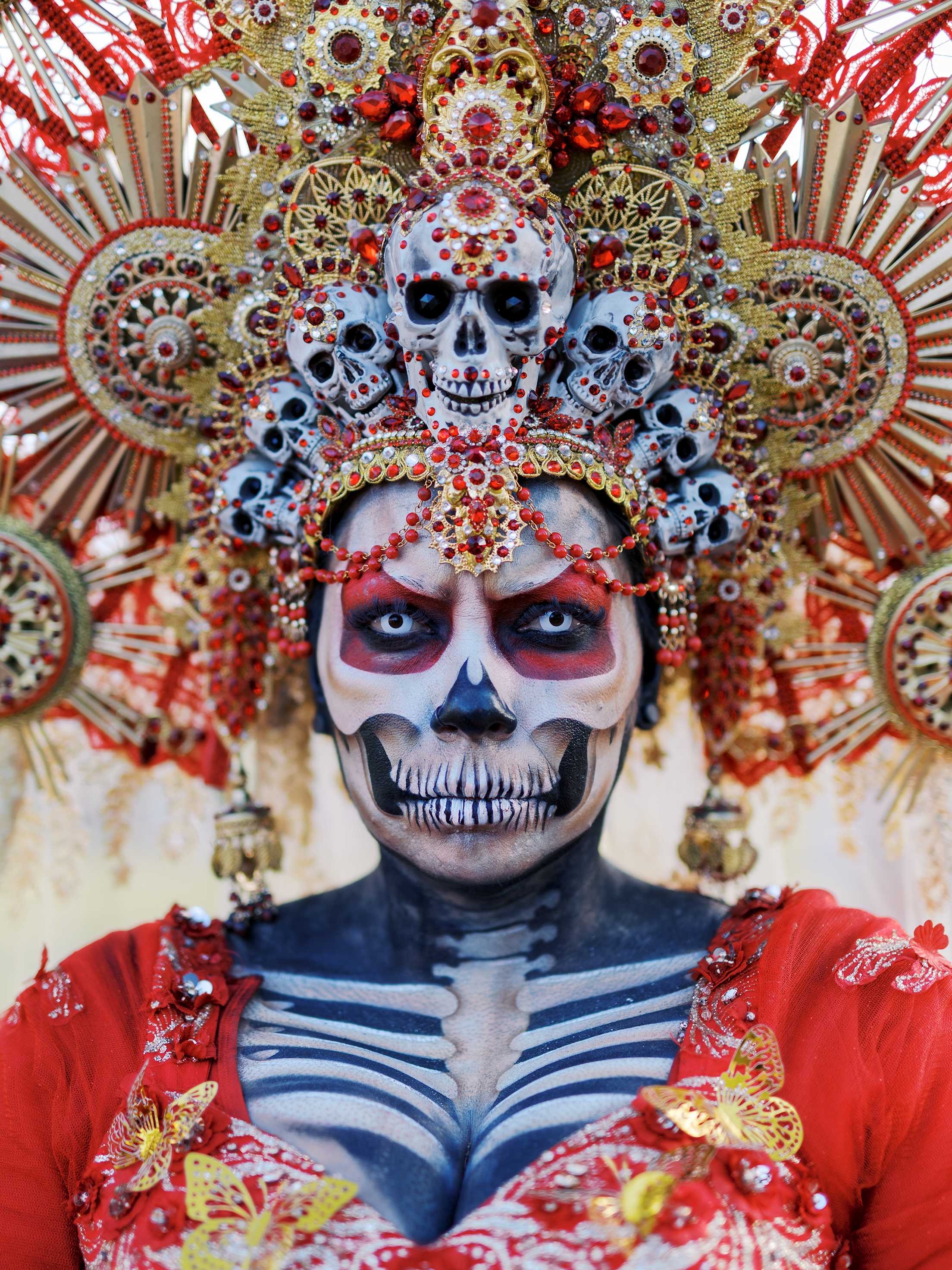
With elaborate altars, performances from Grammy-winning musicians like Los Lobos, and fantastical crafts, sculptures, and jewelry from dozens of vendors, this celebration is a feast for the senses. The over-a-century-old cemetery—best known as the resting place for Hollywood legends like Judy Garland and Burt Reynolds, among others—is one of the few cemeteries in the nation that opens to the public for a Day of the Dead celebration. The tradition began in 2000, and has grown into one of Los Angeles’ favorite ways to celebrate.This is Hollywood, after all; folks know how to put on a show.
Festivities include an afternoon procession of Aztec dancers and live music late into the evening, plus food vendors, film screenings, eye-popping costume contests, tequila tastings for the 21-and-up crowd, and plenty of activities for kids. Even if you don’t have a pro makeup artist in your midst, attendees are encouraged to dress as catrinas or paint their faces like sugar skulls. Unlike other festivals, this one isn’t free; ticket prices in past years have ranged from $5 to $60 depending on the programming you attend.
Dia de los Muertos on Olvera Street
Los Angeles, California; Oct. 25–Nov. 2
At sundown, surrounded by strolling families, the theater group Teatro del Barrio comes to life on Olvera Street. In traditional costume, the actors stage a performance that tells the story of how Day of the Dead came to be, following its evolution from indigenous tradition to modern-day celebrations.
The performance takes place at 6 p.m. every evening of Olvera Street’s nine-day celebration, which has been a go-to Day of the Dead gathering for Angelenos for nearly four decades. Known as the “birthplace of Los Angeles,” this historic region is near the site of the city’s original pueblo, founded by settlers in 1781.
The festivities, organized by the Olvera Street Merchants Association Foundation, kick off nightly with a procession ceremony led by Grupo Tartalejos, an indigenous Aztec group that starts the walk with a ceremonial blessing. Some participants dress up as “living muertos,” and on weekends, kids enjoy face painting from a local artist. The procession concludes at the plaza’s kiosko (bandstand), with a ceremony honoring the loved one of a merchant family or community member. Don’t miss the free pan de muerto and hot drinks.
All Souls Procession Weekend
Tucson, Arizona; Nov. 6–8
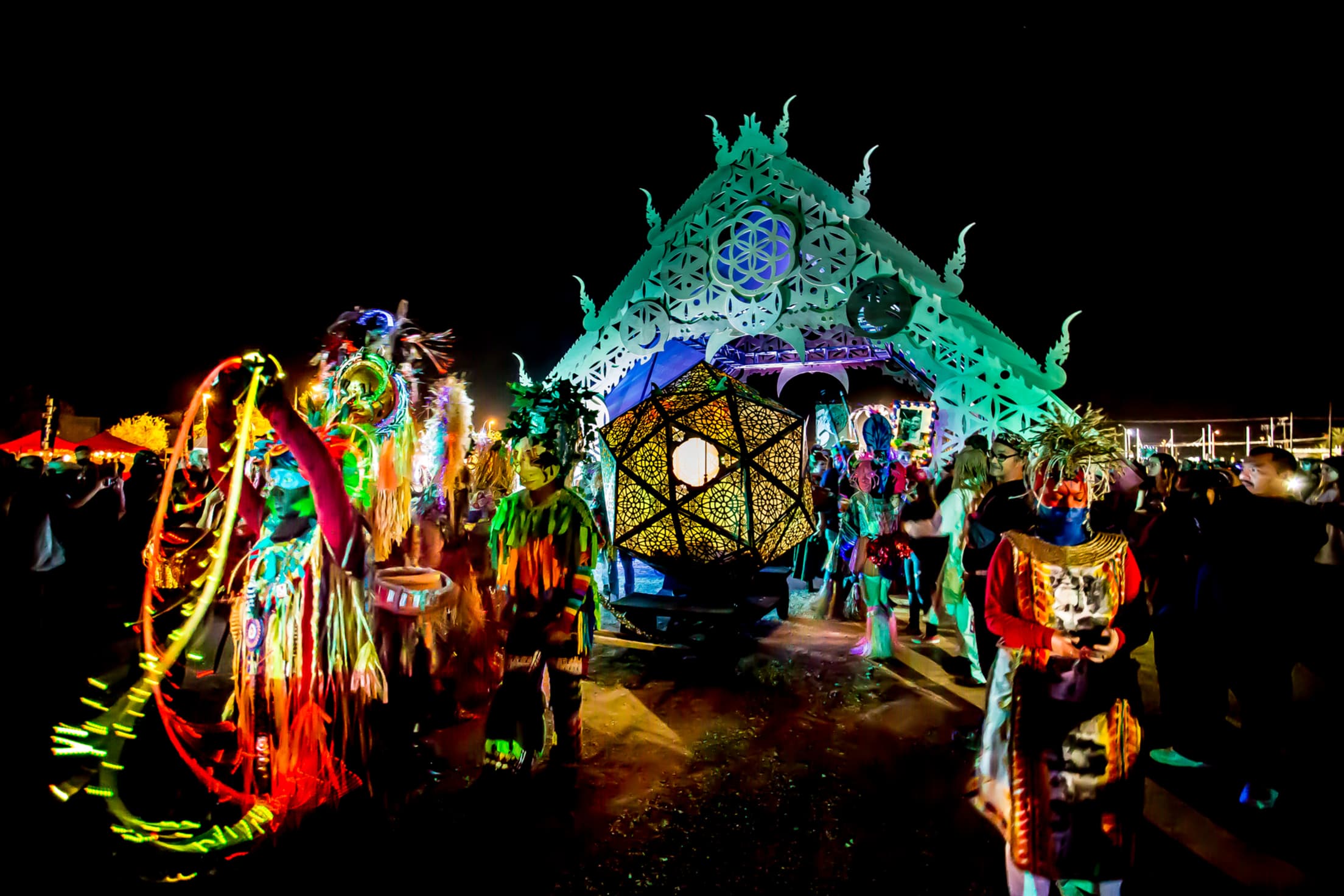
This weekendlong festival was started in 1990 by artist Susan Johnson, who, at the time, was grieving the death of her father and created a ceremonial performance piece dedicated to him. Nearly 40 years later, the event in Tucson—a city indelibly shaped by Mexican culture, located just an hour north of the border—draws 200,000 participants annually, and is organized by the artist and activist collective Many Mouths One Stomach.
At Little Angels, a family-focused gathering, activities include face painting, angel-wing decorating, and local mariachi. The biggest event of the weekend is the nearly 2-mile All Souls Procession on Sunday, November 8, in which participants walk while carrying offerings for their loved ones. People who want to participate should meet at Speedway Boulevard and North Grande Avenue at 4 p.m. The walk ends with a ceremonial burning of an urn containing wishesand hopes for the ancestors. If you’re in town, leave time to explore the adobe buildings of nearby Barrio Viejo, a neighborhood with one of the biggest concentrations of Sonoran architecture in the country.
Day of the Dead Billings
Billings, Montana; Nov. 7–8
Surrounded by the snowcapped Beartooth Mountains, attendees of this Dia de los Muertos festival take part in a ceremony: They write thoughtful notes to departed loved ones, then set the messages aflame to travel back with their ancestors.
Home to nearly 8,000 residents of Hispanic or Latino descent, the Yellowstone Valley town throws a free, family-friendly, two-day Day of the Dead celebration at the MetraPark complex, a 190-acre arena with scenic mountain views. Participants can take a self-guided tour of the community altars or visit the pop-up cemetery. Those interested can reserve a “plot” ahead of time, then decorate a cardboard base with items that represent and honor their loved ones.
Kids and adults can also participate in face painting and costume contests, decorate sugar skulls, and learn to make paper marigolds, pipe-cleaner skeletons, and festive headdresses. Up to 3,000 people have attended this celebration in recent years, and organizers say it’s growing.
Dia de los Muertos in Old Town
Albuquerque, New Mexico; Oct. 30–Nov. 8
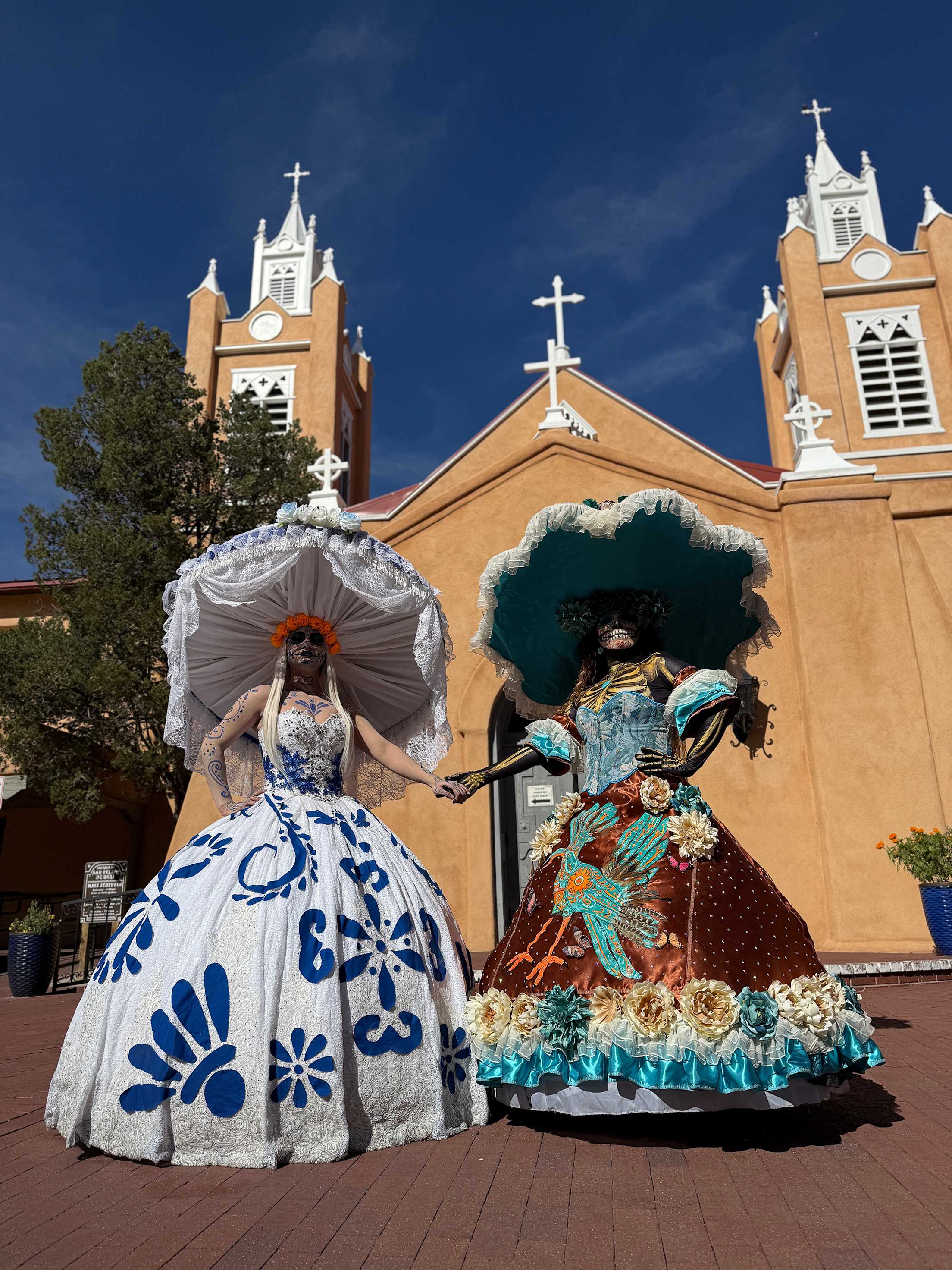
A sea of bright orange and yellow welcomes you to Albuquerque’s Old Town Plaza: This is “Marigold Mile,” which transforms Old Town’s pedestrian walkways each year with more than 30,000 flowers strung in garlands from adobe buildings and streetlights, including a mix of real marigolds and hand-crafted paper and fabric decorations. Stroll the plaza around dinnertime to take in the fragrant flora, live mariachi music, and altars outside stores and restaurants.
Year-round, the flags flying here nod to the city’s history of conquest and cultural convergence: Mexico, Spain, and the United States. But the historic neighborhood truly shines during Dia de los Muertos, with more than a week of activities and musical and theatrical performances. Fan-favorite events include a procession where visitors dress in their best catrina outfits; the Dance of the Matachines from a group of traditional male religious dancers; and a candlelight procession that ends at the plaza, where dozens of altars and elaborate 10-foot sculptures from local artisans await.
Dia de los Muertos in Santa Fe Plaza
Santa Fe, New Mexico; Oct. 30–31
Trumpets, violins, and vocal harmonies from mariachis welcome visitors to the Santa Fe Plaza in the early afternoon on Day of the Dead, but it’s after dark that this historic, tree-lined square springs to life: That’s when kids and adults who have visited the free glow-in-the-dark face-painting booths light up the night with a colorful, candlelit parade.
Now in its fifth year, this two-day Santa Fe celebration sees the plaza festooned with altars, papel picado, and marigolds, while a standout lineup of free live music and performances takes place at the bandstand. This year’s programming is still to be announced, but the 2025 lineup included dance from Ballet Folklórico Santa Fe, theater by Teatro Paraguas, a traditional Aztec blessing, and a screening of Coco, all followed by luminescent fun after sundown. While you’re in town, check out the Museum of International Folk Art’s kid-friendly Day of the Dead celebration, with free art activities, pan de muerto, and dance performances by Los Niños de Santa Fe.
Day of the Dead River Parade
San Antonio, Texas; Oct. 23
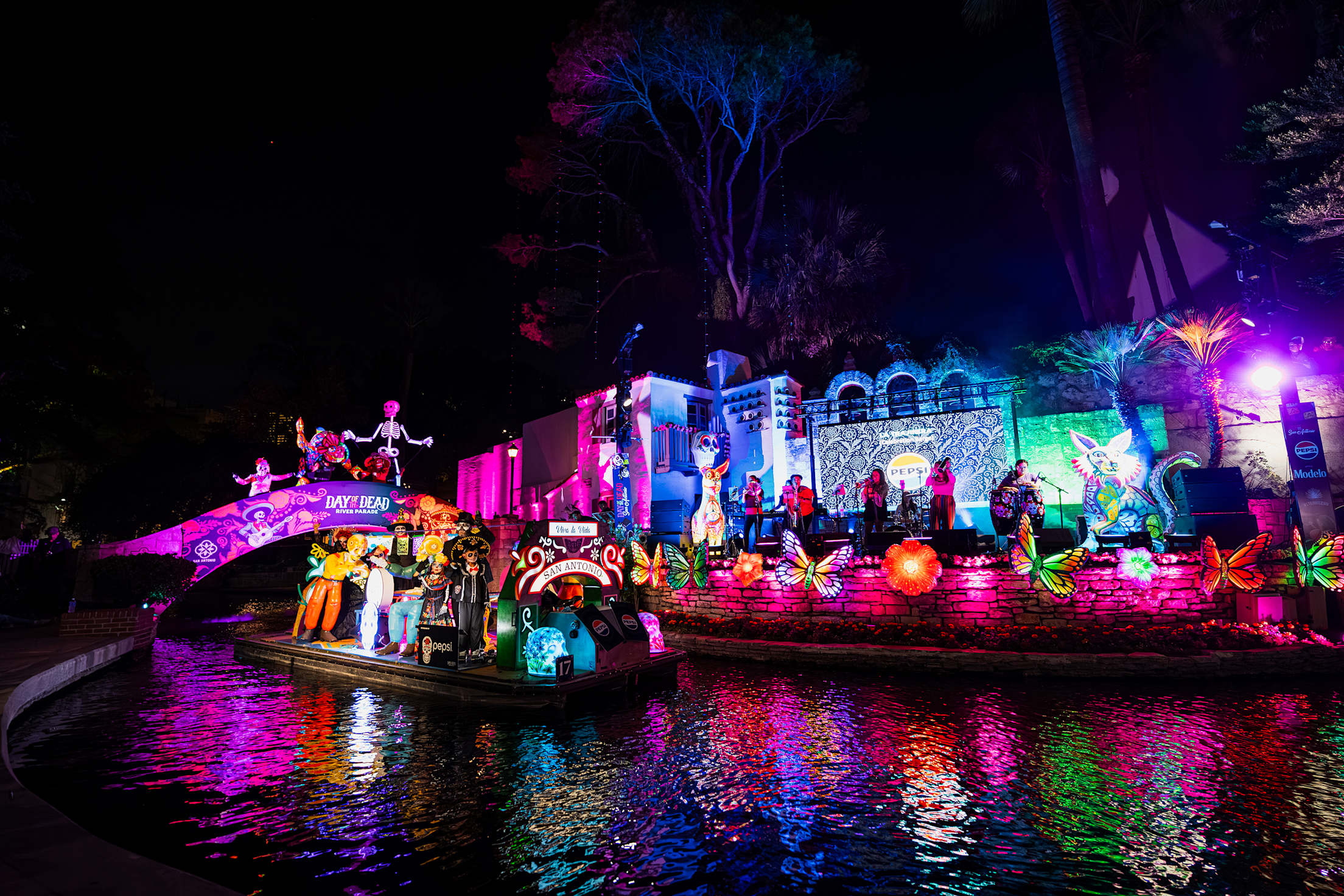
In true Texas fashion, the city of San Antonio goes big for Dia de los Muertos. Some 35,000 people flock to the River Walk after dark for a view of the Day of the Dead River Parade, when more than 20 boats and barges—decked out with dazzling decorations, altars, and even a live band or two—take a festive float down the San Antonio River. Reserved seating is available for those who want to purchase advance tickets starting at $18.50, but the free standing-room option is popular as well. Both make for an easy stroll to the many bars, cafes, and eateries nearby.
That’s just one event in a larger-than-life lineup. The city, where more than 60% of the population identifies as Hispanic or Latino, bills its Day of the Dead celebration as the largest in the country. Festivities kick off in early October and run through November 3, including a stacked slate of live music from Texas artists; last year’s programming featured a fan-favorite Selena Quintanilla tribute band in honor of the late Grammy-winning Mexican American singer. Visitors to Maverick Plaza in the historic La Villita district are greeted by a nearly 40-foot-tall catrin and catrina created by Mexican artisans and brothers Jesus Sanabria and Amauri Sanabria of the Artsumex Colectivo de Arte Mexicano. The celebrations also includea colorful display of giant alebrijes, Mexican folk art sculptures of mythical creatures, which will be installed throughout the city beginning October 3.
How to Celebrate Respectfully
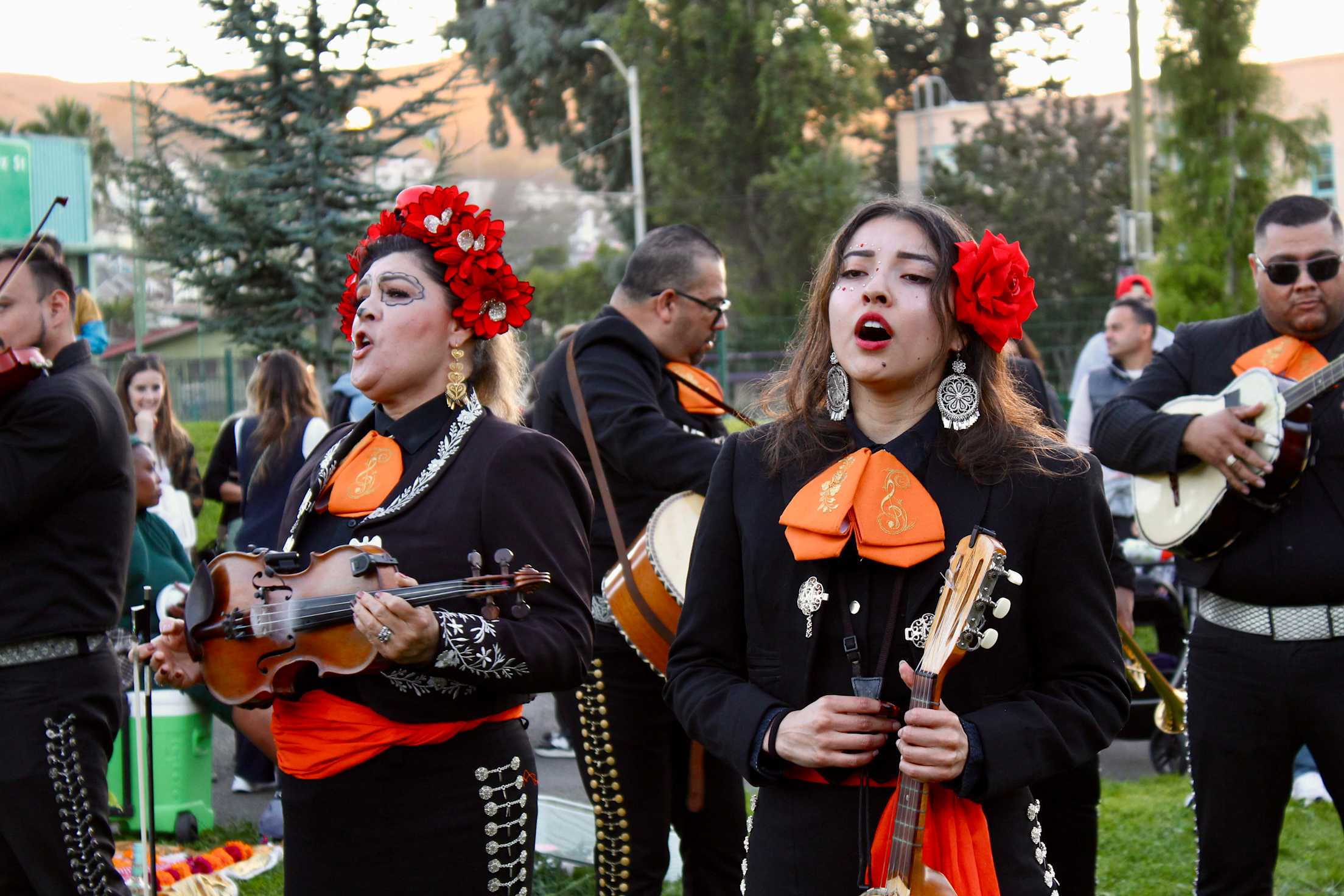
People of all backgrounds are welcome at Day of the Dead celebrations. But remember, for many, this is a sacred holiday. Here are a few tips to keep in mind when you’re celebrating:
Do
- Build your own altar at home using photos of your loved ones. Decorate it with marigolds, papel picado, sugar skulls, fruits, loved ones’ favorite foods, and items that remind you of your ancestors.
- At events, ask before taking photos of people or altars.
- Support local vendors, including Mexican bakers selling pan de muerto.
Don’t
- Treat it like Halloween, dressing up in goofy, gory, or topical costumes.
- Touch or take items, especially from altars, unless they’re offered to you.
- Expect a Cinco de Mayo atmosphere. Be safe, be sober, be polite.
Celebrate Dia de los Muertos in Mexico with a G Adventures tour.