
Do You Need Winter Tires, Cables, or Chains?
Find the best traction device for your vehicle before snow begins to fall.


Question: I’m moving from the Bay Area to Lake Tahoe at the end of the year. I’ve never lived where it snows, so I need to get ready for winter driving. I know I can get snow tires, but I don’t know when or how to use them. Or should I be thinking about some other solution? —Sarah M.
Answer: If you’re trading the temperate California coast for the alpine Sierra, there’s a lot to look forward to—crisp pine-scented air, spectacular views, easy access to the outdoors. But then there’s also winter driving.
If you have little or no experience with it, driving in a snowy environment might seem daunting. But it’s like anything new: It just takes a bit of preparation.
A big part of that preparation is making sure your vehicle’s tires are ready for the conditions. Trouble is, figuring that out isn’t necessarily as clear as you might think. You have to consider several factors, including where specifically you’ll be driving and the kind of vehicle you have.
For insight into how you might approach the problem in your particular case, we turned to Steven Sosa, a location manager for AAA Auto Repair in Santa Rosa, who has been in the tire industry since 1993.
The Options: Winter Tires and Traction Devices
First, let’s clarify the vocabulary. The terms “snow tire” and “winter tire” are used interchangeably. But “snow tire” often refers specifically to one that is aggressively knobby or studded. While such tires can still be effective for mud and heavy off-roading, they aren’t used as much these days for general driving on icy or snowy roads.
“Winter tires” are the preferred solution for that. They’re similar to regular all-season tires, except they use a softer, more flexible kind of rubber. That helps the tread bite into ice and snow, providing superior traction.
That said, “even if you have the best winter tires, you have to be cautious,” Sosa says. “Winter tires handle differently on dry pavement. They grip differently, and you have to adjust your driving style.”
And they aren’t appropriate year-round. If you drive winter tires on dry, warm pavement—as you would on a sunny summer day in Tahoe—they will wear out incredibly fast. The rubber will work too hard, grip the road too tightly, and degrade rapidly.
In addition to specialized tires, you’ve probably also seen traction devices, which include old-fashioned chains and more modern cables.
Chains are no longer the only traction device you can put on and take off at will, and they’re less commonly used than cables. They’re hard on the road, and can be hard on the vehicle, too. They’re also difficult to install. But their aggressive grip can be handy on any vehicle for driving on especially steep snow-covered roads or thick ice.
Cables are now much more common. They’re relatively simple to install and easier on vehicles and roads. However, they’re best for driving on lighter snow; they don’t have the gripping power that chains do.
You might have also heard about snow socks—lightweight, fabric-based alternatives to chains and cables. But Sosa views them with some skepticism: “I’ve only seen them one time by one of my vendors, and I’ve never seen them in action.” For Tahoe, it’s best to stick with the proven solutions: cables or chains.
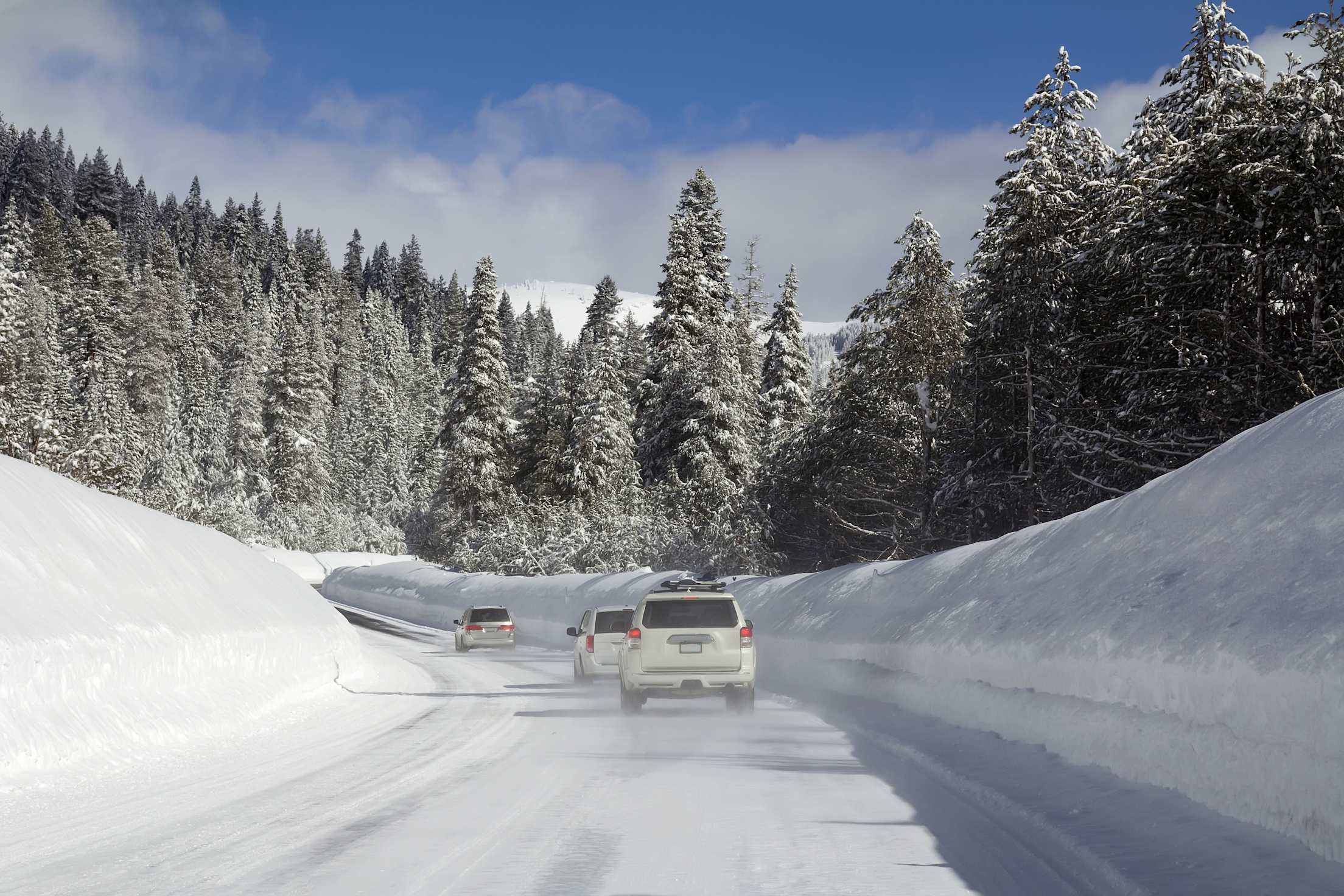
How to Choose Between Winter Tires, Cables, and Chains
Your choice among these various tire and traction alternatives will depend on several factors.
1. Where You’re Driving
If you’re living in a snowy area—as you will be—you definitely want to think about getting a set of winter tires. For those, Sosa suggests following the “Thanksgiving-to-Tax-Day Rule,” switching to winter tires around Thanksgiving (or Halloween, if winter comes early), and keeping them on until the last threat of snow passes in your locale—typically mid-April. (If you were moving to a place like Alaska, you might want to adjust those dates accordingly.) That should maximize the longevity of both your regular all-season tires and the winter ones. Usually, you would buy a set of winter tires and take them to a mechanic or tire shop for installation and removal.
If you know that you’ll be driving exclusively within a developed area—such as Tahoe City or South Lake Tahoe—where the roads are plowed and deiced constantly, you might be able to get away with keeping your all-season tires on all year. Ideally, that would be a set rated for mud and snow, which has a more open, water-shedding tread. (They should be marked “M+S” on the sidewalls.) With all-season tires, you could always pop on some cables for additional traction if snow does occasionally accumulate. But switching over to winter tires at the beginning of the season would be easier.
Even with winter tires on your vehicle, you may need additional traction devices. If you’re using standard winter tires but have to climb deep ice or one of those especially steep hills, you might still need the additional grip of chains or cables.
2. What You’re Driving
Another variable to consider: the kind of car you’re driving—specifically, whether it’s two-wheel, all-wheel, or four-wheel drive.
If you drive a two-wheel-drive vehicle, you are much more likely to need traction devices—cables or chains—on a regular basis. In that case, winter tires can certainly help but may not be a total replacement for chains or cables when conditions require them. Even four-wheel or all-wheel-drive vehicles may still occasionally need the extra traction of chains or cables in especially bad conditions. Note that many all-wheel-drive vehicles require special, low-profile traction devices; check your manual.
Local authorities may sometimes declare that vehicles must either have traction devices installed or available—so you need to at least carry a set in your car all winter long.
Don’t forget everything beyond the hardware.
Regardless of what kinds of tires or traction devices you’re using, winter driving in the mountains is not just a more scenic version of fair-weather driving in lower elevations. Having the right equipment on your car is part of the adjustment. But there are other things you can do to stay safe:
Keep the tank full.
Sosa has a golden rule for when his own kids drive from the Bay Area to Tahoe: “Stop in the foothills and gas up.” Even if your tank is half full, you should top it off. That also applies to people who live in the mountains full-time. If an accident shuts down the road for hours, that gas will keep your engine running, your heater on, and you safe.
Carry an emergency kit.
You should always carry blankets, water, and extra warm clothing in your vehicle. If you get stuck on a mountain pass during a blizzard, temperatures can drop fast, and things can get dangerous quickly.
Know your limits.
If the weather is impacting road conditions, and you don’t have to drive, don’t. Sometimes the smartest winter driving decision is to stay safe and warm indoors and wait for the plows.
By respecting the conditions, equipping your vehicle correctly, and preparing for the worst-case scenario, you should be ready for whatever winter throws your way.
AAA Members save 10% on parts and accessories every day—in-store and online—at Napa Auto Parts.