
Do You Need to Use a Trickle Charger?
If you aren’t driving a car regularly, its battery can go dead. Here’s how to prevent that.


Finding out your car battery is dead is no fun—whether it happens when you get back home after a long vacation, on a Monday morning as you’re trying to leave for work, or in the grocery store parking lot during a snowstorm. Even worse is when you go to your mechanic to get it checked out and learn that the battery is in fact fine—it was just low on charge.
Your car’s battery naturally discharges slowly over time when it isn’t being used. Usually, when you’re driving regularly, the alternator recharges your battery so it’s ready the next time you need it. But if you’re away for a long period, if you primarily drive short distances, or if you store your car for the winter months, the battery doesn’t get that recharge. That’s when your car won’t start when you need it.
Fortunately, trickle chargers and battery maintainers can help prevent this from happening. They are designed to maintain your car battery's charge with a slow “trickle” of power, so the car is ready to go when you are.
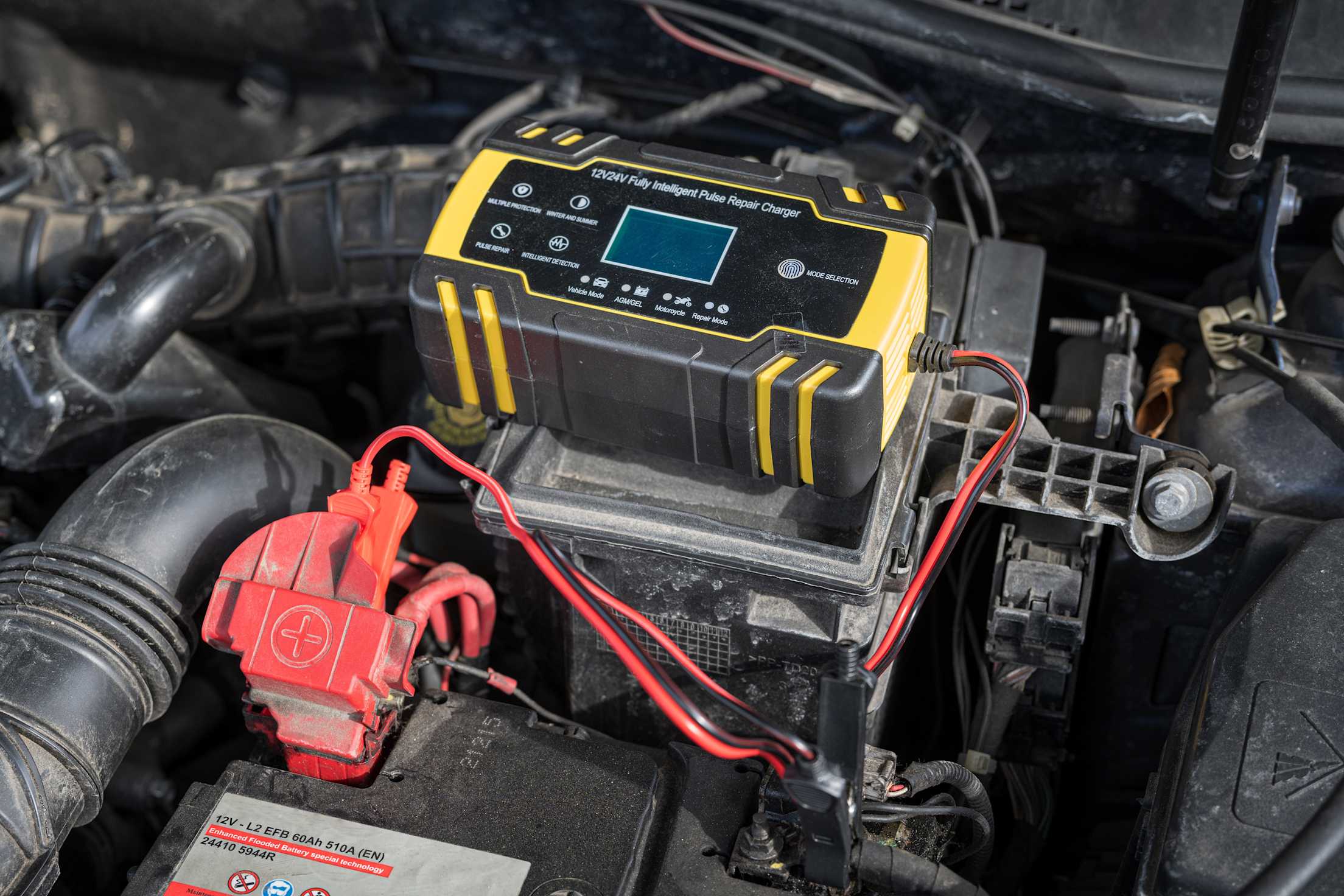
What to Look for When Buying a Trickle Charger or Battery Maintainer
Be sure to read your car’s owner manual before purchasing a trickle charger or battery maintainer. Some manufacturers have advice or requirements that you don’t want to miss.
Both trickle chargers and battery maintainers can slowly charge your car battery using very low amperage. The difference between the two is that a trickle charger has to be manually disconnected when the battery is charged up. That can be a hassle and, more importantly, might be impossible if your goal is to maintain a car that’s parked while you’re traveling or it’s put away for the season. A battery maintainer, on the other hand, turns itself on and off as needed to keep the battery charged.
Some maintainers can also be used for absorbed glass mat (AGM) batteries that can’t be charged with a typical trickle charger. They may have features for charging other batteries, such as lawn mowers, boats, RVs, and more. Battery maintainers are the best option for most car owners.
The biggest downside to trickle chargers and battery maintainers is that they both require an external power source. If you park on the street or don’t have access to an outlet, you’re not out of luck, though: You can get a solar maintainer, which taps energy from the sun to provide the power to keep your battery charged.
Trickle chargers and battery maintainers are different from standard battery chargers, which use higher amperage to charge dead batteries. Fast charging isn’t great for your battery’s health, so you should use such devices only when absolutely necessary. Some standard chargers now have maintainer options, but otherwise you should not use them for regular battery maintenance.
Likewise, you shouldn’t use a jump-starter to maintain a battery. These are designed to boost a dead battery once to get the car started, not to provide a slow charge to a battery that’s in good condition. That said, it’s smart to have a jump-starter on hand, as it allows you to bring a dead battery back to life without needing a second vehicle; it also reduces the risk of improper jumps.
How to Use a Battery Maintainer or Trickle Charger
Before you hook up any device up to your battery for the first time, carefully read the device’s instructions and your car’s manual to make sure you know exactly what you’re getting into and how to avoid mistakes.
Leave the hood slightly open while the trickle charger is attached to your battery. This helps you avoid damaging the charger’s wires or driving off while it’s attached, which could damage your car.
If you’d like to avoid the need for a battery maintainer or trickle charger and keep everything in your car working the way it should, drive your car for at least a 20- to 30-minute stretch at highway speeds once a week. Otherwise, a trickle charger or maintainer is simple to use and will help keep your battery working well long into the future.
Keep rolling with AAA Auto Services, from full-service auto repair to emergency roadside assistance.