
When Is the Best Time to Buy a Used Car?
Opinions vary, but these expert-recommended months might get you the best deal.


Savvy shoppers know that timing matters. You can get a great deal on a big-screen TV just before the Super Bowl, and they’re practically giving away cut trees on Christmas Eve. But what about buying a used car?
The best time to start shopping for a vehicle is before your old one gives out. You can always research models and compare prices now, so as to avoid making a rushed decision when you suddenly need a new set of wheels to get to work on Monday. But what if you can afford to wait? Is there a specific time of year when it’s best to buy? Industry observers say yes—but they disagree about when that is.
Buy when it’s cold outside.
Many automotive experts agree that you’re more likely to score a good deal on a used car in fall and winter. The reason: There is usually greater supply and less demand then, due in part to inclement weather and holiday spending. The worst periods are spring and summer, when warm weather and tax refunds bring out more buyers.
“As the average temperature goes up, so does the price of cars,” says Karl Brauer, executive analyst with iSeeCars, an auto-listing site.
A study based on used-car listing prices by iSeeCars found that January, February, and December (in that order) are the months when you are most likely to find a car advertised at least 10% below its estimated fair market value. By the same token, the worst months to get a good deal are (in order) June, May, and July.
“It’s pretty much clockwork in new and used markets: Prices bottom out November through March, then go up as tax returns start to come in,” Brauer says.
Look for end-of-year turnover.
A recent analysis of transaction prices by Edmunds, the automotive reference guide, came to a slightly different conclusion. Edmunds determined that October and November are the best months to buy a used car.
One explanation for that: It’s when dealers push model-year closeouts and year-end promotions on new cars. These deals often entice used-car buyers to spring for a new vehicle instead. That, in turn, eases demand for used ones and improves pricing. The best holiday to buy, Edmunds found, is the day after Thanksgiving—Black Friday.
All that said, December can also be a good month for people who have the time and money to shop for a used car, says Ivan Drury, Edmunds’ director of insights. Dealers get antsy to sell before January, because that’s when cars turn a calendar year older, which changes buyer perceptions. (Remember that a vehicle’s model year and the calendar year it was released are not always the same.)
He says that January is “still a decent month” because there is less competition. “It’s a high-expense month, people are paying off Christmas and Thanksgiving travel and gifts.”
According to Edmunds, the worst time to buy is tax season, from March through April. “There are more buyers to contend with and dealers know people have more money,” Drury says.
Wait for the trade-in tide.
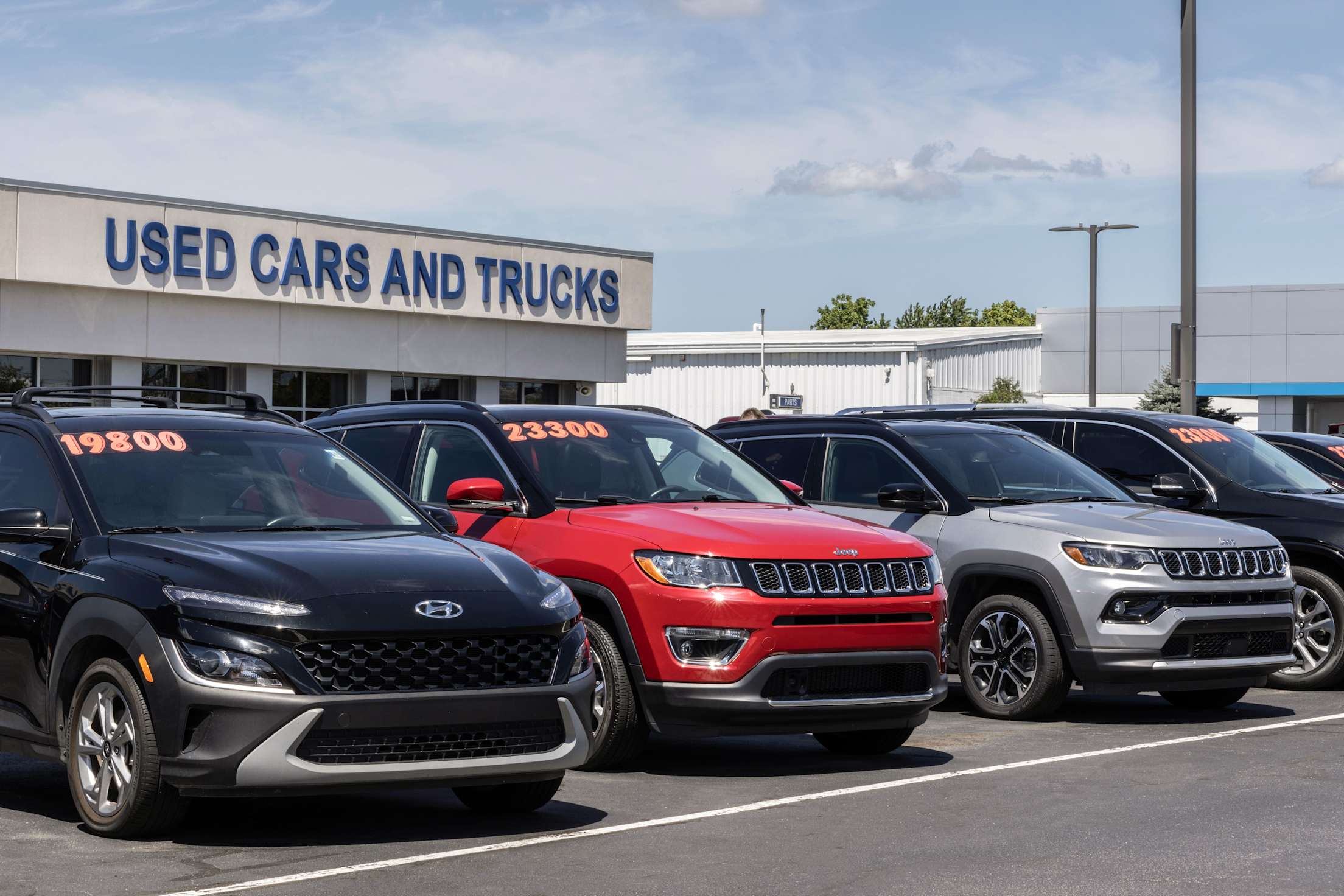
New-car dealers get most of their used-car inventories from customer trade-ins, lease returns, and vehicles they purchase from individuals, other dealers, or at auctions. As a result, “used car availability will follow new car activity,” says David Meese, managing partner with Volvo Cars in Walnut Creek and Dublin, California.
Used-car sales by independent dealers and private parties are less tied to new-car sales. But they are still correlated because of the influence of new-car dealers on the prices of used vehicles.
That’s one reason why independent automotive analyst Brian Moody believes the best time to buy a used car (up to 5 years old) is late summer to end of year, when dealers begin to clear out their current models to make way for the new ones. This is especially true if a car has been redesigned for the new model year.
Say a dealer has a vehicle that looked identical from 2023 to 2027, but is redesigned for 2028. “In most cases,” Moody says, “those 2023 to 2027 models will look outdated and begin to lose value.”
Balance selection versus price.
If you are searching for a specific used car, then selection could matter more to you than price. In that case, you might want to scour dealer lots after their busiest new-car sales periods, when their used-car inventory is likely to be greatest, says Meese, the Volvo dealer.
Meese says that for most brands, new-car activity peaks around Memorial Day, Fourth of July, Labor Day, and Christmas to New Year’s. Those times might not all offer the best pricing, however. If you are looking for “that moment a few times a year when there is a little less demand because there are fewer shoppers and better supply hence new-car activity and trade-ins have increased, that is the end of December,” he says.
The used-car cycle doesn’t vary much by geography or car type, with a few exceptions. Demand for convertibles, sports cars, and family-vacation vehicles such as SUVs spikes in the spring and summer, Karl Brauer says. Similarly, there is more demand for four- and all-wheel-drive vehicles in snowy places as winter approaches.
A flood of electric vehicles is expected to hit the used-car market over the next 12 to 18 months, as people who leased EVs before the federal tax credit ended abruptly in September 2025 return them to dealers. “You could argue that three years from August or September of 2025, there will probably be an extra large number of EVs coming off lease,” Brauer says.
So should you wait?
With varying opinions on when used-car prices might be best, it may not be worth waiting for a theoretically perfect time to buy.
“Unlike new cars, where you might score a better deal at the end of the month or end of the year, for the most part, the best time to buy a used car is when you find the one you want that meets your needs and budget,” says Matt Degen, senior editor for Kelley Blue Book.
Postponing your purchase also poses a risk. “If you have a trade-in, for example, it’s only going to continue to depreciate every month that you wait,” says Jeff Bartlett, managing editor for autos at Consumer Reports. “Which, of course, will eat into your potential savings.”
Let us help you find your next new or used car with TrueCar.