
The World’s 6 Most Scenic Walking Vacations
From Spain’s Camino de Santiago to Japan’s Kumano Kodo, these beautiful routes invite you to explore deeply.


Passing through the 10-foot-tall torii gate, I step up on some tangled cedar roots and walk into the forest. Japanese cypress perfumes the trail. The spicebush’s yellow flowers peek out from beneath the ferns. The silence is periodically punctured by a bush warbler’s call. Emerging from beneath the hovering limbs, the trail gently climbs to a clearing on 1,115-foot Mount Meshimori, from which I can see the Hatenashi Range stretching out like a string of prayer flags.
I’m walking Japan’s Kumano Kodo, one of two UNESCO World Heritage–recognized sacred pilgrimage routes. (Spain’s Camino de Santiago is the other.) Established more than 1,000 years ago by Shinto practitioners and then supported by the imperial family, it links a series of temples and shrines, both Shinto and Buddhist, across the Kii Peninsula south of Osaka and Kyoto.
My particular walk is a five-day self-guided tour with the assistance of a luggage-forwarding service—a convenience that allows me to carry only a day pack on the trail. After walking about 7 miles each day, I arrive to find my heavier bags waiting for me at that night’s ryokan. These Japanese inns provide a place to sleep, eat dinner, and—most importantly—enjoy the geothermally heated baths known as onsens. The next morning, after an early soak, I repack my suitcase, eat breakfast, and return to the trail.
Walk-focused holidays entail plenty of steps without the intense effort of backpacking. On some journeys, like mine, you travel linearly, from point A to point B. On others, you might stay at the same accommodation each night and venture out from there during the day. In either case, they combine extended time in natural settings with up-close cultural and culinary stops.
I find the word “hike” connotes exertion, while “walk” conjures up a more contemplative, less hurried pace that allows for the serendipitous, even the transcendent. I remember once, while strolling a path toward Hawkshead in England’s Lake District, leaning on a stone wall and watching a newborn lamb, barely taller than the enveloping thistles, suckle its ewe. Hours may have passed.
I’ve already experienced walking tours along the Kumano Kodo and in the Lake District. I’m keen to explore Slovenia’s Julian Alps, near Lake Bled, where I’ll photograph the formidable limestone karst formations and abundant waterfalls, then explore the Škocjan Caves (another UNESCO World Heritage site). And I plan to someday step along Italy’s Sorrentine Peninsula, bypassing the stomach-churning drives on those serpentine cliffside roads.
Preparation remains critical on any tour, but packing can be relatively straightforward. These days, in addition to my standard luggage, I bring a rucksack, in which I carry a light merino wool layer, a rain anorak, a map, a journal, water, my camera, some snacks, a smartphone with a translation app, and (if I’m somewhere “birdy”) my binoculars.
However you arrange yours, whether you choose a point-to-point with luggage forwarding or a base camp approach, guided or self-guided, a walking vacation allows you to simplify and relax. All you have to do is choose your trail and see where it takes you. —C.S.B.
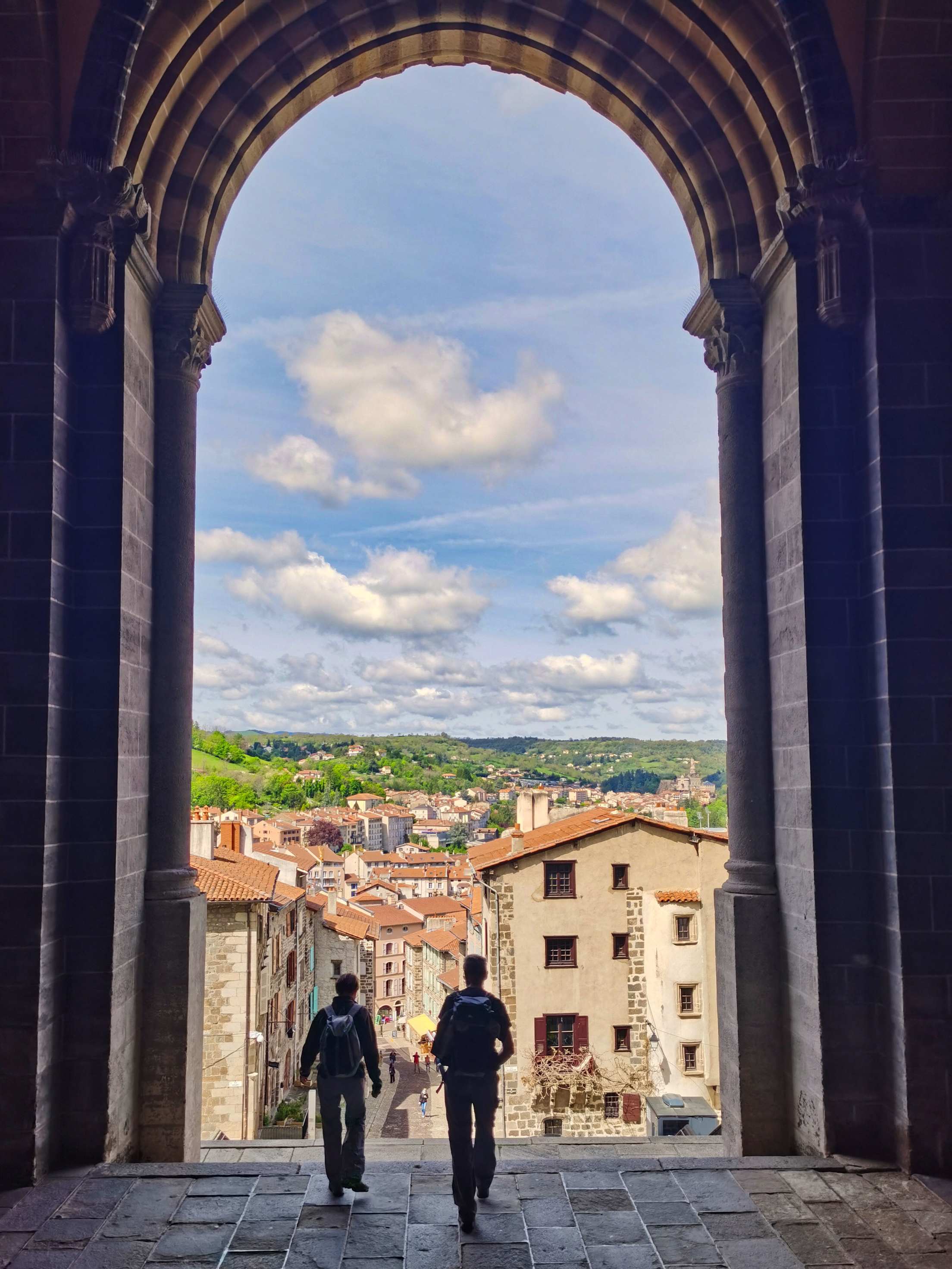
Camino de Santiago
Spain, Portugal, France
In the ninth century, a hermit and a bishop allegedly discovered the tomb of St. James in northern Spain. It caused a sensation then, and ever since, seekers have journeyed to the site on a network of routes collectively known as the Camino de Santiago.
Today, travelers commonly trek the final 100 kilometers (62 miles) of the most popular route, the Camino Francés, from Sarria to the Cathedral of Santiago de Compostela. This section takes about a week and is best for those who like company: Pilgrims share stories while sauntering through sun-dappled forests and pastoral landscapes, then converge in cafes and hostels each evening. The camaraderie ramps up as walkers get closer to the cathedral and receive their Camino certificates.
If you would prefer a road less traveled, the Litoral Way (a variant of the Camino Portugués Coastal Route) goes from Porto, Portugal, north to Santiago de Compostela. Along the way, you’ll follow beachside boardwalks and promenades through sand dunes and towns packed with seafood restaurants. The full route takes 12-plus days; many pilgrims skip sections by taking public transportation. —K.C.
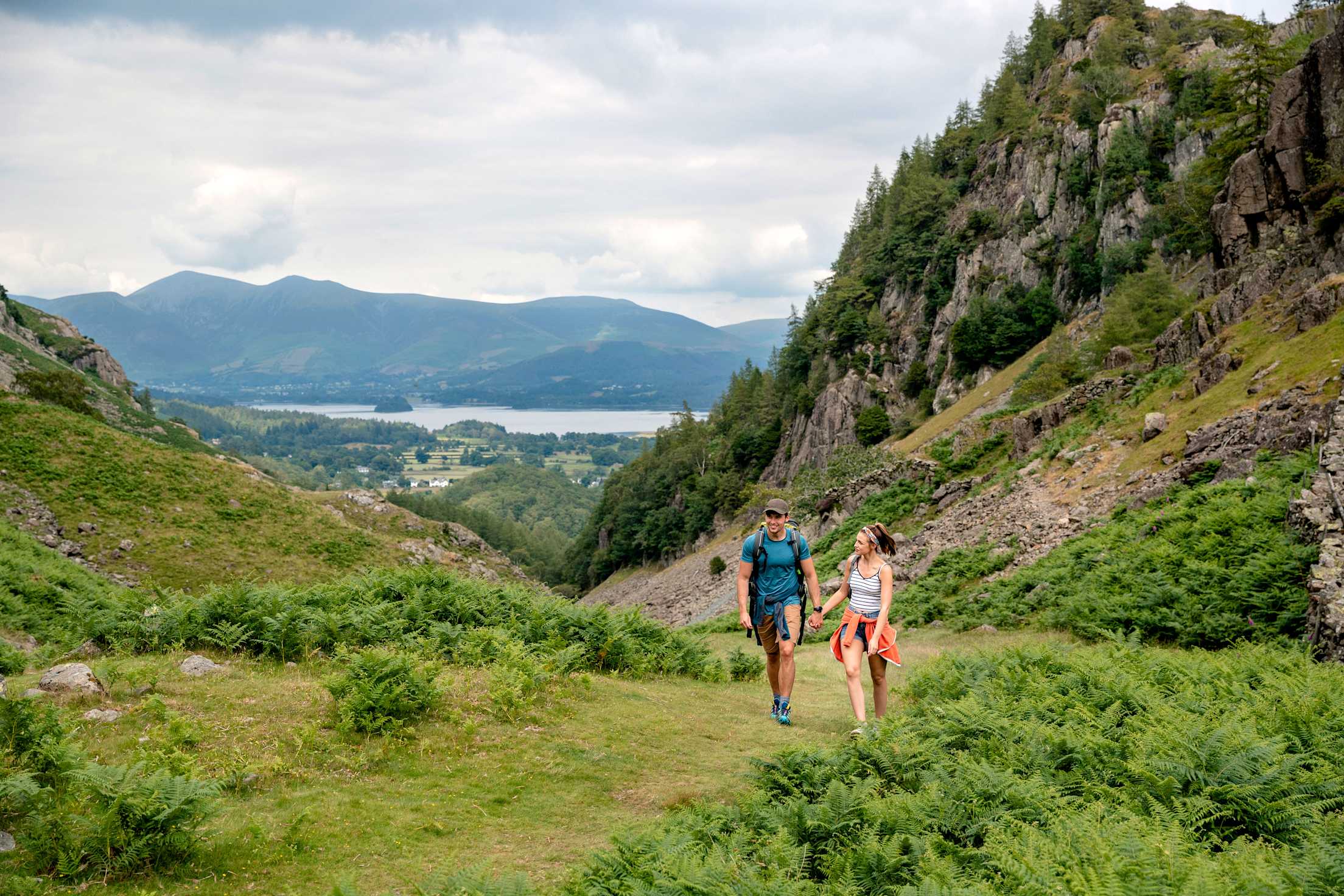
Lake District
England
With its dramatic mountains, glacial waters, and vibrant green valleys, this hill walker’s utopia has inspired everyone from Neolithic builders to Romantic poets like William Wordsworth. The quaint town of Keswick makes an ideal base for exploring Lake District National Park. Ferry from Keswick’s marina to Hawes End, from which you can promenade along Derwentwater’s forest-fringed shore or tackle the moderate 3.5-mile Catbells trail for panoramas of the lake ribboning between the mountains. From Keswick’s market square, amble the 4-mile loop to Castlerigg Stone Circle, a 4,500-year-old Neolithic monument. Visit around sunrise or sunset to soak in the solitude and to maximize the mystery.
From Keswick, you can also drive or take a bus to Grange and embark on the moderate 5-mile trail to Borger Dalr (Borrowdale valley), an area that writer and avid hiker Alfred Wainwright called the “finest square mile in Lakeland.” The climb culminates at Castle Crag, site of a 2,000-year-old hillfort overlooking a patchwork of fields, forests, and water. May through September brings the best chances for sunshine and pleasant temps, but always be prepared for weather. If it gets too wet for walking, you can tour Wordsworth’s former home, Dove Cottage, or Beatrix Potter’s farmhouse retreat, Hill Top. —K.C.
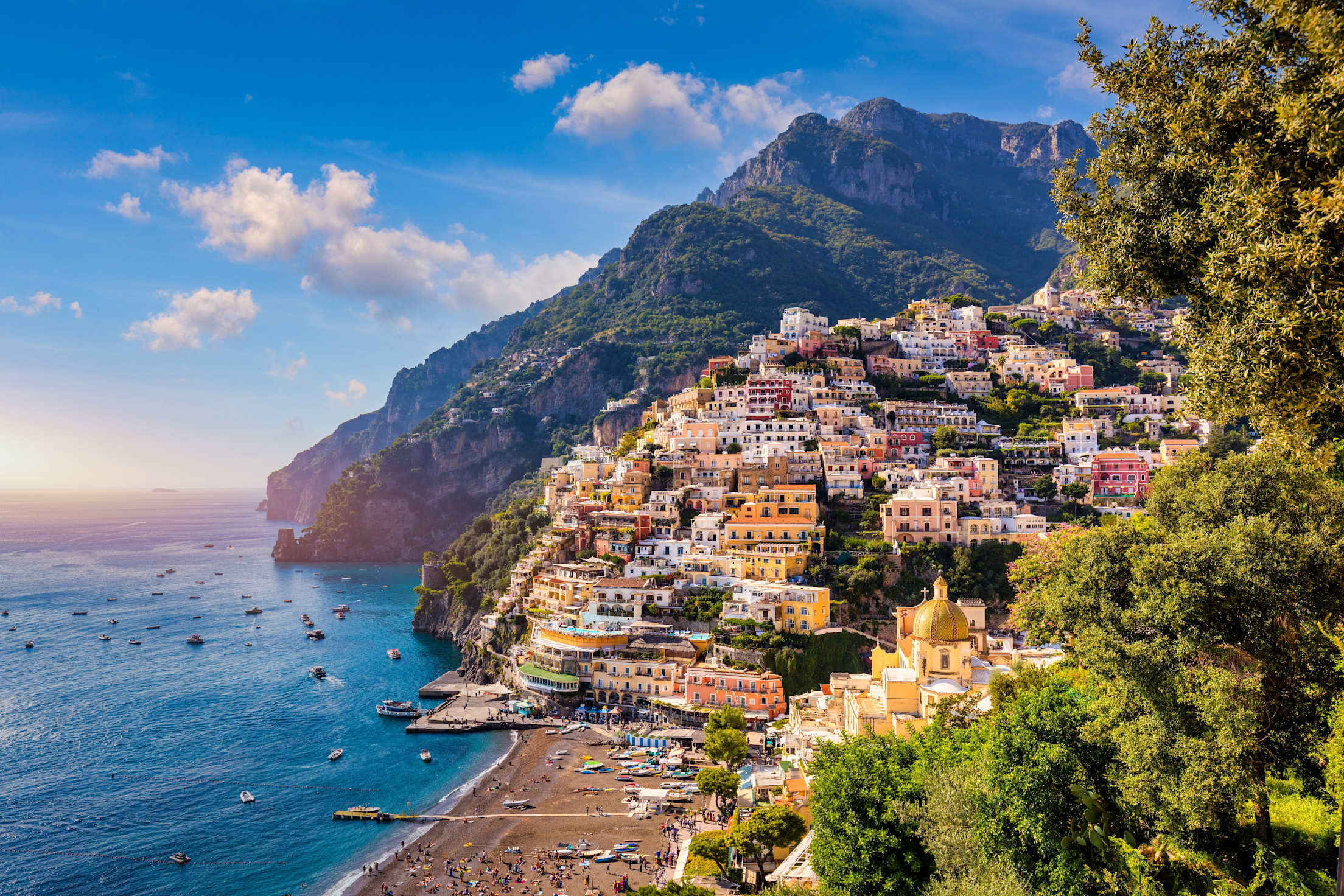
Sorrentine Peninsula
Italy
All along this gorgeous peninsula, pastel-colored towns cling to cliffs that plunge into the glittering Tyrrhenian Sea. The region is also threaded with breathtaking trails. The most famous—the Sentiero degli Dei (Path of the Gods)—is justly popular, and the moderate 5-mile footpath is worth it for dreamy vistas of verdant mountains, terraced vineyards, and Positano poised above the cerulean sea. You’ll find fewer walkers and easier terrain on the 5-mile Sentiero delle Sirenuse (Sirens’ Path) near Sorrento. The loop climbs through olive groves to sweeping views of the mountainous peninsula and the islets where the Sirens lured sailors to their doom in Homer’s The Odyssey.
From Amalfi or Sorrento, take a ferry ride to Capri, then hail a taxi to the quaint town of Anacapri. There, a chairlift carries you to the top of Monte Solaro, where you can drink in hilly panoramas dotted with whitewashed towns. Then, ramble back to Anacapri through flowery meadows and fragrant pine forest, past a 15th-century hermitage, and along a historic mule track overlooking the sea. For the best weather and thinnest crowds, plan to visit in May, September, or October and walk early in the morning. Later, you can while away the afternoon swimming in the sea and savoring la dolce vita. —K.C.
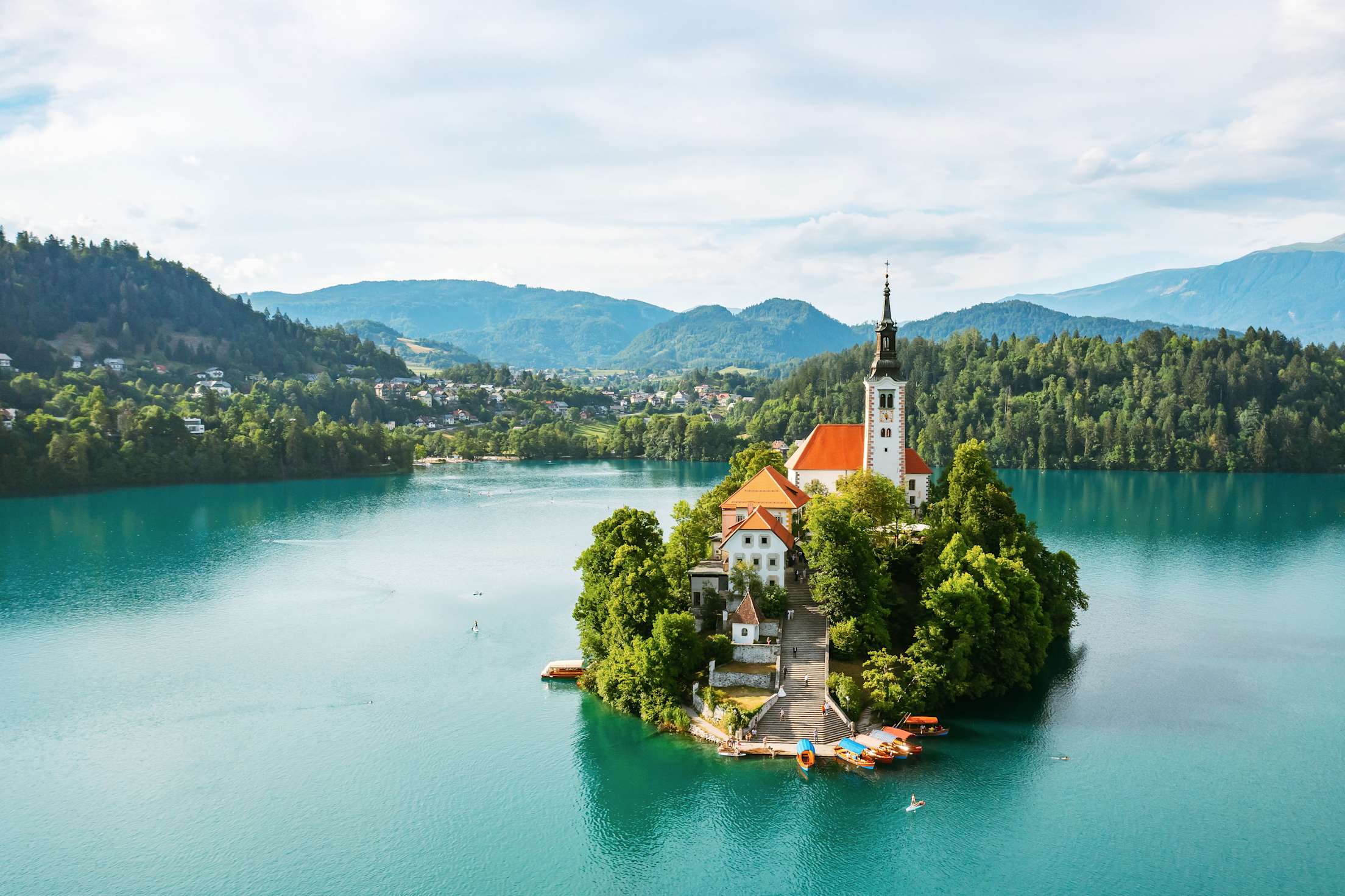
Lake Bled, Lake Bohinj
Slovenia
About 35 miles north of Slovenia’s enchanting capital of Ljubljana lies a walkable, watery wonderland that looks like something out of a fantasy novel. Lake Bled’s sapphire waters surround an island crowned with a baroque-style church, watched over by a medieval castle and towering mountains. On the western shore, take the approximately 2-mile trail to the Ojstrica and Mala Osojnica overlooks and capture photos of the fairy-tale scene. A 3.7-mile path encircles the lake; in summer, you can dip your feet into clear, balmy water. Or book an advance ticket to venture along the nearby 3.4-mile Vintgar Gorge-Sveta Katarina loop. You’ll traipse on boardwalks between rock walls above an emerald-green river.
About 18 miles away, less-touristed Lake Bohinj is an idyllic hub for exploring Triglav National Park. Mosey through lush forests around the shore and meander along Mostnica Gorge, where a teal-colored river crashes through carved rock formations. Catch a cable car to Vogel ski resort, then tramp through alpine meadows and snag a snack at a cheese cottage run by a shepherd. Bonus: If you don’t want to rent a car, you can access the trails at both lakes using Slovenia’s convenient, comfortable bus system. —K.C.
Kumano Kodo
Japan
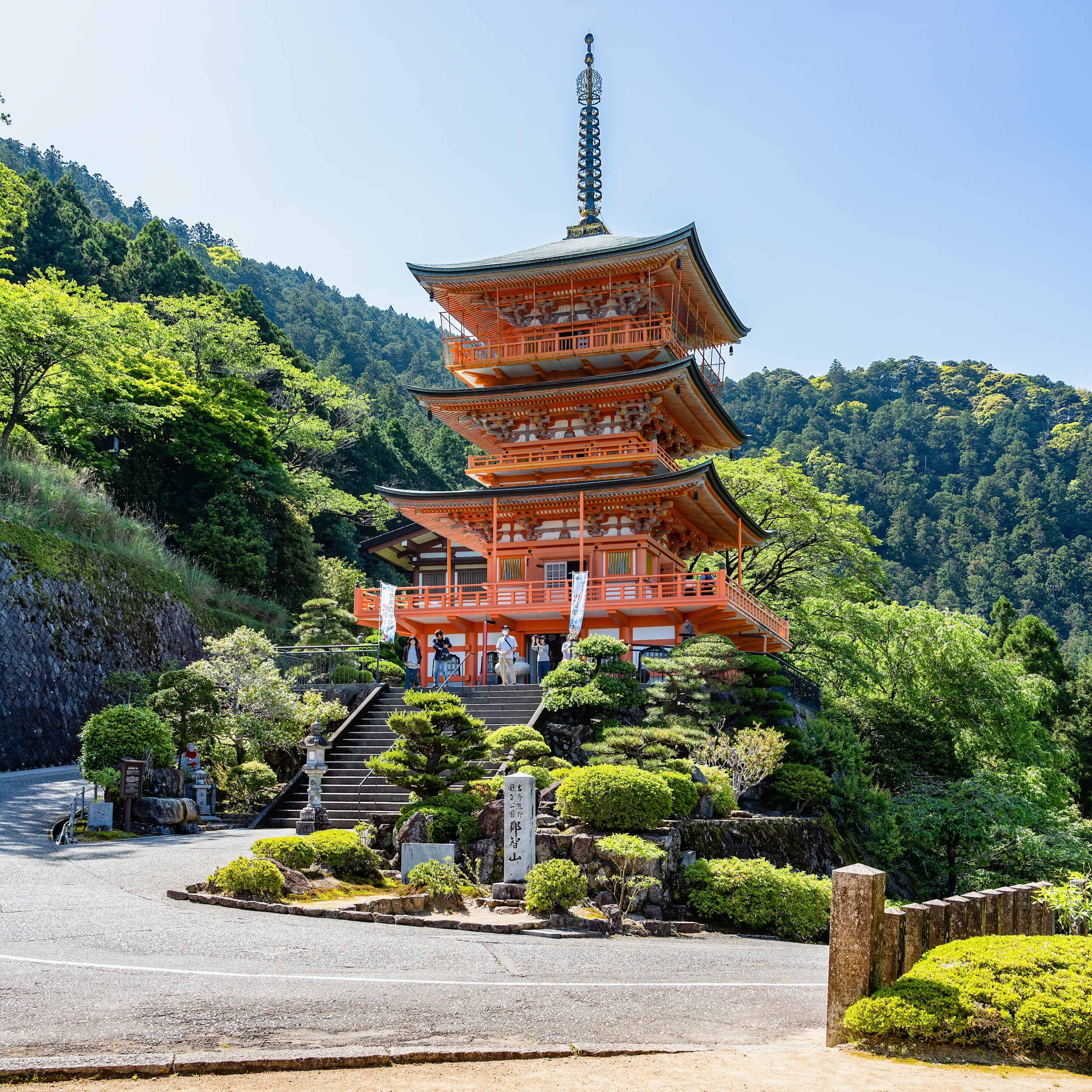
For more than 1,000 years, people have gravitated to the mountains of the Kumano region south of Osaka. Over time, they constructed three grand shrines and numerous smaller ones that fuse Buddhism and Shintoism (Japan’s indigenous, nature-centric religion). Today, those shrines are linked by the Kumano Kodo, a UNESCO World Heritage–designated trail network.
On the most popular route, Nakahechi, you’ll follow in the footsteps of the Japanese imperial family (who started making pilgrimages here in the 10th century) through cedar and cypress forests, crossing mossy bridges over whispering creeks to views of forest-blanketed mountains. The picturesque shrines range from an earth-toned edifice with a cypress-thatched roof to a striking orange pagoda backdropped by a towering waterfall. Along the way, you can soak in hot springs and sleep in family-owned inns.
The full Nakahechi takes five or six days and is rated intermediate to strenuous. You can create a more moderate itinerary, and some tour companies can help you arrange accommodations and luggage transfers. (Both should ideally be done six months in advance.) You can bypass parts of the trail by bus or boat, but chances are you’ll still have to climb some steep forest paths. The trail is well marked in English, and a warm welcome and a hot Japanese bath await you each evening. —K.C.
Queen Charlotte Track
New Zealand
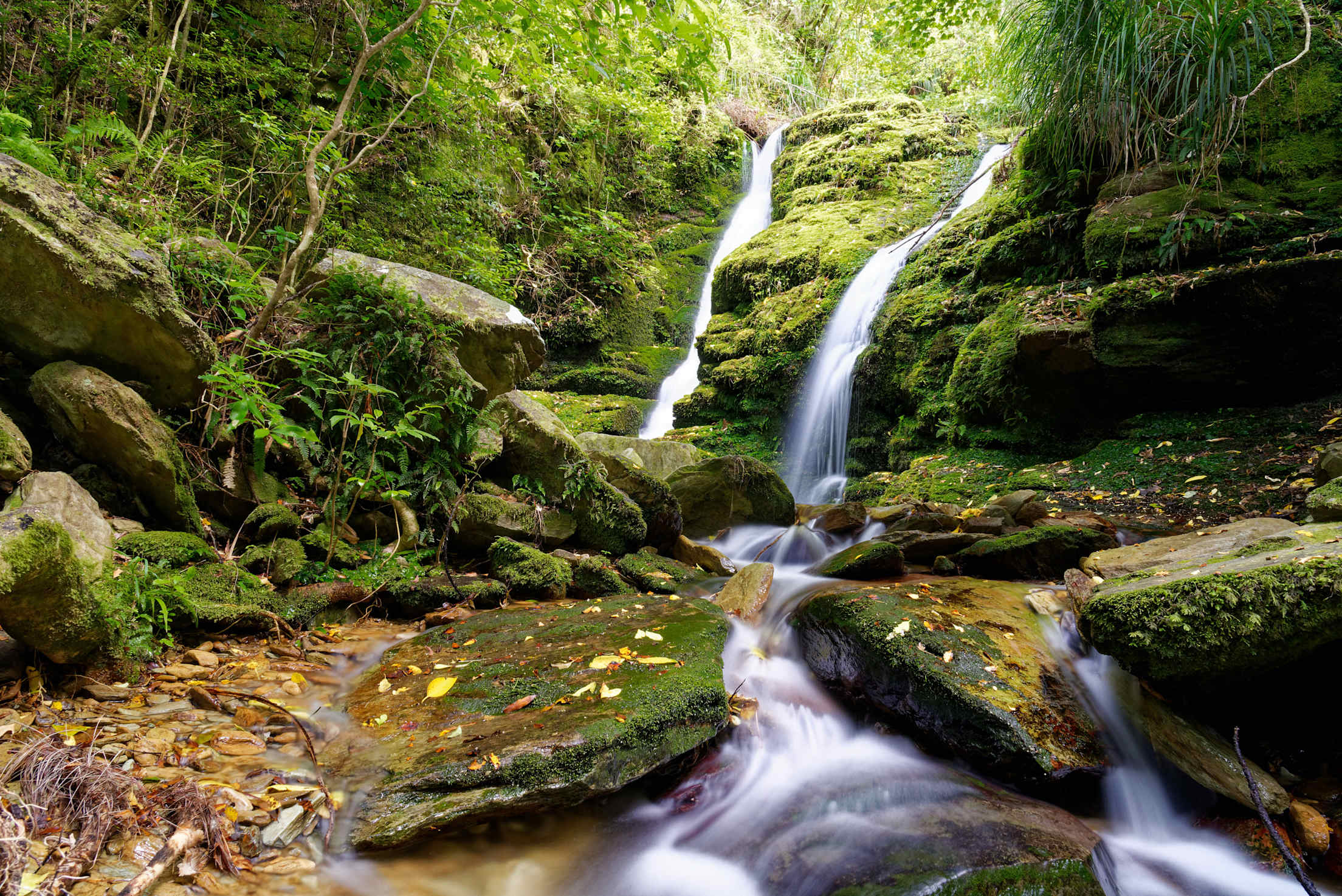
This sublime 45-mile trail squiggles through rainforest and serrated shorelines in the South Island’s Marlborough Sounds—a smattering of peninsulas that resemble green paint splotches in the blue Pacific. An ideal introduction to long-distance walking, this well-marked, moderate track can be completed in four or five days, with four to eight hours of trekking each day.
The adventure begins with a boat ride to Meretoto/Ship Cove—an important sailing hub for Maori voyagers and Capt. James Cook’s local base for his 18th-century expeditions. From there, spend days sauntering through shady, fern-filled forests to views of verdant mountains rippling above cobalt blue bays. Watch for flightless weka birds, and delight in the warbling of bellbirds and tuis. Several lodges along the way have restaurants with blissful bay views and offer complimentary kayaks or paddleboards for guests. For the best weather, visit mid-September through mid-May; many lodges close for the Southern Hemisphere’s winter. —K.C.
Unplug in nature and book a meaningful vacation with AAA Travel.