
How Long Will Your Hybrid Vehicle Battery Last?
The traction batteries in hybrids are good for a long time—but they do wear out eventually.


Hybrid vehicles might be great for gas mileage, but every hybrid owner must face an unfortunate reality: Hybrid batteries don’t last forever. Eventually, they have to be replaced.
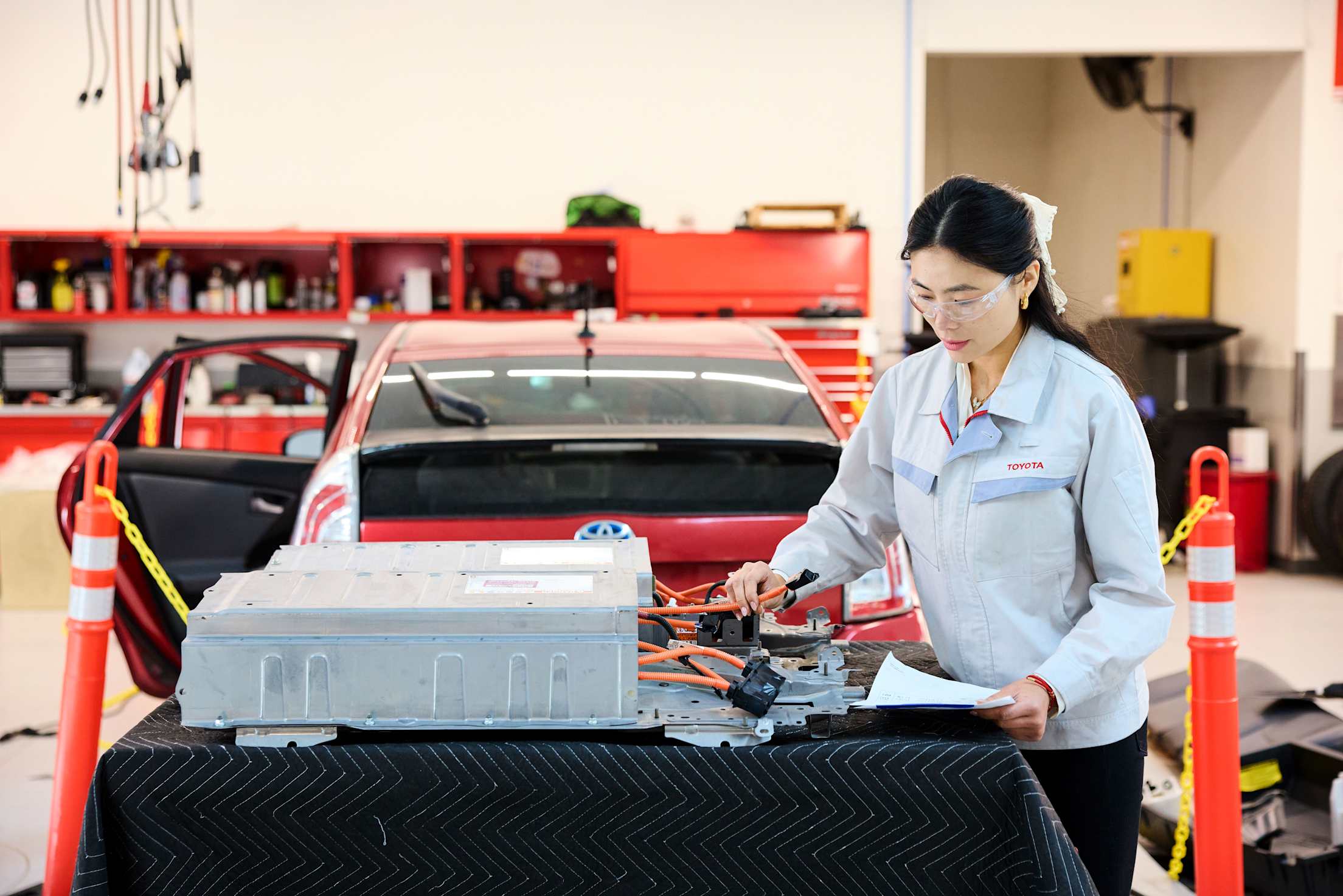
Hybrid vehicles like the Toyota Prius use what’s called a “traction battery” to power the drivetrain. This battery—a collection of multiple lithium-ion cells—exclusively powers the electric motor and is designed to charge and discharge quickly. Hybrids also have a separate lead-acid battery that supports the combustion engine and powers features like the entertainment system.
While lead-acid batteries are prone to abrupt failure, traction batteries die a long, slow death from the day they are installed. Each discharge-charge cycle saps their maximum capacity a little bit, limiting the amount of charge they can ultimately hold.
Unfortunately, there’s no hard rule on how quickly your battery will degrade; that varies widely based on driving habits and environment. It isn’t even easy to figure out how much life your battery has left: While real-time charge level is easily determined, long-term battery health isn’t readily measurable without special equipment. You would need a mechanic or dealership service center to offer guidance—but even then, things may remain murky.
The good news is that hybrid batteries last a long time, says Dylan Bade, electric vehicle analyst for AAA Mountain West Group. You can safely get 100,000 to 150,000 miles out of a hybrid battery, he says, noting that a typical warranty on a hybrid vehicle covers the battery for 150,000 miles or 10 years. “Most are probably good for up to 200,000.”
But all batteries slowly lose capacity from the day they are first put into service, and eventually they will fail. The question is when. Bade says he considers a hybrid battery to be in failure when its capacity has fallen to about 70% of its maximum. “This is where things will begin to impact you,” he says, because the combustion engine will be running more than it should—and you’ll be hauling around a heavy battery that isn’t doing you any good. You’ll know when you get to this point: Most hybrid vehicles display a dashboard alert when there are significant battery issues.
Keeping an eye on fuel efficiency can also help estimate remaining battery lifespan. “The less the electric motor is used, the more gas you’ll use,” says Greg Brannon, director of automotive engineering for AAA. “With very old hybrids, you’re likely to see significant degradation of fuel economy.” When your miles per gallon drop by 10% to 15%, Brannon says it’s time to schedule a service call.
What to Do When Your Battery Starts to Fail
When it comes to fixing a dying battery, Bade says drivers have only one option: replacement. Battery capacity is a one-way street, and there’s simply no way to “top up” a struggling system.
“In newer vehicles, it may be possible to swap out cells in a modular fashion if they are failing individually,” says Bade. But generally, you’ll need to replace the entire pack. Hybrid batteries are costly, but not nearly as expensive as those in EVs. Bade says replacement batteries cost $4,000 to $5,000—about a quarter of what an EV replacement runs.
One alternative for those looking to save money on a replacement is to opt for a refurbished or used battery. These units, which are often salvaged from damaged or end-of-life vehicles, may have some degradation but plenty of life remaining, and can make sense for older cars. “If you have 250,000 miles on the car, are you really going to drive it all the way to 500,000?” says Bade.
At $1,000 to $2,500, a used battery can offer a less costly stopgap until you’re ready for your next vehicle. Sarah Kennedy, manager for battery lifecycle solutions for Toyota Motor North America, says the company is exploring a refurbished battery replacement program for its Prius vehicles.
How to Maximize Hybrid Battery Health
What can you do to keep your battery at optimal health? Brannon says that extreme temperatures—especially heat—are the biggest culprits when it comes to battery degradation.
Driving behavior matters, too. Putting more gas-powered highway miles on the car instead of electric-powered city miles will naturally help extend battery longevity. But it’s where you do that driving that is the critical factor. Brannon says that high heat is a problem because the car has to use extra energy to cool the battery, which makes the battery work harder and impacts its overall health. While you may not be able to avoid the heat if you live in, say, Arizona, even small steps such as parking your car in a garage instead of on the street can improve battery health over the long term.
Other than keeping your car as cool as possible, “there’s no real trick to maximizing battery health except for following your regular vehicle service plan,” Brannon says. “Just make sure the combustion engine is working normally and the tires are inflated properly, as you would with any vehicle.” Most manufacturers also recommend replacing battery coolant at regular intervals, typically starting around 100,000 miles.
Brannon adds that your hybrid’s owner’s manual should be your guide when it comes to maintenance rather than focusing on extra services the dealership may have suggested.
What about plug-in hybrids?
Brannon says that early evidence suggests that plug-in batteries behave differently. “Plug-in hybrids will have a more pronounced decline in range over time,” he says. That’s because they act more like an EV than a hybrid, using the electric motor more frequently—and often exclusively for short trips. As a result, drivers will likely see plug-in batteries fail more quickly. The use of high-speed chargers can also reduce longevity, says Bade.
Brannon stresses that, despite the inevitable decline of battery health, purchasing any kind of hybrid can still make sense. “You need to run the math,” he says, to find out which vehicles are the most cost-effective based on your driving habits. The AAA driving costs calculator is a great place to start with this calculus.
“In general, the more you drive, the more a hybrid pays off,” he says. “But the answer isn’t simple.”
Save 10% on labor, up to $75, and get an extended warranty on parts and labor.*