
Is Your Spare Tire Safe?
Make sure your spare is ready to roll.


It was a hot summer Sunday morning, and I was ready to take my daughters to our favorite swimming hole. But when I started the car, I saw the dreaded blink of a low-tire alert. Sure enough, a quick visual check revealed that the left front tire of my Subaru Outback was visibly low; a closer look found a chunky screw tucked neatly between the treads.
The problem: It was Independence Day weekend, and we were high in the Sierra Nevada, 50 miles from the nearest mechanic—should there even be one open on the holiday. (As I found out later, there wasn’t.)
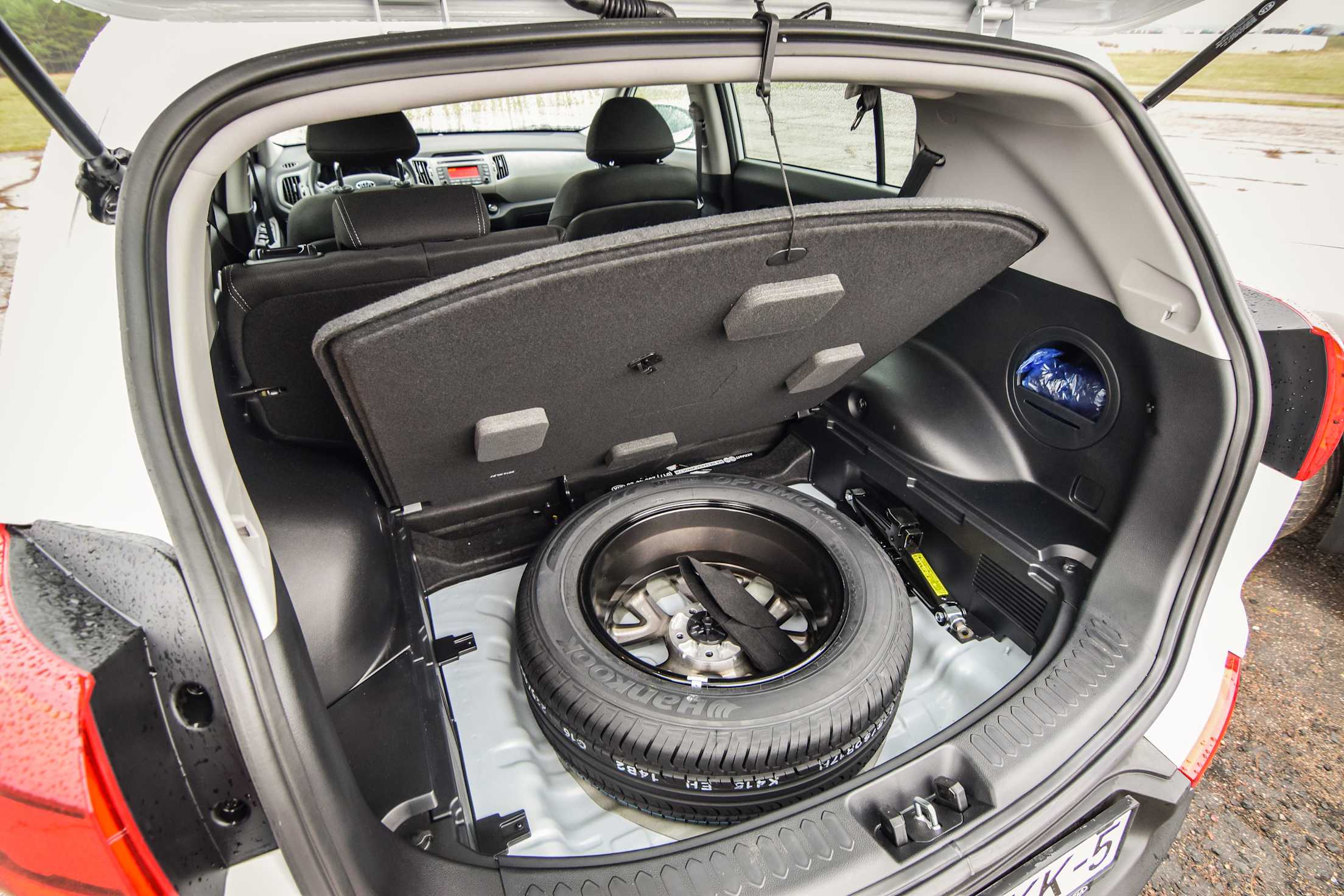
Preparing to handle the situation myself, I opened the spare-tire compartment in the back, only to find a small temporary tire—or “donut”—instead of the full-size one I expected. Checking the owner’s manual, I discovered that my situation was even more dire than I first thought: It said that my donut spare could be used only on the rear wheels of my all-wheel-drive car. That meant that I would need to change two tires, not one, moving a rear tire to the front before installing the donut in its place. Not only that, but the manual specified that I shouldn’t drive on the spare for more than 50 miles—well short of my drive home.
The pickle I found myself in isn’t uncommon; recent data shows that just 30% of new cars come with a spare tire. Most of those spares are, like mine, a donut (aka a temporary, space saver, or compact spare). Other vehicles come with a sealant kit. Some luxury and electric cars have run-flat tires—which feature a durable layer surrounding the inner tire, allowing them to be driven short distances after a puncture—in lieu of a spare. All of these alternatives have limitations compared with full-size spares.
“We get a fair amount of service calls from drivers who are caught unaware when they discover they don’t have the full-size spare they were expecting,” says David Bennett, repair systems manager at AAA.
The best solution to spare tire surprises? Be prepared ahead of time. Here’s how.
Know your equipment.
First, read the tire section of your owner’s manual and make sure you’re familiar with the equipment you’ll be dealing with if you get a flat.
Manufacturers have rules regarding temporary spares, typically recommending keeping your speed under 50 mph and not driving on them for more than 50 miles. “A temporary spare is going to handle differently,” Bennett says. “Braking and steering will both be different than if you had your regular tire or a full-size spare on there.”
You should also be sure you have all the necessary tools to install it, including a jack, lug wrench, and the required key if your wheels have locking lug nuts.
If you have a tire repair kit, it may be a two-part system, with a sealant and an air compressor, or an all-in-one solution in a can. The latter is “basically canned air with sealant in it, so you use it just like you're inflating the tire,” says Frank Goodwin, vice president of auto repair, AAA Mountain West Group. “But a lot of times, the puncture is bigger than what the sealant will repair. If you get a bolt through the tread or something cuts it and it’s on the sidewall, sealant is not going to fix that kind of a problem.” In that case, you would probably need to call for a tow, he says.
Check your spare regularly.
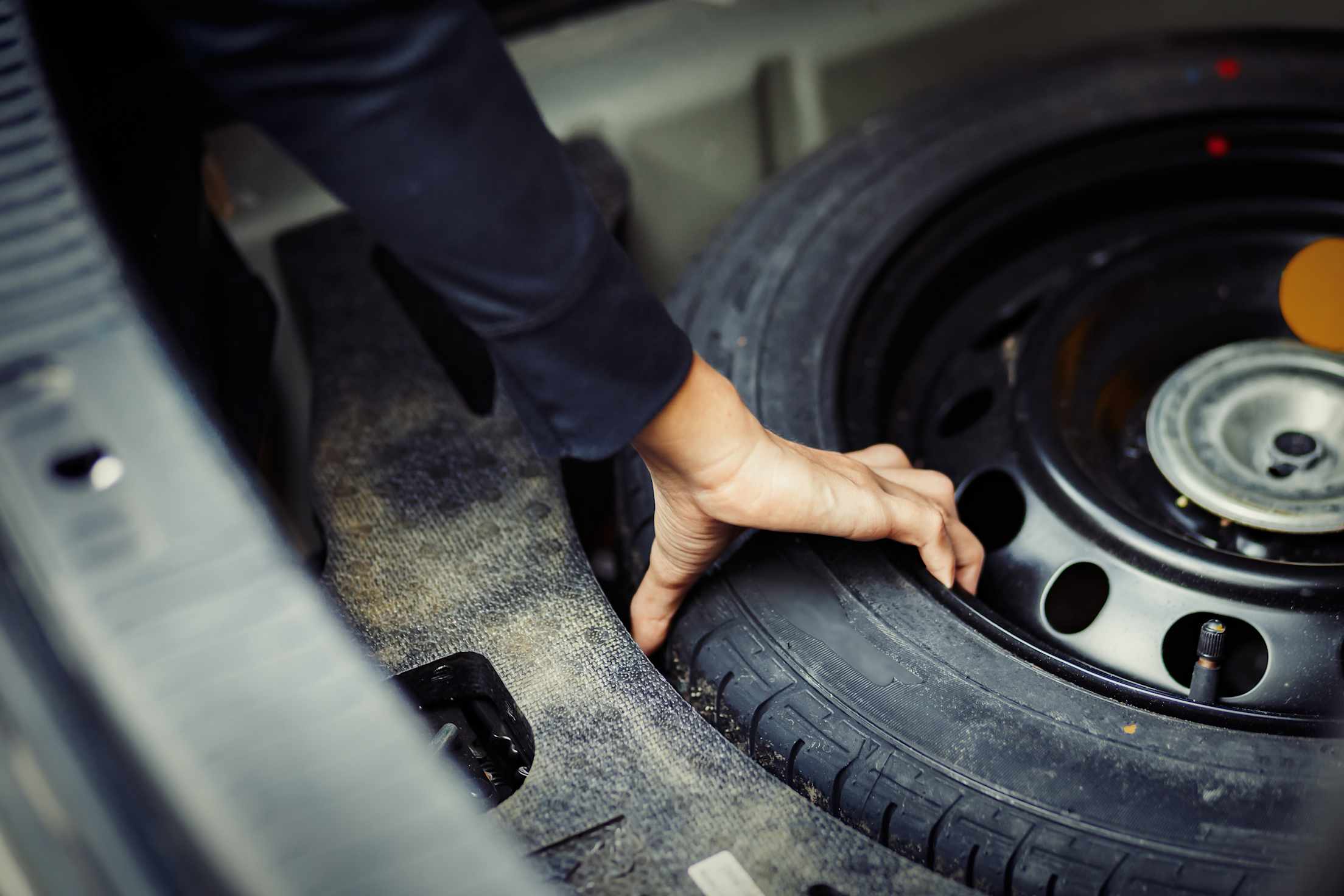
One of the most common mistakes is not checking the air pressure in the spare tire (assuming you have one), which can lead to unpleasant surprises when the tire is needed most. “It’s dangerous to drive on an underinflated tire,” Goodwin says. “It’s a good idea to have your spare checked at the same time as your other tires during your regular service.” Donuts require 50 to 60 pounds of air pressure—almost double that of regular tires.
Most spare tires, both full-size and space-saving, will last seven to 10 years if maintained correctly. However, a number of factors can reduce this lifespan, particularly when tires are mounted externally and exposed to the elements. Even a spare tire stored inside a car and never driven can develop leaks due to cracks from rubber degradation. You’ll want to give your spare a visual inspection, particularly before long road trips or when venturing far from a service station or tow service, to make sure it’s in good shape.
If your car comes with run-flat tires, it’s not a good idea to replace them with regular tires despite possible cost savings, says Goodwin. “Run-flat tires are considered a safety feature of the vehicle, just like seatbelts,“ he says. For this reason, many repair shops have a policy that run-flats must be replaced with the same.
As for me, I was saved by the intervention of a savvy and well-equipped local who got us safely on our way. And I was fortunate enough to find a AAA Approved Repair Center that was open over the holiday weekend. But I certainly won’t be caught unawares again.
Make smart choices, whether you’re buying, selling, insuring, maintaining, or repairing a vehicle.