
Will Your Driver Assistance Systems Fail in the Rain or Snow?
Precipitation can confuse the sensors that driver assistance systems rely on.


Soon after leasing a 2019 Subaru Impreza, I decided to try out its adaptive cruise control on my drive home from work; it was one of the new features I was most looking forward to using. It worked swimmingly for most of the drive, keeping the Impreza as far from the car ahead of me as I wanted, slowing down and speeding up depending on traffic conditions.
But then, at a near stop in deadlocked traffic, I sprayed washer fluid on my windshield. Suddenly, my car sped up at what felt like full throttle. I quickly slammed on the brakes to avoid hitting the car ahead of me, but it left me shaken. It seemed that just spraying fluid on the windshield caused the system to stop recognizing that there was a car ahead of me.
It also made me wonder about the technology: If a little washer fluid could mess with the car’s advanced driver assistance systems (ADAS), what about rain or snow? How does the technology that’s built into our cars work in inclement weather?
How Inclement Weather Impacts ADAS
ADAS have been around for a long time now, evolving from anti-lock braking systems and electronic stability control to the countless technology-led safety features of today, including active parking assistance, adaptive cruise control, automatic emergency braking, blind spot warning, forward collision warning, lane departure warning, lane keeping assistance, and more. These systems use cameras, radar, and other sensors to function. However, those sensors are not infallible.
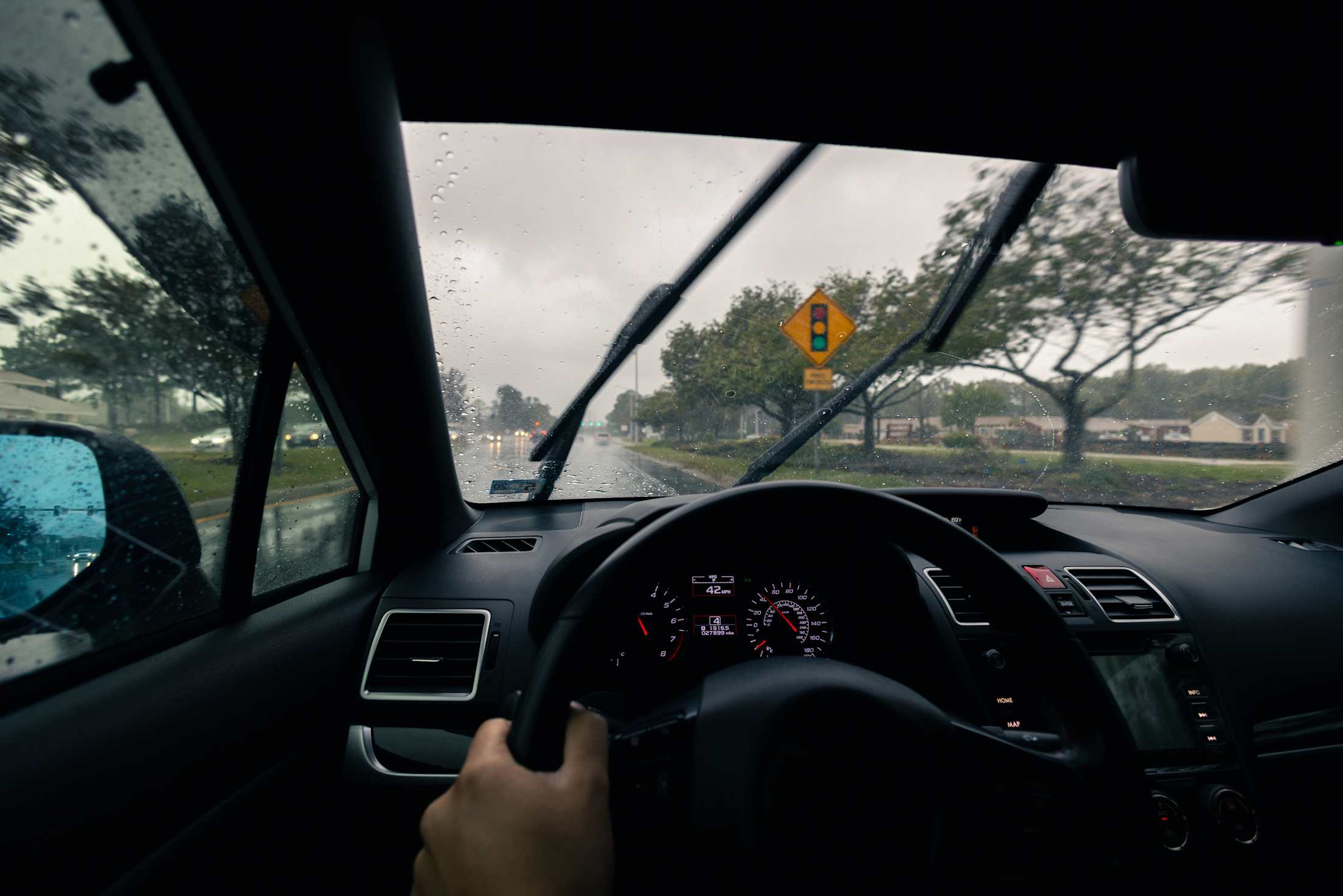
“Rain, snow, heavy fog, and even bright, direct light can obstruct or confuse the sensors [that] cars rely on to know what's going on around them,” said Will Kaufman, editor at Edmunds, the car-buying advice site. “Snow, mud, or dust can cake on the surface over the sensors or windshield and fully block those sensors and cameras as well.” While most ADAS sensors can be affected by inclement weather, cameras are particularly impacted by low-visibility conditions.
How to Know When ADAS Are Impacted
Unfortunately, there’s no way to tell that your car’s ADAS features are compromised by weather until they deactivate. When that happens, you should get a heads-up warning on the dashboard display. “The car might specifically tell you that the sensors are obstructed and you should try cleaning them,” said Kaufman. Unfortunately, such maintenance may not always work or be possible.
Even if you don’t get such a warning, you should assume that the systems may not work if the weather is bad and take additional precautions. “Drivers should not assume that ADAS features are functioning correctly just because they are available,” said Greg Brannon, Director of Automotive Engineering and Industry Relations at AAA.
How to Drive Safely in Inclement Conditions
While you can wipe rain, snow, or mud off of sensors and cameras, this won’t be effective in the long term if bad weather continues.
However, it is possible to adapt ADAS to poor weather. For example, some vehicles allow you to adjust the sensitivity of the automatic emergency braking and forward collision warning systems so they react sooner. Following distance for adaptive cruise control is also adjustable, allowing you to leave more room between you and the car ahead to compensate for slicker roads. That said, “if you're worried about how close your car is following, or concerned about poor road or weather conditions, turn off your adaptive cruise and drive in a way you feel safe,” said Kaufman.
No matter the weather, ADAS are not designed to replace your own good driving habits; they are there to back you up in the event that something does happen. If the ADAS features deactivate, you can still use the same commonsense precautions you should always use while driving, with additional caution for driving in inclement weather. “The rules of safe driving are always the same, regardless of whether or not your ADAS is working,” said Kaufman.
When roads are slick and visibility is low, slowing down is critical, because it allows for greater reaction time if something happens and gives you greater control. Accelerate slowly to prevent your wheels from spinning when pulling off from a stop. When driving in the snow, don’t let four-wheel or all-wheel drive lull you into complacency; while it will help you go, it can’t help you stop.
Keep a larger distance between your car and the car ahead of you. “Braking and steering are universally affected by how much traction your car has, so systems designed to stop your car or help keep it in its lane and on the road are impacted by slippery roads, regardless of visibility,” said Kaufman. The distance gives you a better chance of stopping your vehicle in time and allows you to ease onto the brakes rather than slamming them, which can potentially lock up your wheels.
Ultimately, ADAS aren’t 100% effective, and they don’t replace you, the driver. Safe driving is always your responsibility. “Some of these systems are great conveniences, and some have been shown to reduce the total number of certain types of accidents,” said Kaufman. “If you don't feel safe doing it, don't ask your car to do it for you.”
Make smart choices, whether you’re buying, selling, insuring, maintaining, or repairing a vehicle.