
5 Unforgettable Train Journeys in Europe
Watch history unfold outside your window.


The cheery yellow and green cogwheel train chugs fall ribbons down a cliff into an emerald valley clustered with wooden chalets. The train curves past cows munching in a wildflower meadow. As you weave above wispy clouds into crisp, snowy peaks, the worries of everyday life feel as far away as the treetops thousands of feet below.
Experiences like the Wengernalp Railway offer a way to see destinations you could never visit by car or plane. “Travelers are really excited about train journeys,” says Tonya Leigh, senior director of sales at AAA Travel, adding that rail business is up 100% from last year. “It offers an opportunity to visit multiple places without unpacking and repacking a bag, and to take a slower approach to getting there.”
Just over 200 years ago, the world’s first public railway made its maiden voyage from Shildon to Darlington, England. The ride stoked train mania around the world. Throughout Europe, laborers performed remarkable feats of engineering—gouging through mountains, twisting tracks up vertiginous slopes, and erecting sweeping viaducts over river valleys. Their efforts also sparked social progress: Railway travel expanded women’s freedom to adventure solo and broadened horizons for riders of various incomes. Trains knitted the continent together culturally, shaping everything from the countryside to cuisines to clocks. (Railways necessitated the creation of time zones.)
Today, you can still travel on some of these legendary lines. Of course, the vehicles have been upgraded: While budget-friendly options abound, contemporary train travelers can also find black-tie, white-tablecloth experiences with Champagne and caviar. No matter what you choose, the following itineraries are transportive in more ways than one. Hop aboard these historic tracks to discover cinematic scenery, storied cities, and occasionally something out of the pages of a classic crime novel or children’s fantasy.
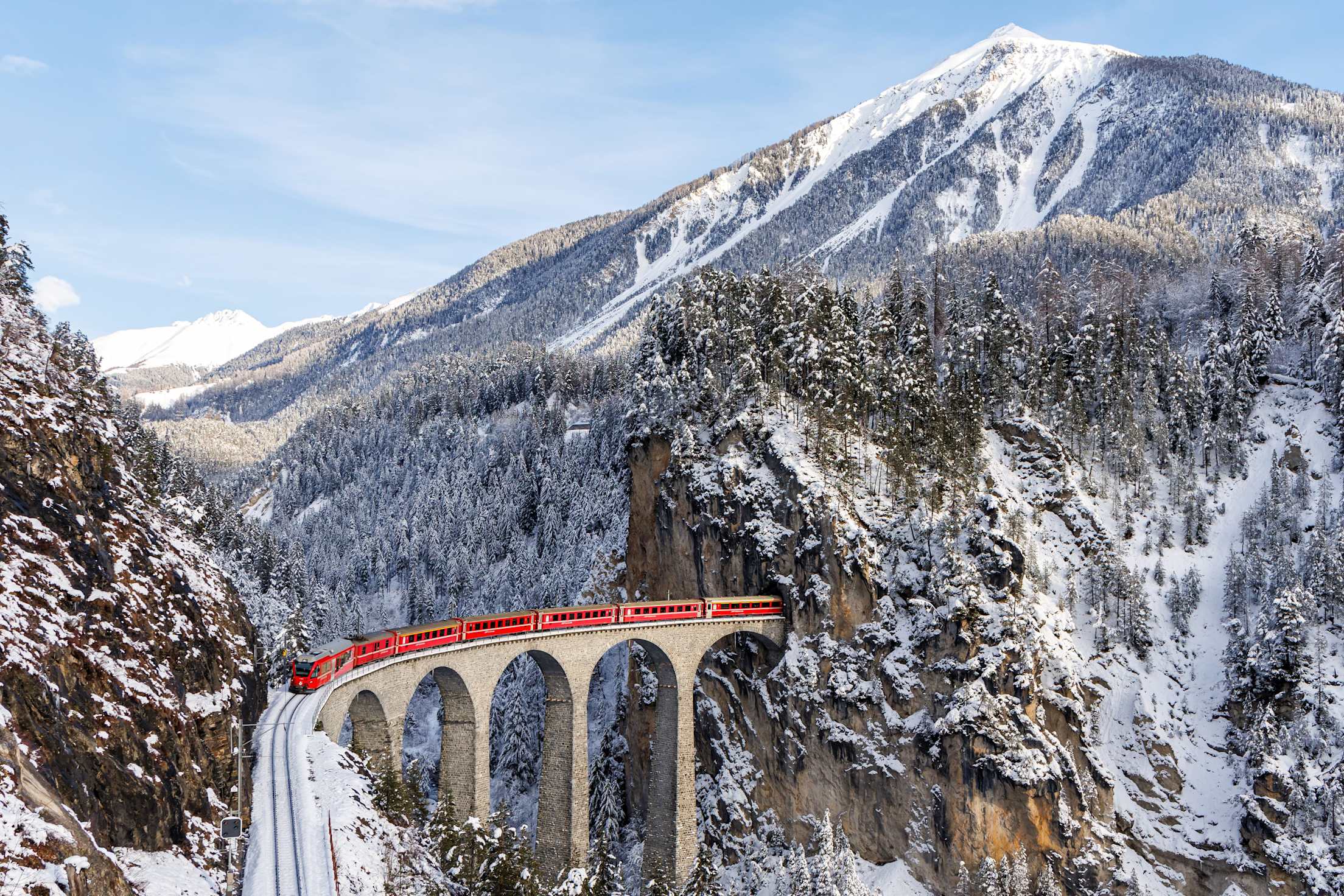
Switzerland
At the mountain pass of Kleine Scheidegg, you hop off the Wengernalp cogwheel train from Lauterbrunnen and stare into the faces of three gigantic peaks: the Eiger, the Mönch, and the Jungfrau. To get an inside peek (literally), catch the famed Jungfrau Railway, which opened in 1912 after 16 years of blasting, hacking, and drilling. Quickly, the train plunges into darkness, plowing 4.7 miles through the Eiger and Mönch before emerging at Jungfraujoch, Europe’s highest train station. From 11,000 feet, the platforms overlook panoramas of icy peaks plummeting into green valleys and a glacier slowly snaking through the Alps.
The Wengernalp and Jungfrau railways can be connected with several iconic train routes for a spectacular spin through Switzerland. From Interlaken, head west in the sleek GoldenPass Express, whose high windows display jaw-dropping Alpine valleys. In Zweisimmen, switch to the old-world GoldenPass Belle Époque train. Lounge in sea-foam green seats with vintage wood paneling as a slideshow of cerulean lakes and mountain villages streams by. Alight in Montreux to amble along Lake Geneva, tour enchanting Chillon Castle, and sip white wine from the castle’s vineyard.
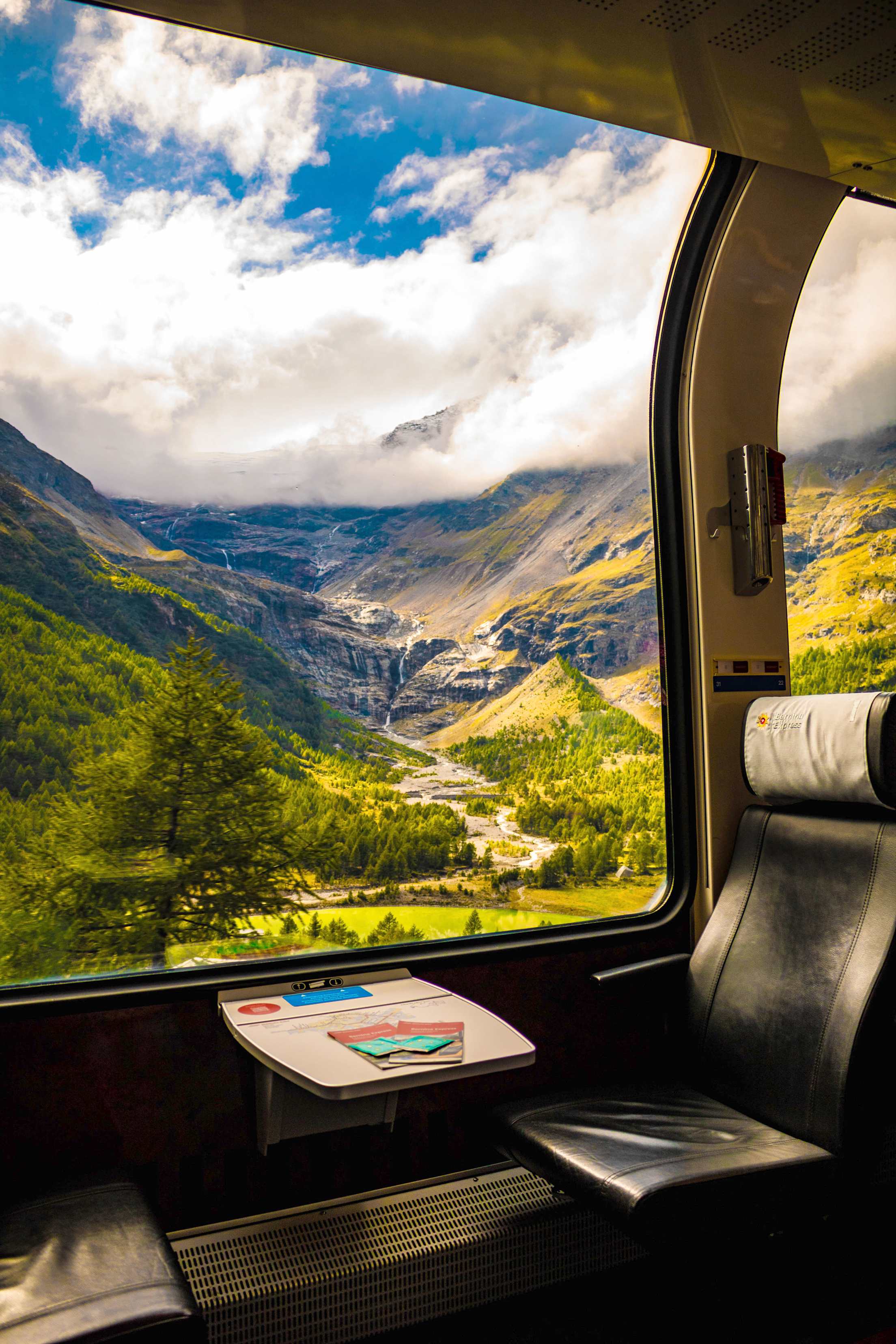
Next, catch the train to car-free Zermatt and hop on the Gornergrat Bahn, launched in 1898 as Switzerland’s first electric cogwheel railway. It climbs nearly 4,800 feet in 35 minutes to views of the shark tooth–shaped Matterhorn peak. On the way back, disembark at Rotenboden station, where from July to mid-August you can frolic among flowers in Europe’s highest Alpine garden.
Then, traipse the 2-mile Riffelsee Lake trail among ibexes and Blacknose sheep to a lake that reflects the Matterhorn. The hike ends at Riffelberg station, where you can jump back on the Gornergrat. Glide along the Rhaetian Railway on two trains. From Zermatt, the Glacier Express traverses 91 tunnels and 291 bridges as it twists toward St. Moritz. Relish Alpine cheeseswith pear bread and Swiss wines as you drink in verdant valley and majestic glacier views. In St. Moritz, board the Bernina Express to Italy. Your windows frame meadows, aquamarine lakes, and waterfalls. In Tirano, Italy, tuck into fresh pizzoccheri, the region’s famous buckwheat pasta, before returning to the land of fondue.
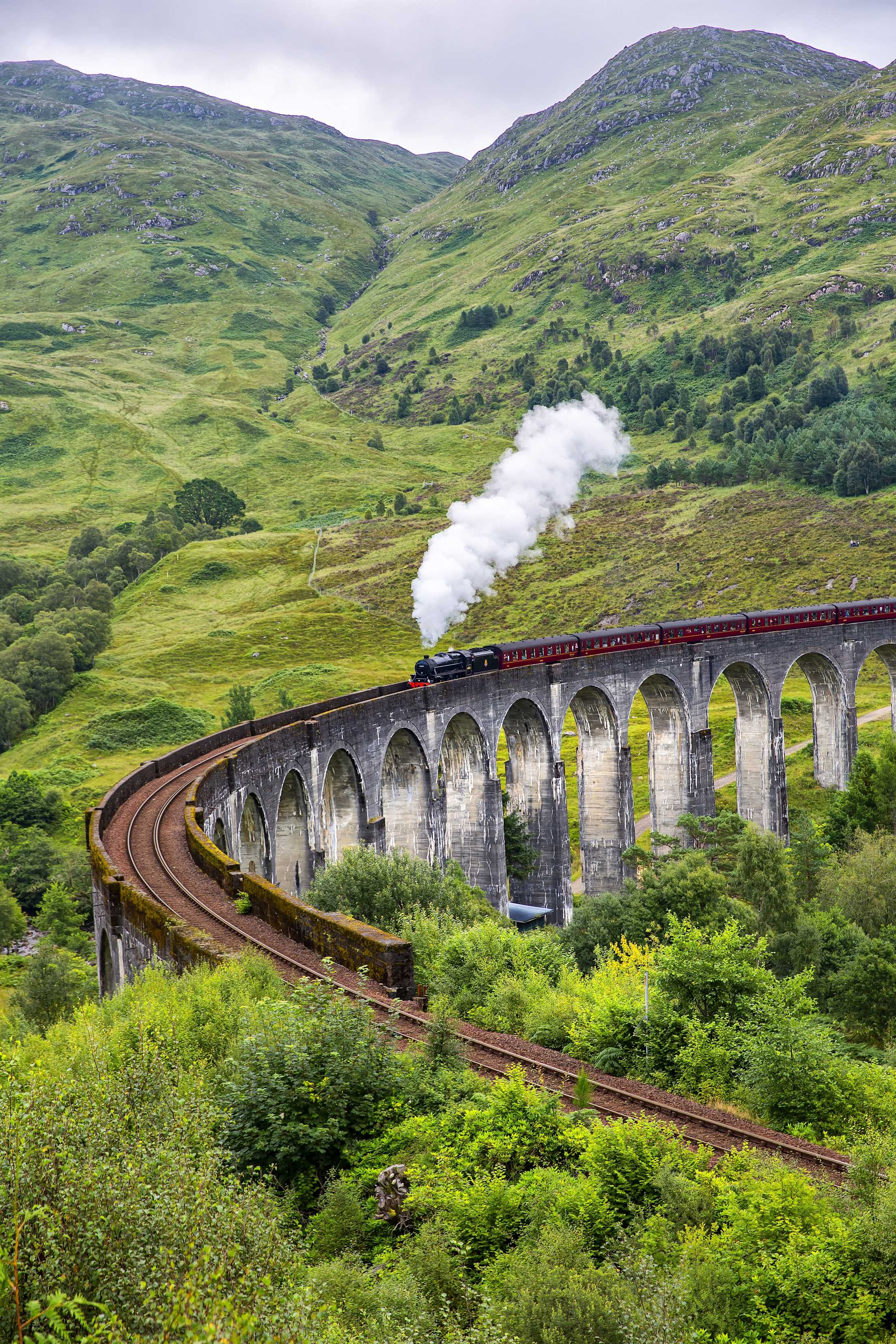
Scotland
Steam billows and hisses out of the black engine as your shiny maroon train swoops over the 21 concrete arches of Glenfinnan Viaduct in the West Scottish Highlands. Outside your window, Loch Shiel gleams silver between lush mountains and tempestuous clouds. This cinematic experience is as close as you can get to riding the Hogwarts Express. The Jacobite Steam Train, with its historic engine, is the same style of locomotive that rattled over the 19th-century viaduct in the Harry Potter films.
The train comes with a dark history lesson familiar to fans of another book-to-screen series, Outlander. It is named after the Jacobite Rebellion, a series of uprisings from 1689 to 1746 that aimed to restore Catholic King James VII and his heirs, including Bonnie Prince Charlie, to the throne. On the shore of Loch Shiel in the shadow of the viaduct, the Glenfinnan Monument tower marks the place where 1,200 Highlanders pledged to fight for Bonnie Prince Charlie in 1745, culminating in the bloody Battle of Culloden.
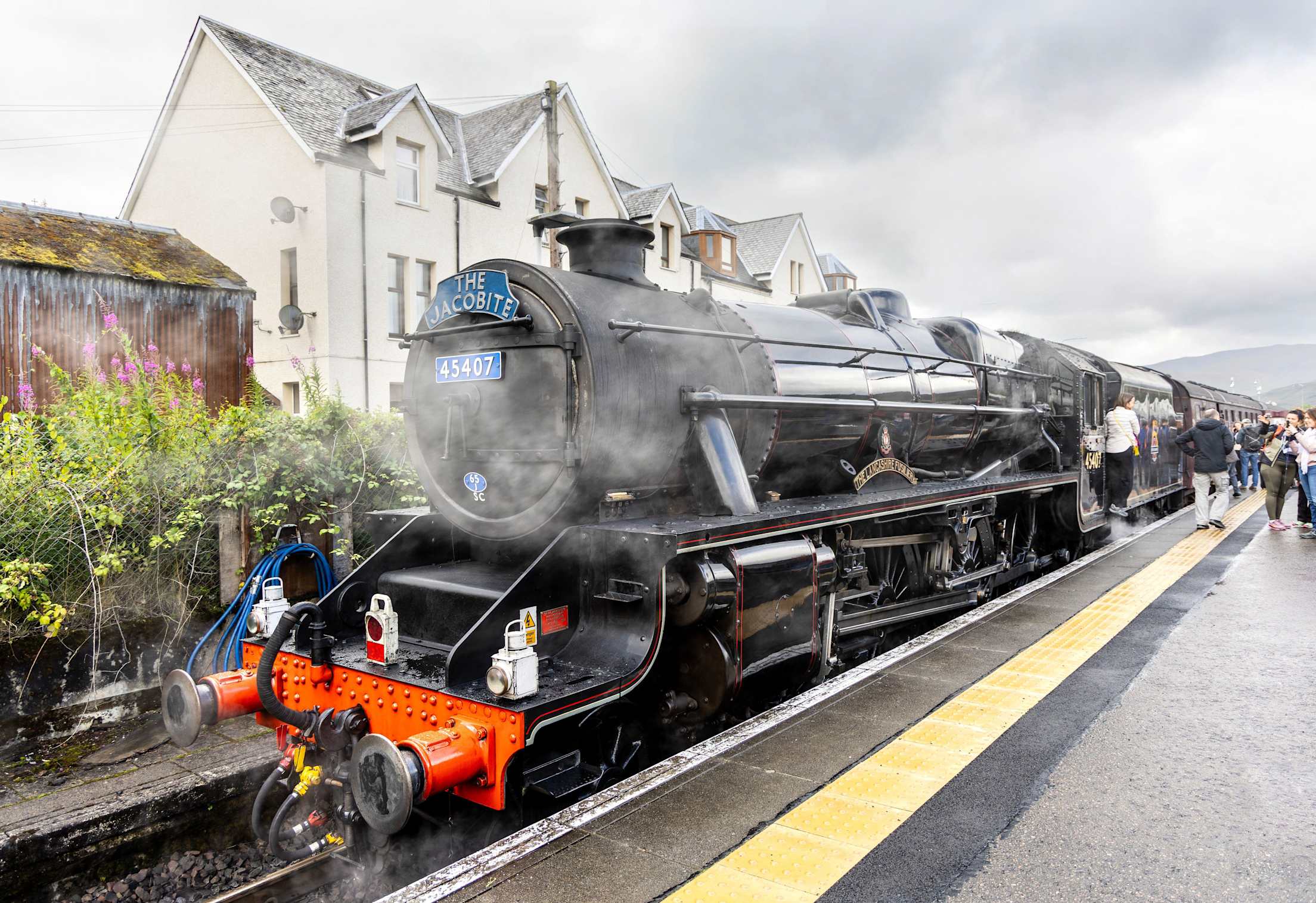
Despite its somber past, the rail journey from Fort William to Mallaig on the famed West Highland Line is considered one of the world’s most scenic. You’ll rumble through moody, misty moors and see rivers and lochs snaking between mountains that resemble giant tortoise shells. In coastal Mallaig, hop on a ferry or take a one-hour wildlife tour (perfectly timed for train stopovers) to spot porpoises, seals, dolphins, and basking sharks.
You can connect your Jacobite jaunt with several classic train trips. From Glasgow to Fort William, your train barrels over the beginning of the West Highland Line, which has been enchanting travelers since 1894. Skirt lochs between hills in painterly shades of green and brown before foraying through boggy Rannoch Moor, full of knobby hills and bulbous mountains. On the way from Edinburgh to Inverness (gateway to the Culloden battlefield), your train canters along the 19th-century Highland Main Line through heather-mottled glens and the dramatic mountains of Cairngorms National Park. If you’re traveling from London to Fort William, Glasgow, or Edinburgh, consider overnighting on the Caledonian Sleeper. On board, get into the spirit with haggis and a wee dram of whisky. Then, drift off in your room and awake to a full Scottish breakfast backdropped by rolling countryside.
France, Italy, Hungary
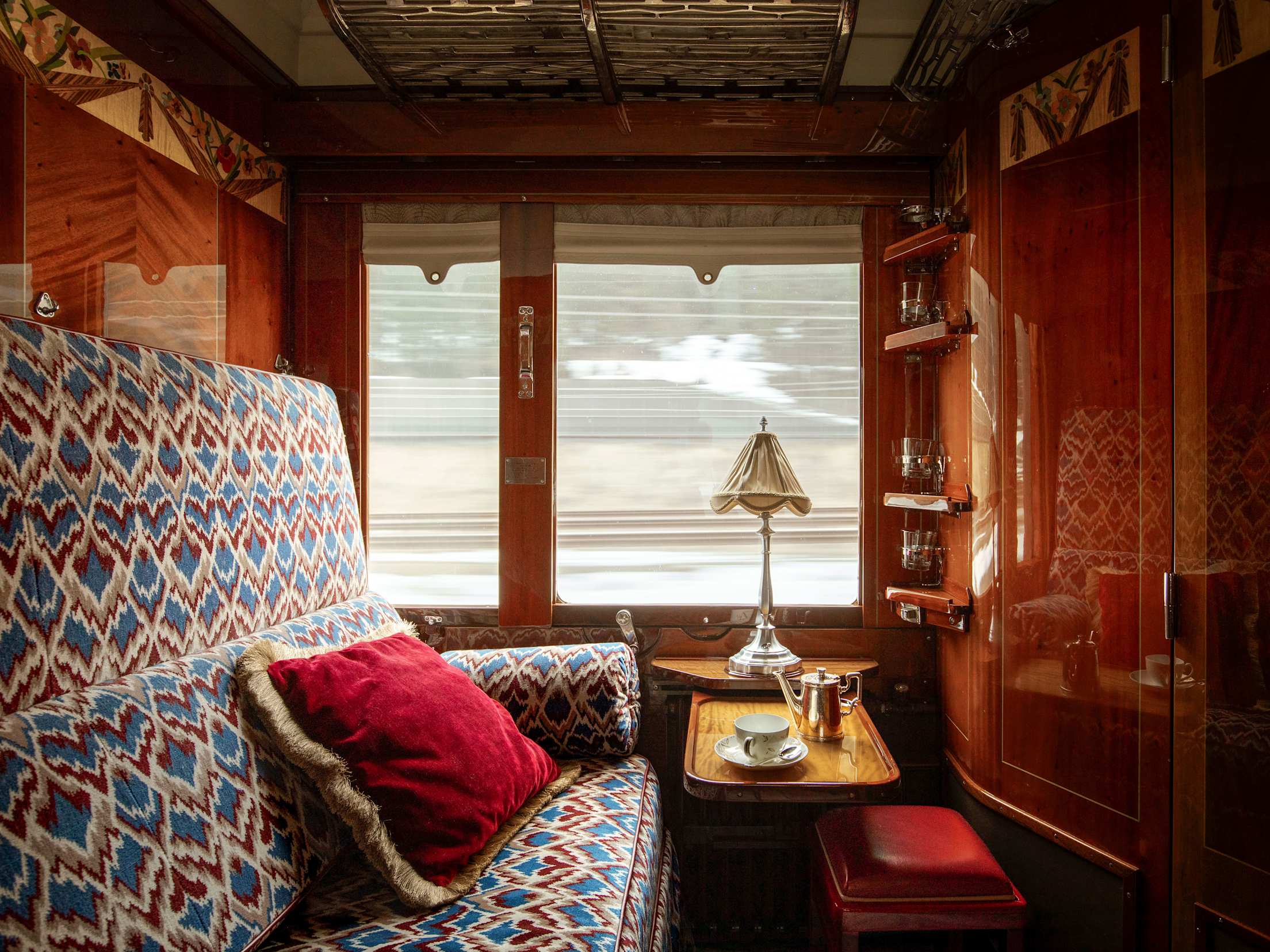
Sipping a martini in the Venice Simplon-Orient-Express’ bar car, you feel teleported into the golden age of rail travel—and perhaps into a classic whodunit. This art deco time capsule, resplendent in midnight-blue velvet, fizzes with conviviality and joie de vivre. Sounds wash over you: clinking glasses, giddy laughter, and jazz tinkling on the baby grand piano. The only thing that could complete the fantasy is if Hercule Poirot, Agatha Christie’s dapper detective, penguin-walked up the aisle and unmasked a murderer.
Since 1883, this legendary train has charioted a glittering cast of monarchs, movie stars, diplomats, spies, rail enthusiasts, and bon vivants across Europe. Today, the routes connect romantic cities like Paris, Venice, Florence, and Budapest. But the true destination is the train itself. From the moment you board, the brass-buttoned staff strikes a balance between impeccable, warm, and charming. Every detail of the restored railcars gleams with the glamour of the 1920s and ’30s. You’ll ooh and ah at glossy wood paneling inlaid with floral flourishes and glass panels depicting classical nudes designed by 19th-century art nouveau jeweler René Lalique.
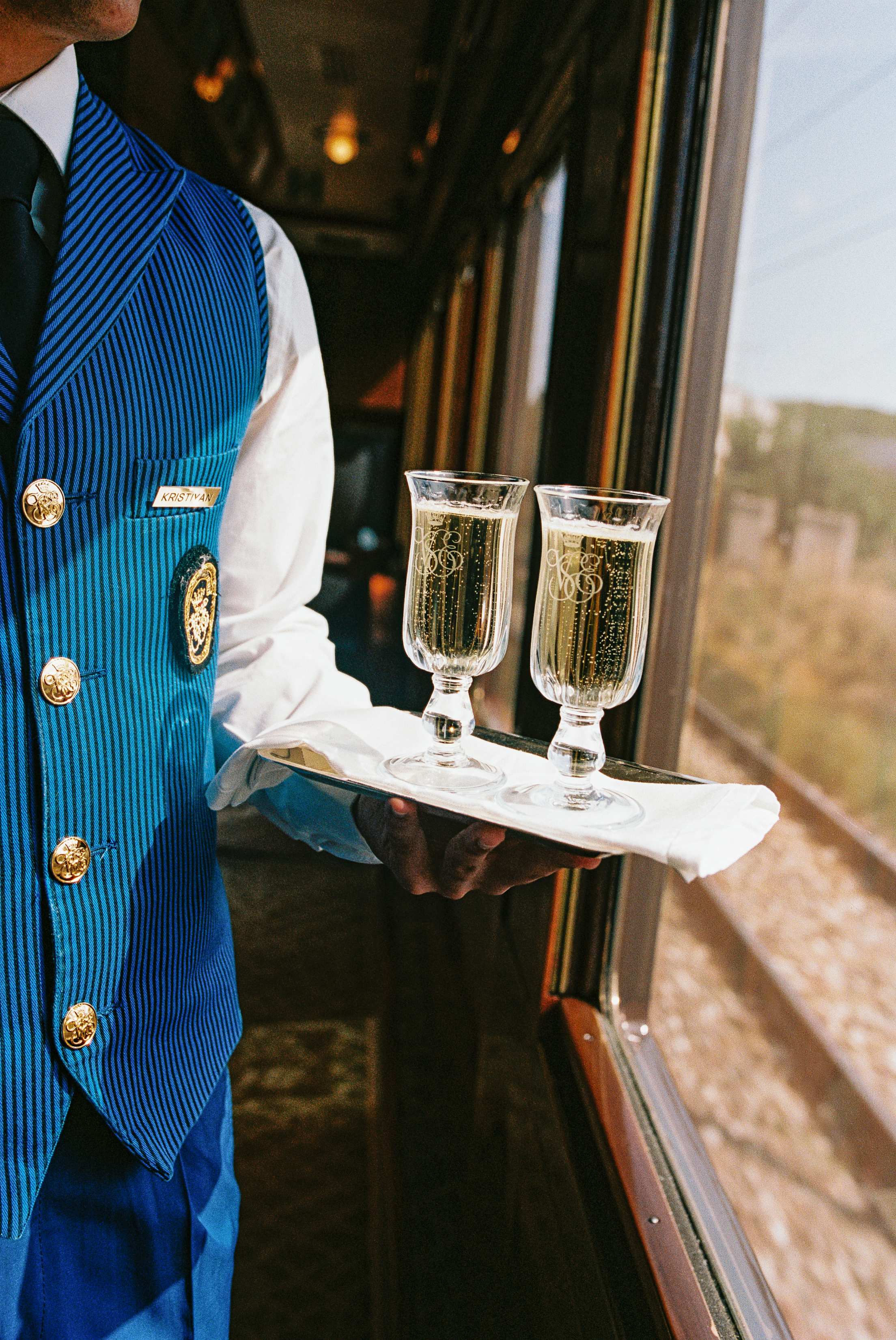
The journey is a moveable feast of indulgences. In the afternoon, sink into your compact cabin’s plush sofa while sipping tea, watching ancient villages breeze by, and nibbling on the “choicest morsels,” as Christie phrased it in Murder on the Orient Express. The four-course dinners are black-tie and cocktail dress affairs that might feature lobster salad brightened with marigolds and turbot kissed with Champagne sauce and caviar. During meals, the sommelier’s wine selection is complimentary, dahling.
After a nightcap and canapes, retire to your quarters, where a steward has transformed your sofa into a duo of cushy bunk beds. The next morning, munch on croissants in bed as the sunrise illuminates the countryside. Then, tuck into luncheon treats like langoustine ravioli before decamping at your destination. As you bask in the afterglow of extravagance, your strolls along Venice’s rippling lagoon, Budapest’s dramatic Danube views, or Paris’ glittering lights will feel even more dreamy.
Norway
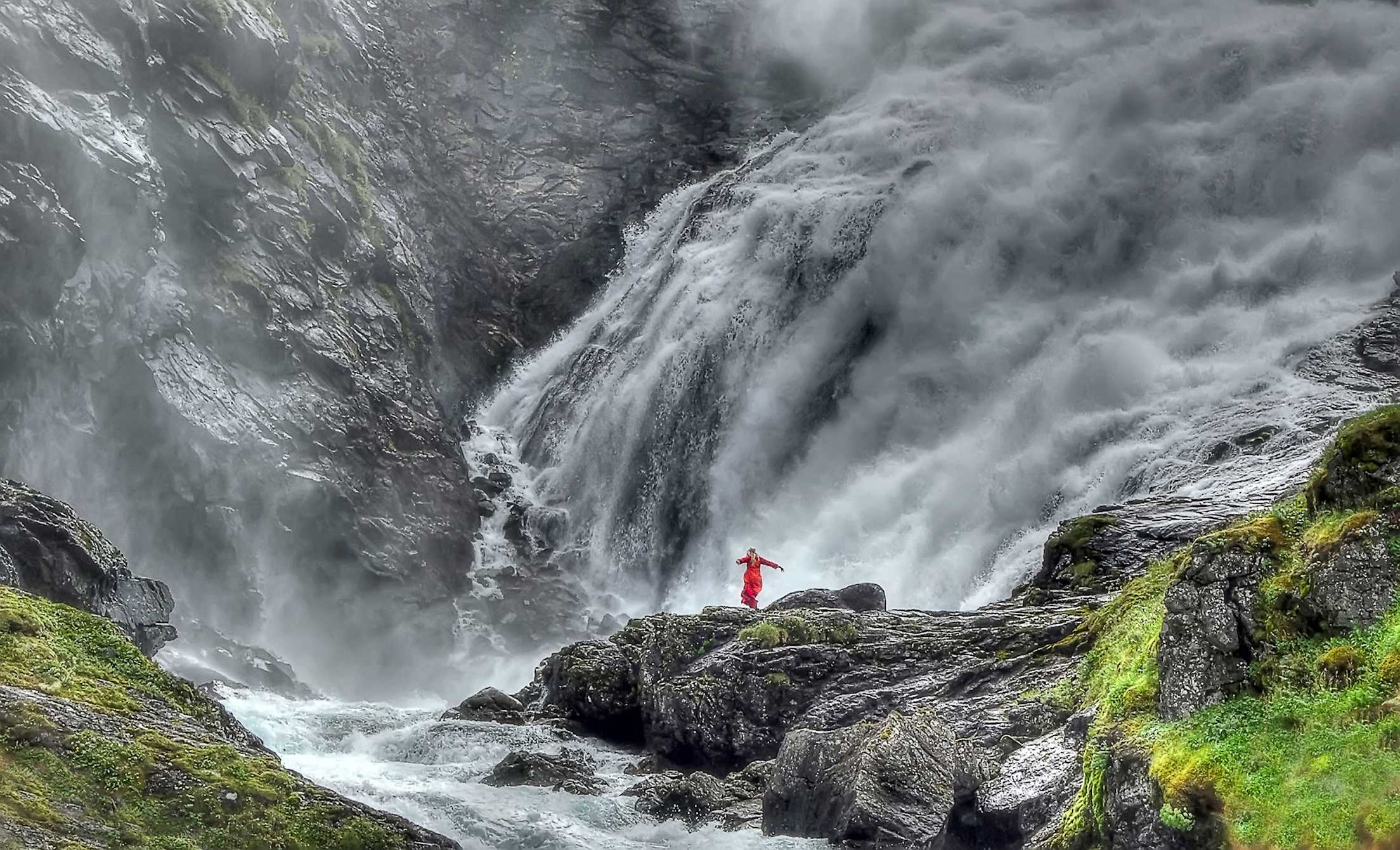
The train door opens, and you and your fellow passengers step into the spray and thunder of Kjosfossen waterfall. As the water ricochets down black rocks blanketed with moss, a woman in a red dress dances on a stone platform. She is portraying a huldra, a seductive forest spirit from Scandinavian folklore. This spellbinding summertime scene is accessible only from the Flåmsbana, which opened to passengers in 1941 and is considered one of the world’s most spectacular train rides.
While the Flåm can be a highlight of any Norwegian vacation, travelers often book the ride as the centerpiece of the “Norway in a Nutshell” itinerary, bookended by stints on the scenic Bergen Line. This route typically begins in the country’s cool capital, Oslo. Here, you can float on a sauna in the urban fjord with KOK Oslo, get face-to-face with Edvard Munch’s The Scream in the National Museum, peruse 200-plus sculptures by Gustav Vigeland in Frogner Park, and ponder the history of activism at the Nobel Peace Center.
The itinerary continues on the Bergen Line train from Oslo to Myrdal. Snack on Norwegian waffles with jam and sour cream as you gaze at lake after lake mirroring conifer forests, rugged rockscapes, and snow-shrouded mountains. In Myrdal, snag a tangerine-tinted seat in the retro, wood-paneled Flåmsbana. As the train winds above tranquil valleys, you can watch bicyclists zipping along riverbanks and waterfalls crashing down cliffs. In an hour, you’ll roll into the fjordside village of Flåm. At Flåm’s wood-carved Aegir Gastropub, feast on Viking-inspired dishes such as locally sourced pulled goat and lamb sausages with lingonberries.
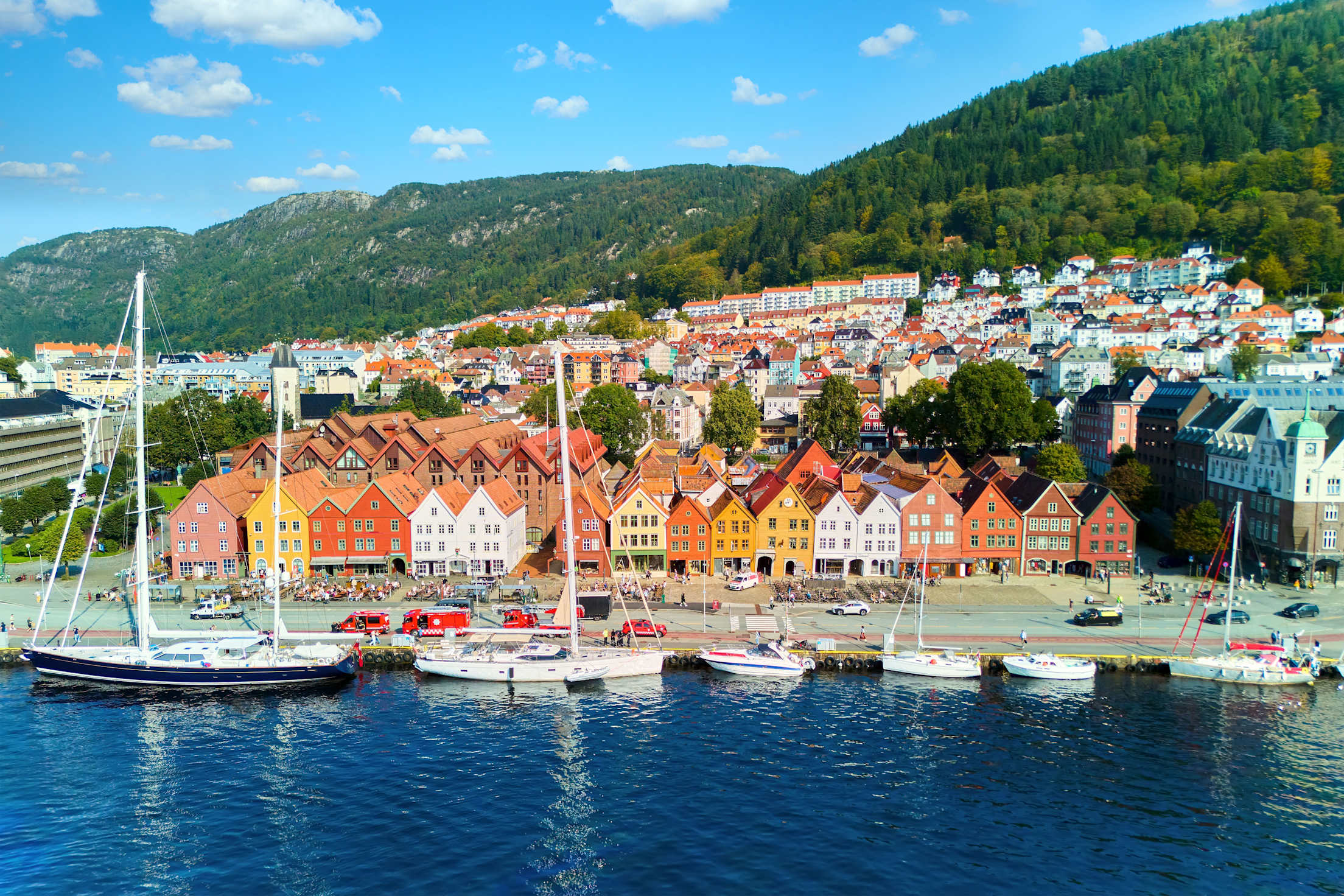
Next, ferry the fjord’s glassy waters between epic cliffs and storybook villages while learning about Norse legends and spotting eagles, seals, and porpoises. Then, bus and train to Bergen, streaming past even more raging rivers and reflecting lakes. In Bergen, wander through the waterside Bryggen district, with its bright buildings in shades of auburn and butter. At the Old Bergen Museum (open mid-May through mid-September), time travel to the 1800s, when Bergen was Europe’s largest wooden city. From the wharf, zip on a boat to the small island of Holmen where, at Cornelius Sjømatrestaurant, you can savor fresh seafood surrounded by a watery wonderland. If your schedule allows, cruise along the coast and through Sognefjord, past picturesque villages and waterfall-laced mountains.
Portugal
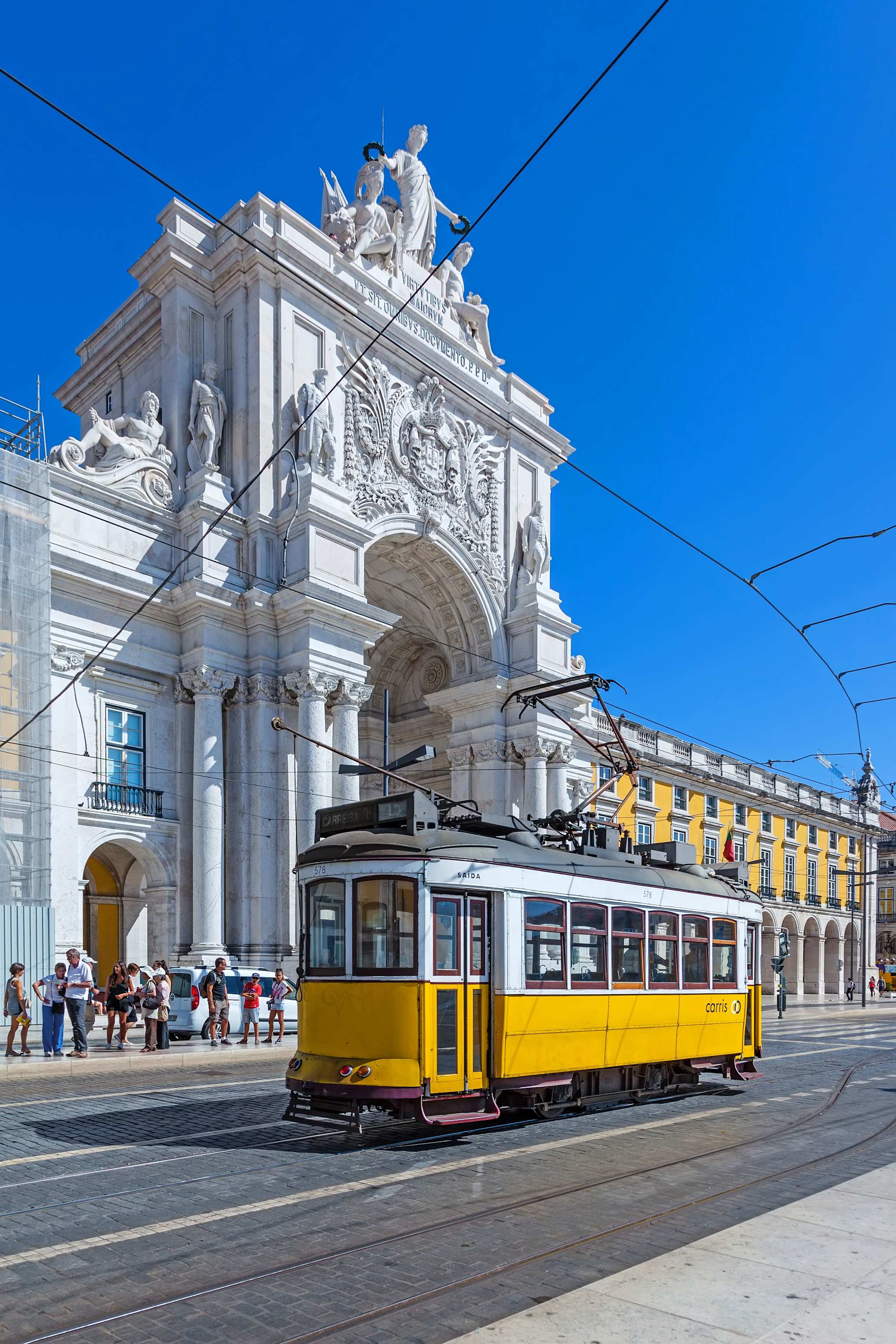
As you trundle through Lisbon’s curvy, cobbled streets in a mustard-yellow tram, you can’t help but be seduced by Portugal’s romantic modes of transport. The city’s electric trams debuted in 1901 and remain popular—especially tram 28, which transports travelers between beloved districts and iconic sites. Jump off at bustling Portas do Sol plaza and hike up to Castelo de São Jorge to learn about the medieval castle and its Iron Age roots. Then, stroll under shade trees among peacocks and peer over the castle’s parapets at the terra-cotta roofs along the Tejo River. At Time Out Market in the Mercado da Ribeira, graze on garlicky pica-pau steak, cod croquettes, and mussels in tomato sauce from the city’s renowned chefs. At night, swoon over live fado music in traditional restaurants like O Faia and A Severa.
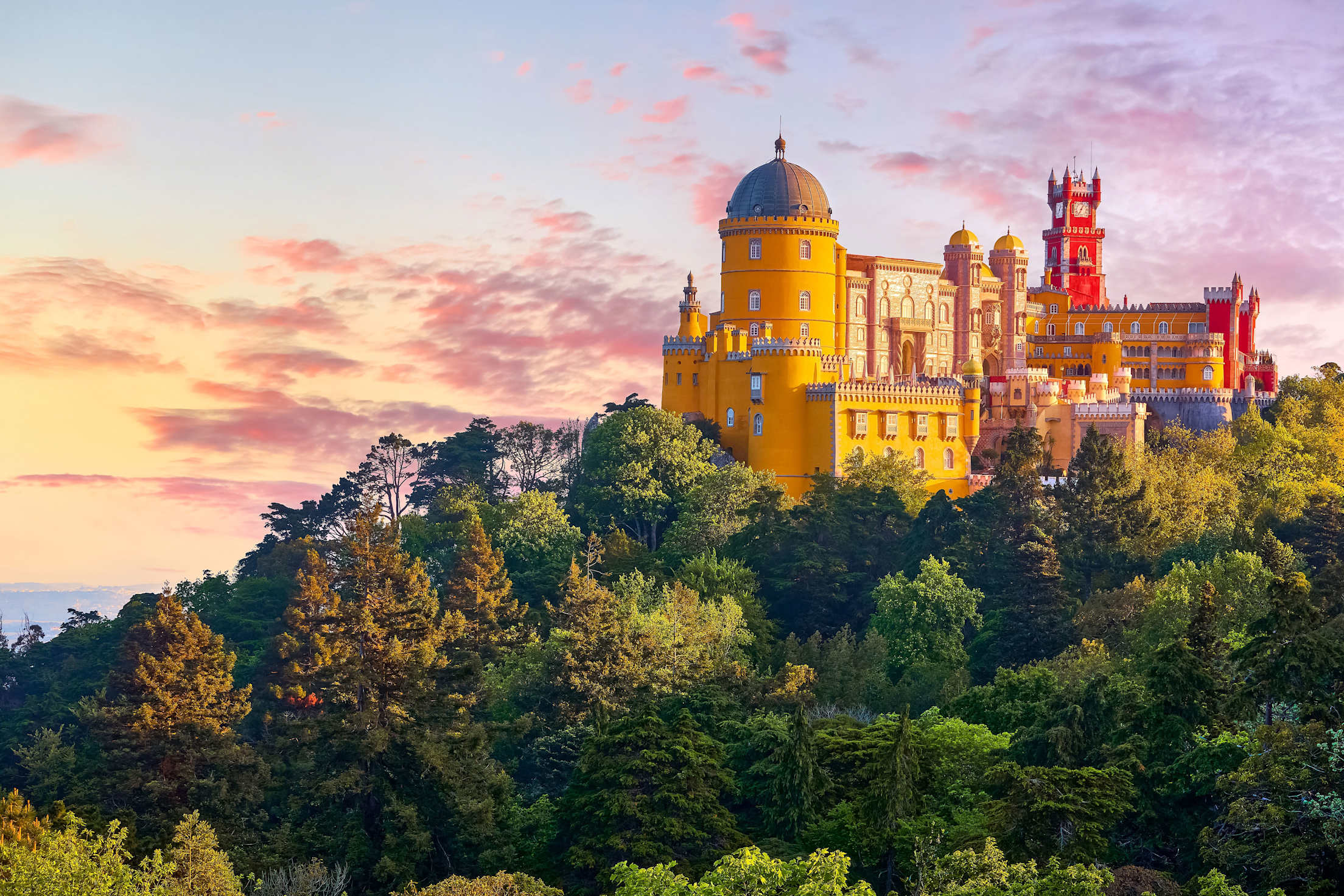
Take a side trip to Sintra, a UNESCO World Heritage town and playground for royalty. Here, meander through an enchanting woodland to Pena National Palace, a citrus-colored architectural confection co-designed by the “King-Artist” Ferdinand II. Next, head back to Lisbon, then whoosh past verdant hills on a high-speed train to Porto, a coastal city on the Douro River. Browse for books at Livraria Lello amid neo-Gothic and art nouveau elegance. Pop into the 1916 São Bento train station, gloriously decked with blue and white tiles called azulejos. Across the river, tour the famed port wine cellars in Vila Nova de Gaia’s warehouse district, then cross back over the Dom Luís I Bridge to ramble Porto’s waterfront Ribeira and dine in eateries under stone arcades.
Next, breakfast on a boat as you cruise up the Douro River to the Douro Valley, the birthplace of port. Sip this famous export (and other red wines) at one of the many vineyards that stripe the hillsides above the river. Arrive early at Pinhão Railway Station to admire the 3,000-plus azulejos that depict winemaking, then train through terraced vineyards beside the river. Keep an eye out for historic wooden boats called rabelos. Today, they ferry tourists. But historically, brave boatmen steered these vessels laden with heavy casks through the rapids to Porto, so the world could savor Portugal’s famed fortified wine.
Book your dream train adventure with the experts at AAA Travel.