
Will Facial Recognition Replace Your Driver’s License at the Airport?
Here’s what you need to know about biometric screening expanding at airports around the world.


Many airports have rolled out biometric electronic gates, TSA PreCheck Touchless ID lanes, and other facial recognition or fingerprint-powered advancements designed to enhance and speed up security. Some travelers have already encountered these systems, especially when journeying abroad. U.S. citizens arriving at London Heathrow, for example, can often bypass long lines and interviews at immigration by zipping through a kiosk that scans your passport, then takes a picture of your jet-lagged face so unflattering it makes your passport photo look like a glamour shot.
For years, U.S. airports have been experimenting with this technology, mostly for arriving international travelers. But this year, more and more airports have made biometric identity confirmation available to U.S. citizens at departure and arrival. U.S. Customs and Border Protection (CBP) estimates that a biometric entry-exit system could be implemented in all commercial airports and seaports within three to five years.
Most of these processes are optional for U.S. citizens, but some are required, which raises concerns about privacy and profiling. Here’s what you need to know about the basics of travel biometrics, where you’ll encounter it, and how to opt out if you wish.
Biometric Exit
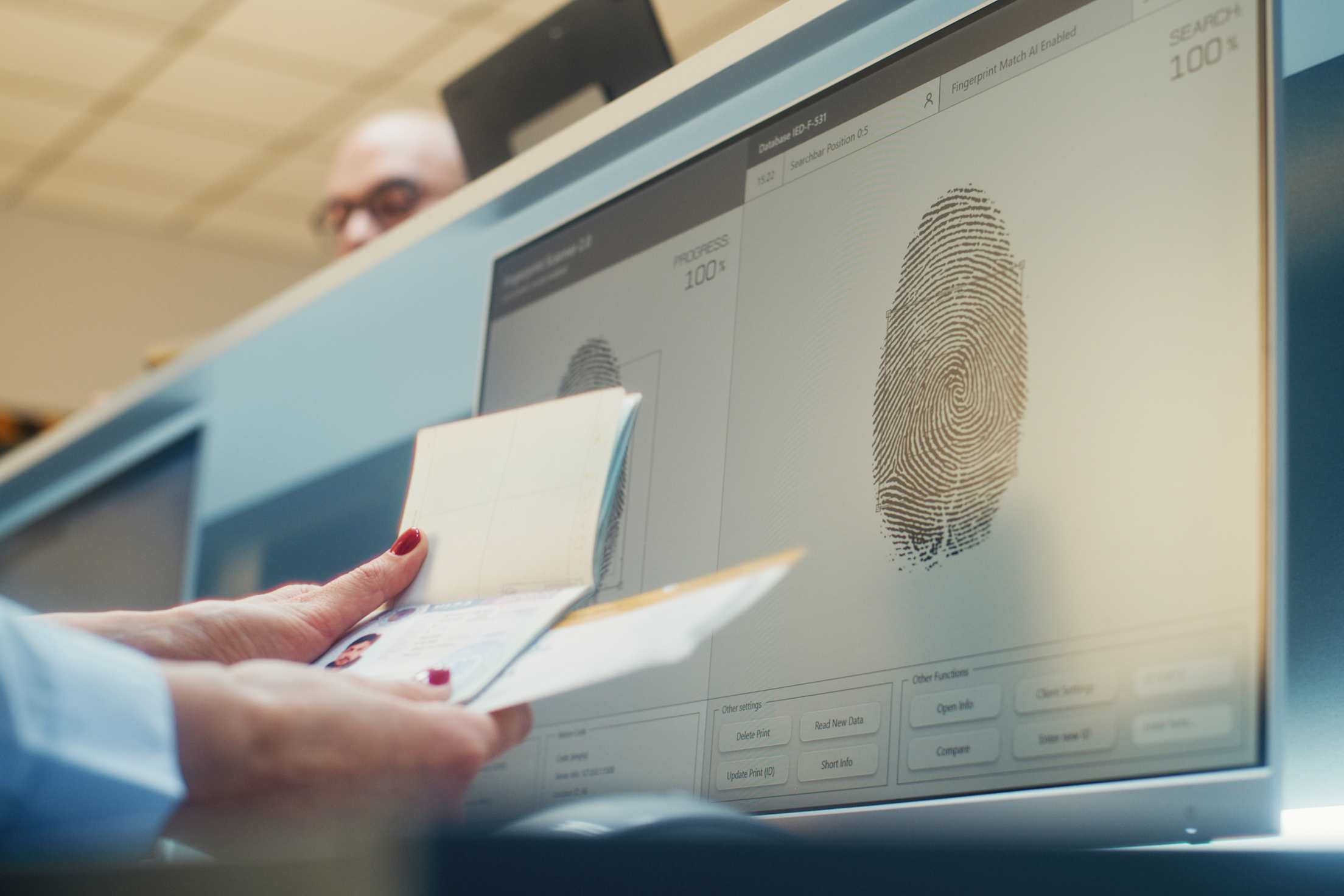
Run by CBP, biometric exit systems use facial recognition and sometimes fingerprinting for travelers departing to international airports. This process speeds up pre-flight security and reduces human error in reviewing passport photos; you’ll still need to pass through customs when you arrive at your destination. As you line up to board your flight, instead of an agent manually reviewing your passport, you’ll typically pass through an e-gate—a barrier with glass doors and a biometrics-enabled camera. The camera photographs your face and matches it to photos previously taken for passports or other government documentation. In some instances, federal officers manually take photos of passengers and analyze them with facial recognition technology. While use of a biometric exit is optional for U.S. citizens, the technology is rapidly expanding to airports around the country.
This process is currently used at 61 airports, including Anchorage, Seattle-Tacoma, Portland, Salt Lake City, San Francisco, San Jose, Oakland, Sacramento, Los Angeles, Phoenix, Tucson, Denver, and Las Vegas. To find all U.S. airports using biometric exit, visit the CBP site and enter “exit” under “Biometrics Technology Available.”
Biometric Entry
All U.S.-based international airports use biometric entry at CBP inspection areas, primarily for foreign nationals arriving in the country. Now, it’s increasingly being used for U.S. citizens through programs such as the CBP’s Enhanced Passenger Processing (EPP), which streamlines and automates the customs assessment, allowing CBP agents to focus resources on higher-risk travelers. In airports that use EPP, when travelers enter the CBP inspection area, a camera photographs their face and matches it to information already on file. EPP is used at more than 20 airports, including Phoenix, Denver, and Los Angeles. This process is voluntary for U.S. citizens, and no enrollment is necessary.
TSA Facial Comparison Technology
The Transportation Security Administration (TSA) is using facial recognition technology at more than 350 airports nationwide for both domestic and international travel. According to the TSA, facial verification helps accurately match the traveler to their ID, thus enhancing security. As travelers enter the security zone, an agent asks them to have their photo taken by a camera that assists in verifying their identity. This process is voluntary; if you opt out, an agent will check your photo ID and boarding pass manually and you will not lose your place in line.
TSA PreCheck Touchless ID
If you’re enrolled in TSA PreCheck or Global Entry, have a passport, and are traveling with a participating airline (Alaska, American, Delta, Southwest, or United), you can opt in to Touchless ID by updating your profile with the airline. This will allow you to breeze through a dedicated TSA PreCheck Touchless ID lane at security, where a camera will verify your identity using facial recognition technology. In most instances, this process will be even faster than the regular TSA PreCheck lane, and you won’t have to fumble with documents. A handful of airports even allow TSA PreCheck Touchless travelers to use facial verification in lieu of the required ID check at baggage drop.
This program is available at 65 airports, including Anchorage, Seattle, Portland, Salt Lake City, San Francisco, Oakland, San Jose, Sacramento, Los Angeles, Phoenix, Las Vegas, and Denver. For the full list, visit the TSA PreCheck Touchless ID site.
TSA Clear E-gates and Pods
Clear, a travel screening company, offers both regular TSA PreCheck and an upgraded membership program called Clear+ for $209 per year. Clear+ allows travelers passing through security to verify their identity at a Clear+ pod with facial scanning, then get an escort to the front of the security line. Clear is also rolling out biometric e-gates for Clear+ members so they can bypass the pod and the TSA PreCheck line and zip through security even faster. This program is available at more than 70 airports and stadiums.
The European Union’s Entry/Exit System (EES)
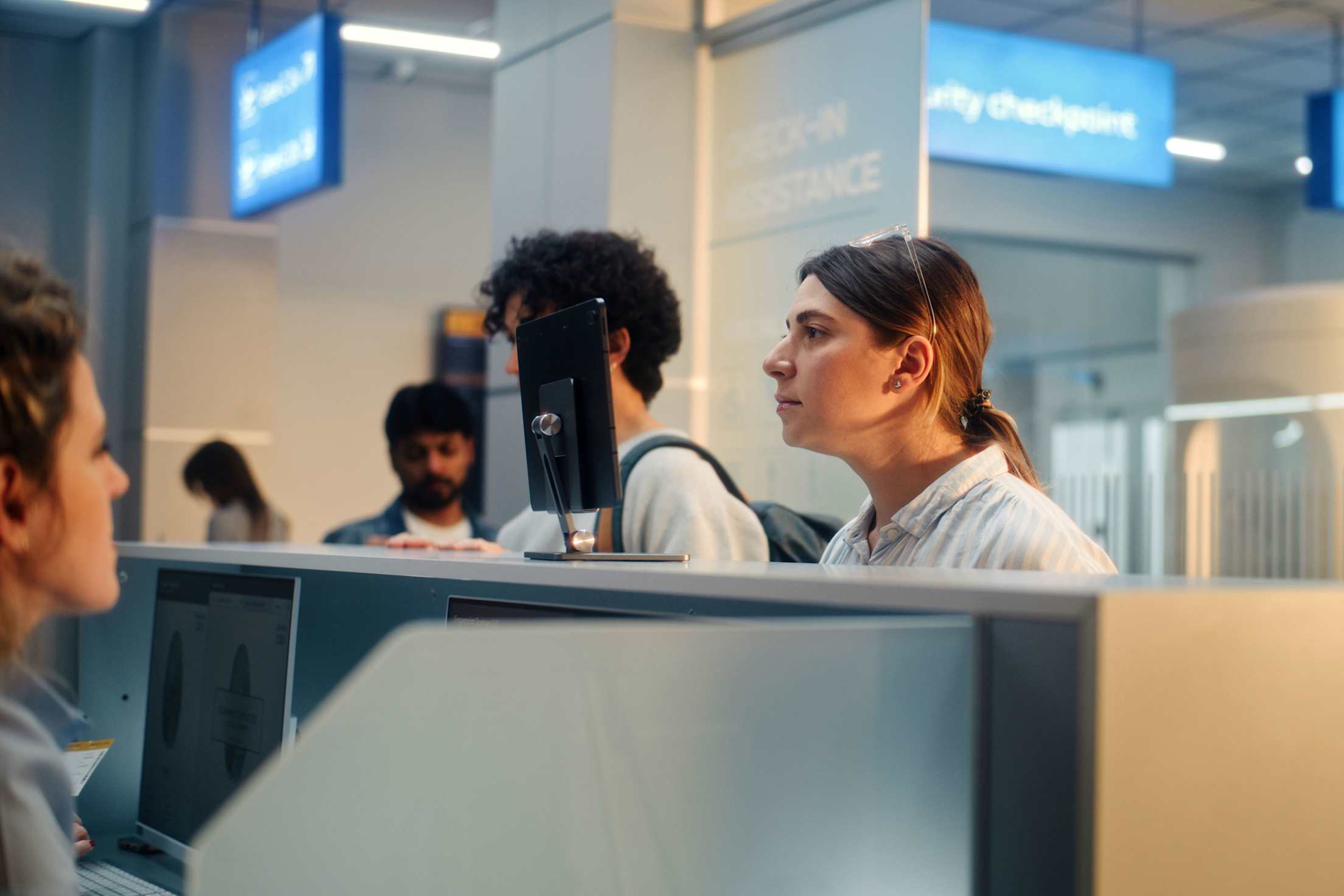
If you’re arriving in one of the 29 European member countries, you’ll be met by a passport control officer or automated system who will photograph your face and/or scan your fingerprints as part of the EU’s EES. In some locations, you can use a self-serve kiosk or mobile app to submit your biometrics, but a passport control officer will still confirm your information. Providing biometric data is required for non-EU nationals; if you refuse, you’ll be denied entry.
What are the privacy concerns with this technology, and can travelers opt out?
In 2023, five U.S. senators wrote to the TSA urging them to reconsider the rollout of facial verification processes. They cited several concerns, including that some travelers could be racially discriminated against or misidentified by inaccurate technology, and that the information could be stolen in a data breach. In addition, the American Civil Liberties Union has warned that facial verification at airports could expand “throughout our public spaces to scrutinize our identity, check us against watchlists, record our movements, and more.”
CBP says it deletes images and info collected through facial recognition within 12 hours for U.S. citizens. The TSA says that under normal circumstances, facial recognition information is deleted within 24 hours of your departure. Both organizations emphasize that facial recognition has a 98 to more than 99% accuracy rate. But critics point out that with 3 million people traveling in and out of U.S. airports every day, even a 1% error rate means thousands of people could be misidentified and subjected to interrogations, delays, and missed flights.
Both the TSA and CBP stress that facial recognition programs are optional for U.S. citizens. So, if you are a U.S. citizen and feel uncomfortable with using biometrics in the U.S., it is absolutely within your rights to opt out. Simply tell the agent, and you’ll go through a traditional manual check of your documents. Note that signage about biometrics being voluntary can be vague or difficult to see in crowded airports. And while some travelers report that opting out is quick and easy, some claim that agents incorrectly informed them that biometrics is mandatory, pressured them, or told them the only alternative is to wait in a long line to get manually checked. Again, know your rights, and also be aware that if you’re traveling internationally, other countries may or may not give you the right to refuse biometric technology.