
Are TSA PreCheck and Global Entry Still Worth It?
Find out if these programs are beneficial for you, based on your travel schedule, location, and lifestyle.


When TSA PreCheck and Global Entry debuted more than a decade ago, their advantages were clear. Approved travelers felt like VIPs as they breezed through brief airport security lines without taking off their shoes and unpacking, then repacking their electronics. But as more people enrolled, lines sometimes grew longer. Many airports rolled out CT scanners at security that allowed travelers to leave their electronics and liquids in their carry-ons. And in July 2025, the Transportation Security Administration (TSA) ended its nearly 19-year-old requirement to remove your shoes when getting scanned.
With all these changes, is enrolling in TSA PreCheck or Global Entry still worth the time and money? The answer depends on how often you travel, where you go, and your personal circumstances. Read on to find out the best choices for you.
What are the advantages of TSA PreCheck?
When you enroll in TSA PreCheck, you’ll get a Known Traveler Number that you plug into your airline reservation to receive a TSA PreCheck indicator on your boarding pass. This is your ticket to shorter wait times at security. Around 99% of TSA PreCheck passengers typically speed through security in less than 10 minutes, according to the TSA. Meanwhile, wait times in regular lines are typically under 30 minutes, the agency says.
Of course, during less popular travel times, people without PreCheck may zip through standard lines in less than 10 minutes. And during the holiday crush, waits in both lanes can drag on longer than expected, though travelers report that PreCheck queues are typically much shorter than the standard lines that snake through the terminal.
With TSA PreCheck, you can also pass through security while keeping a light jacket and belt on, in addition to leaving your electronics and liquids in your bag. All these benefits make for a smoother departure. The travel website Upgraded Points surveyed more than 1,500 travelers and found that those with TSA PreCheck rated their stress level while going through security at 3.4 on a scale of 1 to 10. Those without the program ranked their stress level at 5.5 out of 10.
If you have mobility issues or struggle with standing for long periods of time, moving through security quicker and increasing your chances of snagging a coveted seat at the gate can make a big difference to your well-being.
And if you’re traveling with kids, even a small drop in anxiety and wait times (plus avoiding the hassle of putting all their electronics and jackets in the bins, then redressing and repacking them) can be a lifesaver for your frazzled nerves. Children 12 and younger can automatically join parents or guardians with TSA PreCheck in the fast lane. Teens ages 13 to 17 can join you only if the TSA PreCheck indicator appears on their boarding pass, which should occur if they’re on the same reservation with you.

What are the monetary and time costs of TSA PreCheck?
The cost of the program for the first five years ranges from $76.75 to $85, depending on which of the authorized TSA PreCheck enrollment providers you choose (Idemia, Telos, or Clear). Renewing for each subsequent five-year period ranges from $58.75 to $79.95, based on the provider and whether you renew in person or online. In short, you’re looking at just over $15 a year at the beginning, and less over the long term. Some travel credit cards reimburse cardholders for the cost of TSA PreCheck, so see if your card offers this perk.
For first-time applicants, it takes about five minutes to fill out the online application and 10 minutes to complete the required in-person visit at one of numerous provider locations, where the agent collects your fingerprints and photo, verifies your identity documents, and takes the enrollment fee.
Another option is a Clear+ membership, which uses biometric scans (facial or fingerprint) to verify your identity at a Clear+ pod, then gives you an escort to the front of the TSA PreCheck line at security. The program also offers line-jumping perks with partner organizations. But at $209 per year, you have to be facing a lot of queues to make the cost worthwhile.
Is TSA PreCheck worth it for you?
If you fly domestically only once or twice a year, it’s most likely not worth the time and money to apply, even if you fly during busy seasons. But if you’re a frequent flyer, or if you fly often with kids in tow, the time and stress savings could add up significantly over the long run. And if your credit card reimburses the fee, enrolling is almost certainly worth the minimal time commitment.
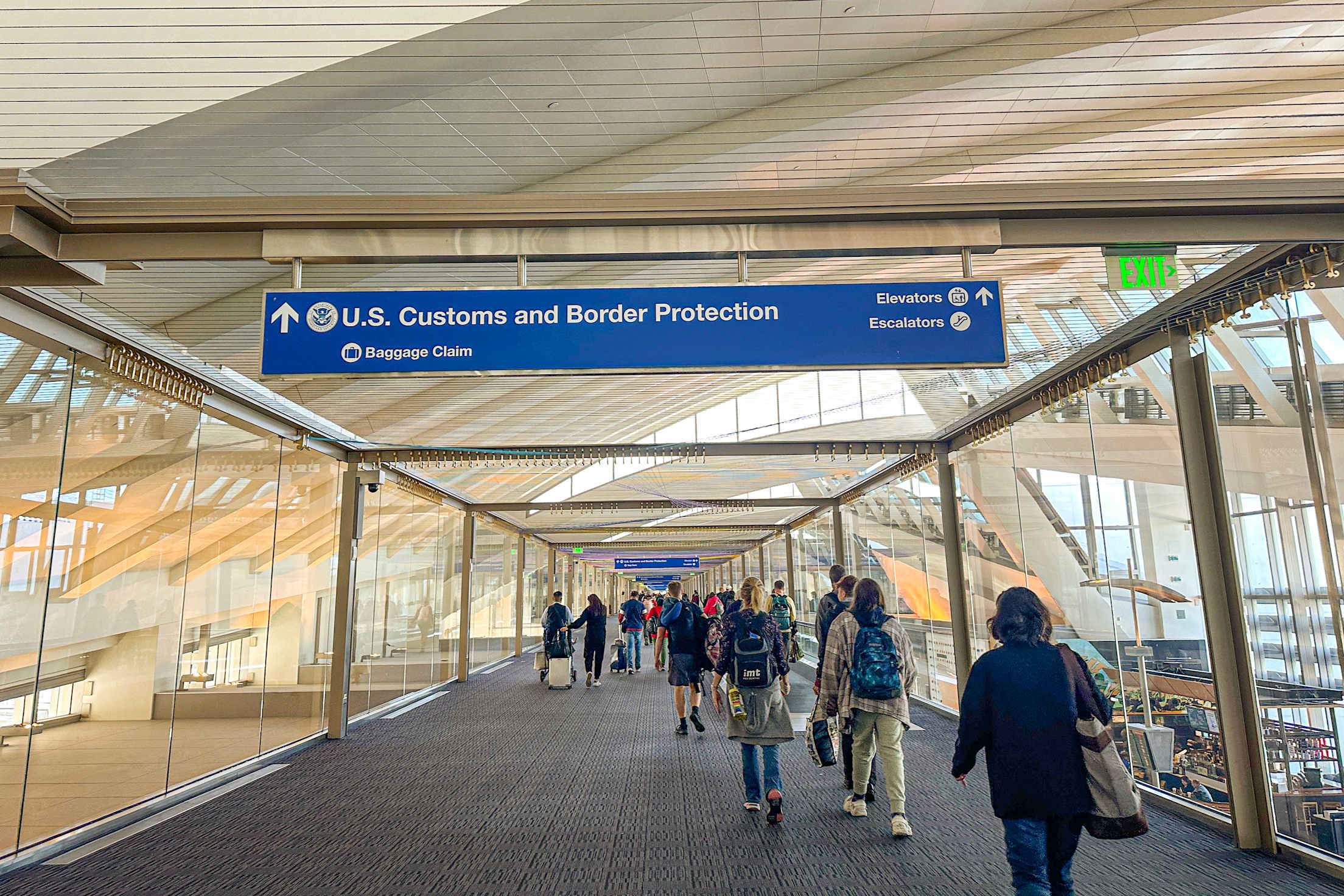
What are the advantages of Global Entry?
With a Global Entry card and number, international travelers can speed through Customs and Border Protection (CBP) upon their return to the United States by trading long lines for kiosks or an app. The kiosk will either scan your face or read your passport and your fingerprints. Then, it will ask you a few questions, snap your photo, and either print it on a receipt that you’ll show to the customs agent in the dedicated Global Entry lane or send you to the terminal exit. Alternatively, you can download the Global Entry app, answer a few questions, take a selfie, and show your mobile receipt to the agent. Some international airports offer preclearance, so you can get cleared before you step on the plane.
On average, Global Entry reduces arrival wait times by 70%, according to the U.S. Travel Association, an industry organization. Another bonus: Global Entry comes with TSA PreCheck benefits at no extra charge. When you make your airline reservation, just enter your Global Entry CBP PASSID number as your Known Traveler Number, and the TSA PreCheck indicator will appear on your boarding pass. Global Entry also applies to some sea borders and land borders, which is handy for people who often drive into Mexico or Canada (just remember to pack your physical Global Entry card).
What are the monetary and time costs of Global Entry?
The fee is $120 for a five-year membership. Some travel credit cards reimburse you for this cost. Children under age 18 are free (if their guardian is already a member or applying concurrently), but they must go through the application process and receive their own membership; they can’t just join you in the Global Entry lane.
After you fill out an application online, CBP will review your information. According to CBP, 80% of applications are approved within two weeks, but some applications can take more than a year to process. If you’re conditionally approved, you’ll schedule an in-person interview at a Global Entry Enrollment Center. These centers are few and far between; for example, California and Arizona each have five centers, while Nevada has just one. So there might not be a location close to your home. Also, wait times for appointments vary dramatically by center; you can get a sense of the range at Global Entry Alerts and Appointment Scanner. Applicants trying to interview in Salt Lake City, for instance, might have to be patient for 137 days, but if you’re near Tucson, you could probably stroll into a center this week.
As an alternative, conditionally approved applicants can opt for Enrollment on Arrival. When your flight lands in the United States (or when you depart from a designated preclearance airport), follow signs to CBP officers who can conduct your Global Entry interview during their admissibility inspection. You’ll need your U.S. passport and documents showing permanent residence in the United States. If you’re renewing Global Entry, you may be able to conduct the interview remotely by Zoom. This time-saving option isn’t available to everyone; for example, if you’ve legally changed your name, you’ll need to present your documents in person.
Is Global Entry worth it for you?
TSA recommends enrolling in Global Entry if you travel internationally four or more times a year. If you travel abroad less frequently, Global Entry probably isn’t worth the time and money—unless you also often fly domestically and would like to gain the additional perks of TSA PreCheck.
If your usual international point of entry has one of the busier immigration and customs sections, such as the San Francisco International Airport, Global Entry could be a boon. But if you typically fly into an airport with shorter-than-average CBP lines, such as Phoenix, Global Entry might not save you much time. In addition, consider how far away your nearest enrollment center is, how long you might have to wait for an appointment, and whether Enrollment on Arrival is a desirable alternative. If you decide not to get Global Entry, consider Mobile Passport Control, which is free and can expedite passing through customs, but is available at fewer airports.