
Get the Truth Behind 5 Fuel-Efficiency Myths
A lot of the conventional wisdom about maximizing your car’s miles per gallon simply isn’t correct.


If you find yourself sighing whenever your gas gauge approaches “E,” you’re not alone. Surveys confirm that fuel economy continues to be one of the most critical factors for buyers shopping for new cars. According to AAA data, high gas prices are increasingly pushing drivers to combine errands, join carpools, and even postpone vacations.
You’ll see lots of suggestions out there for ways to improve your car’s gas mileage. These range from the legitimate to the questionable. Here’s where five commonly recommended strategies land on that spectrum.
Myth 1: Using Cruise Control
Turning on your car’s cruise control can indeed help it burn less gas under certain conditions: Maintaining a steady speed means less acceleration, which in turn means less fuel burned. But the speed you select when initiating cruise control is critical.
“The most important variable for efficiency is speed,” says Roger Clark, an auto industry consultant and former senior manager of energy efficiency at General Motors. “As you go at higher and higher speeds, you increase the aerodynamic drag or wind force.” As drag increases, the engine has to exert more power to compensate.
So if you set your cruise control to 55 mph, that’s fine, says Clark. But over that, you’ll reduce your miles per gallon in most gas vehicles.
In some cases, that reduction can be really significant, according to recent tests by Consumer Reports. Comparing gas mileage at 55 mph and 65 mph in a Nissan Altima and a Toyota RAV4, testers found that the increase in speed cut fuel economy by 8 mpg in the RAV4 and 6 mpg in the Altima.
Traffic and terrain also matter. “Cruise control can be a killer in the wrong conditions,” says Bruce Shields, president of Knoxville, Tennessee-based American Transportation Co., a fleet management service. “You actually burn more fuel as the car aggressively compensates for hills instead of allowing small speed variances.”
Myth 2: Choosing Manual Transmissions
Thirty years ago, it was true: Manual transmissions were typically 5% more efficient than automatics. That was due to their mechanical efficiency. Manuals transferred power more directly from the engine to the wheels than automatics.
But technology doesn’t stand still, and automatic transmissions have improved. Among other things, they gained gears. (Automatic transmissions now typically have eight or 10 forward gears, compared with five or six in a manual.) By the 2010s, automatics were actually more efficient than manuals. “They don’t have the same losses that they used to,” says Greg Brannon, director of automotive research for AAA.
Myth 3: Turning Off Air Conditioning
Using the air conditioning unquestionably cuts into gas mileage. Trouble is, you’ve got to cool down somehow, and open windows create enough wind drag to offset the gains from forgoing the AC. “If you open the windows above 40 miles an hour, you’re losing more efficiency than if you just run your AC,” Clark says.
That said, if the weather is temperate enough to keep the windows closed without AC, your gas budget will thank you. “If you live in a beautiful place like California, with moderate temps most of the year, not using your air conditioner can have a fairly significant impact on the economy of the vehicle,” says Brannon. One option he suggests when it gets warm but not hot: “Use the fresh air vent on your car, which has a much lower aerodynamic impact than opening the window.”
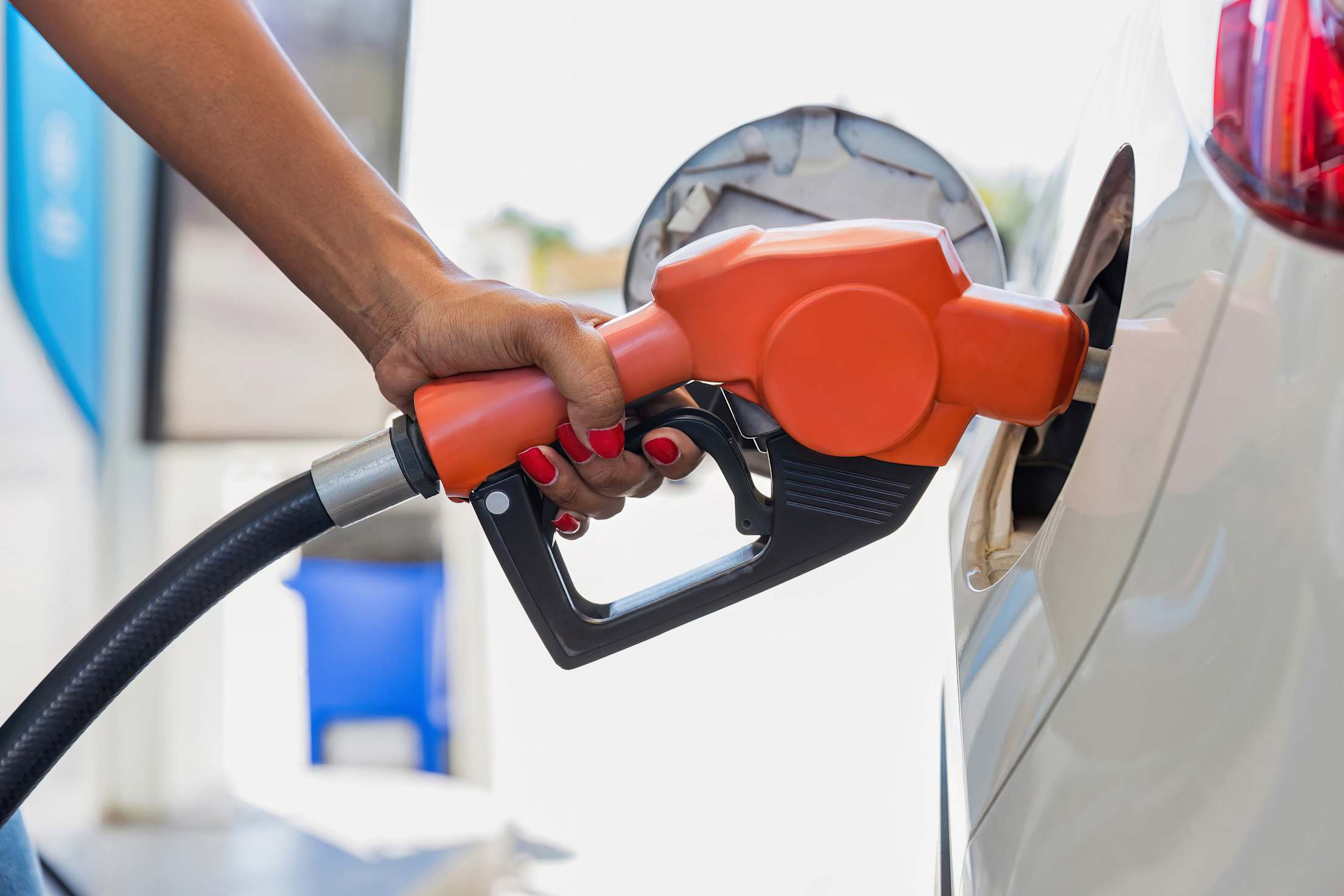
Myth 4: Turning Off the Engine, Shifting to Neutral
Idling is the enemy of gas efficiency, for an obvious reason: The engine is burning gas without moving the car. Thus, putting the car in neutral has no impact on efficiency, because the engine is still running.
Turning the car off, however, can indeed save gas compared with idling—but the gains are minimal if you’d be idling for just a short time.
Many modern cars feature an auto stop/start setting that turns the engine off when stopped, then restarts it as soon as your foot touches the gas. That feature, the experts say, is a definite gas saver, especially when you’re stopped at lights or fully stopped in bad traffic.
Speaking of idling, you’ll also save gas if you hit the road as soon as you start the car: Unless it’s really cold, there’s no need to warm up the engine in a modern vehicle before driving.
Myth 5: Keeping the Tank Full
By itself, having more gas in your tank doesn’t help fuel economy: If anything, it adds some extra weight, which can take more gas to move.
But you don’t want to go to the other extreme, either. Regularly driving your car with the needle close to empty is hard on your fuel pump, says Brannon. If you consistently drive with lower fuel levels, any savings you might realize by driving a slightly lighter car will be offset by the hundreds of dollars you’ll eventually need to drop for a new pump. For optimal efficiency, experts say you should keep your tank half to a quarter full, assuming you don’t mind the extra fuel stops.
While you’re at the gas station, higher-octane fuel won’t help improve efficiency. “If your vehicle doesn’t recommend or require premium fuel, then using it offers no benefit,” says Brannon. What can help is being sure the fuel you’re using is certified Top Tier—which means it contains additives that help your engine operate more efficiently.
What Does Improve Mileage
Here are some effective strategies you can use to get better mileage.
Watch your driving habits.
Because gas mileage is all about speed and wind resistance, the slower you go (to a point), the better your miles per gallon. The sweet spot, the experts say, is 35 mph to 55 mph. (Below that, you’re likely either in town or in traffic.)
Keeping your speed steady, accelerating smoothly, and leaving plenty of room in front of your car, can minimize fuel consumption. Think of it this way: Every time you brake unnecessarily, you’re wasting the gas it takes to get you back up to speed.
Avoid extra loads.
The heavier your car, the more pressure on the tires, which increases friction (or, in auto-expert speak, “rolling resistance”) and reduces efficiency. Paring down the supplies you keep in your car can help.
So can removing gear from the outside of the vehicle when you’re not using it. “Anything like a roof rack, with skis or bikes on it, disturbs the airflow around the vehicle, making it less aerodynamic,” says Clark. The difference can be surprisingly significant: Consumer Reports tests showed that carrying bikes on a rooftop cut fuel efficiency by 19% to 28%.
Maintain your vehicle.
You might not notice a direct improvement in fuel efficiency from regular tuneups. But failing to swap out oil and air filters will affect your car’s engine performance over time. “Maintenance is incredibly important because it helps the vehicle operate as the manufacturer designed it to,” Clark says.
You should also check tires regularly, as low tire pressure increases rolling resistance, and rotate them to prevent uneven wear. Good wheel alignment is also key to keeping a car moving smoothly along the road.
Earn 5% cash back on gas purchases with your AAA Travel Advantage Visa Signature® Credit Card.1