
Don’t Believe These 5 Transmission Fluid Myths
These common misunderstandings can damage your vehicle.


The transmission is one of your car’s most critical subsystems, and it relies on transmission fluid to operate correctly.
“Transmission fluid is a specially formulated lubricant that keeps the transmission’s moving parts cool, clean, and protected,” says Eric Carlson, master hybrid technician and owner of Ervine’s Auto Repair and Grand Rapids Hybrid and EV in Grand Rapids, Michigan. “It helps transfer power from the engine to the wheels, allows smooth gear changes, and prevents excessive wear and overheating.”
Repairing a transmission can easily cost thousands of dollars, but most problems can be avoided with regular maintenance. Among other things, that means periodically replacing the transmission fluid.
However, there are several misconceptions about transmission fluid. Here are five of the most common.
1. Myth: Transmission fluid only needs to be topped off.
The guidelines for most vehicles recommend draining and replacing the transmission fluid every 30,000 to 150,000 miles. (There are, of course, exceptions, but that’s the typical range.) But some car owners think you can avoid replacing it by occasionally topping off the fluid.
This isn’t true. The reason is that, unlike engine oil, transmissions don’t typically burn transmission fluid, which would suggest periodic replenishment between replacements. If the fluid is low, it likely indicates a leak. Topping off the transmission fluid could replace fluid that’s been lost, but it doesn’t address the root cause of the problem.
You can check the transmission fluid level in much the same way as you check the oil in many but not all vehicles; see your owner’s manual for instructions. If you notice it’s low, talk with your mechanic, but stick to your vehicle’s schedule for replacement.
“Regular fluid changes help keep your transmission shifting smoothly and extend its lifespan,” says Carlson. “The only way to prevent transmission failure is to change the fluid.”
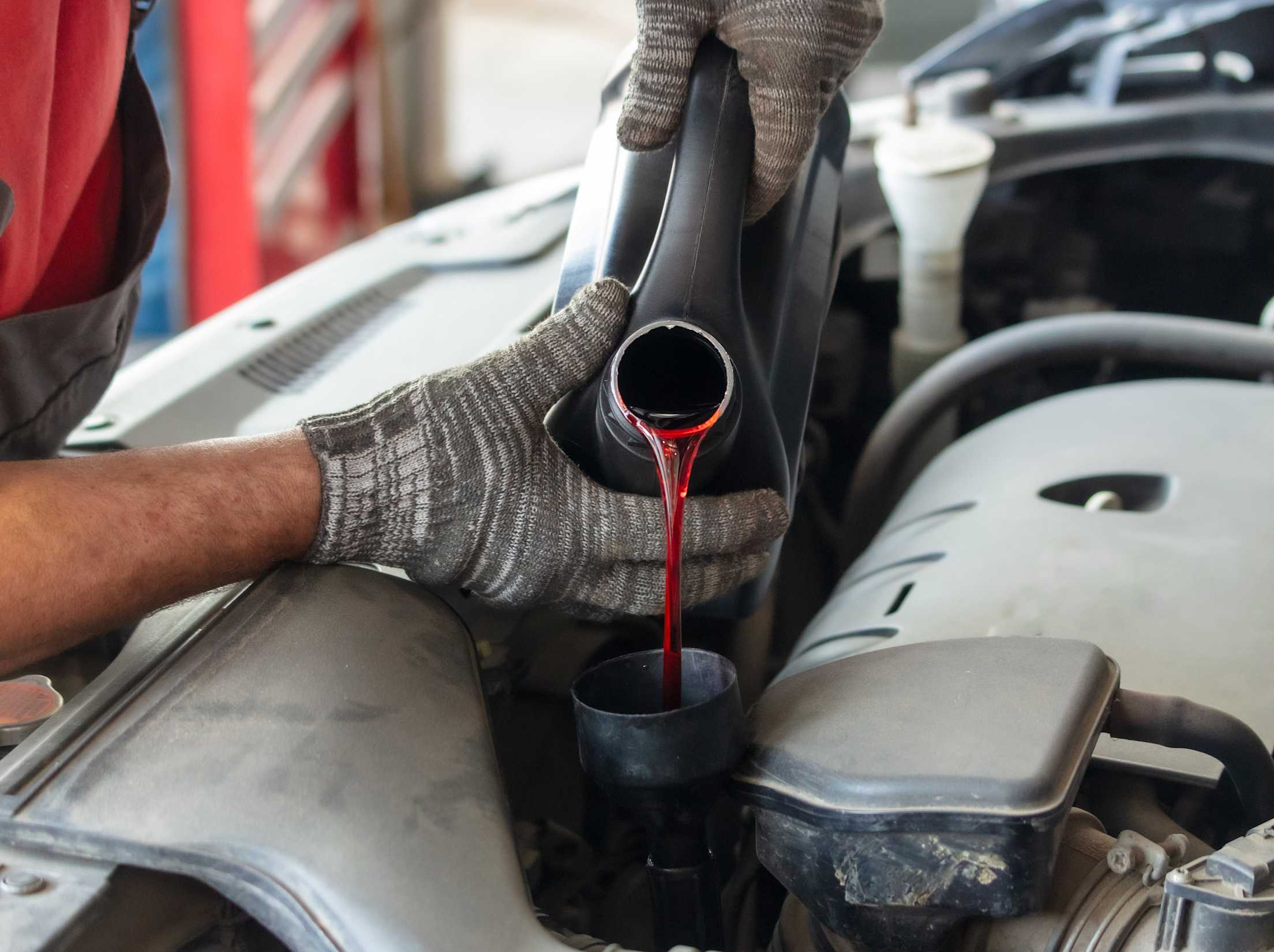
2. Myth: Transmission fluid lasts for the life of your car.
Some car manufacturers say their transmissions are designed so that the fluid should, in theory, last the vehicle’s lifetime. But that can be misleading, says Carlson. Depending on your driving habits, the fluid can degrade more quickly, and even so-called lifetime fluid may need to be replaced.
The extreme conditions that lead to premature degradation can include frequent short trips, driving in stop-and-go traffic, driving on salted, dirt, or gravel roads, towing, and using a bike or roof rack. A study by AAA found that while only 6% of drivers believed they were driving in severe conditions, the reality is that 62% of them were once they understood what severe driving was.
If your driving includes any of those extra-stressful conditions, check your owner’s manual for the suggested maintenance intervals and consult with your mechanic about replacing your transmission fluid—even if it’s advertised to last the lifetime of your vehicle.
3. Myth: All transmission fluid is the same.
As vehicles and transmissions have become more advanced, a greater variety of transmission fluids has hit the market. “Different transmissions require specific fluids with unique additives, viscosity, and friction properties,” says Carlson.
It is critical to use the correct fluid in your vehicle’s transmission. “A transmission unit can become irreparably damaged if the wrong fluid is used,” says Christian Subjeck, director of automotive repair operations at AAA Mountain West Group. Your vehicle’s owner's manual lists the transmission fluid required for your vehicle. If you have any questions, ask your mechanic.

4. Myth: Replacing transmission fluid will fix transmission problems.
Regular transmission fluid replacement can prevent problems from developing, but it doesn’t cure them. Once there’s a problem, it needs to be fixed, then the fluid maintenance schedule can resume.
“If a transmission is already slipping or damaged, a fluid change won’t repair worn components,” says Carlson. “It’s best to have the system properly diagnosed before assuming a fluid change will help.”
In fact, a transmission service can exacerbate problems that are already present in your vehicle if maintenance has been irregular. For this reason, some shops require a liability waiver if a new customer with an older car insists on a transmission fluid service.
5. Myth: Sealed transmissions don’t require maintenance.
Some transmissions are labeled “non-serviceable” or “sealed.” That can confuse car owners, since it suggests that service isn’t needed. What that really means is that there’s no easy dipstick access; it doesn’t mean they’re actually maintenance-free.
“These systems still have filters and fluid that wear out over time,” says Carlson. “They require specialized equipment to be adequately serviced.” In fact, some non-serviceable transmissions—such as those found in some Hondas—need to be serviced as often as serviceable transmissions.
Ultimately, it’s your responsibility to change the vehicle’s transmission fluid at or before the recommended interval to prevent possible transmission damage, which can be an expensive and extensive repair. A good mechanic can guide you through when maintenance is needed, why it’s needed, and help dispel any confusion about the process.
Save 10% on labor, up to $75, and get an extended warranty on parts and labor.*