
8 Rules Every Cruise Passenger Needs to Know
Follow these etiquette guidelines to maximize fun and minimize hassle.


Ask cruisers to name their biggest gripes, and chances are one will be the behavior of some of their fellow passengers. While the majority of those sharing the decks, restaurants, halls, and other public spaces with you are likely to be congenial—and may even become lifelong friends—there are always a few unfortunate exceptions. And all too often, those who roil the social waters around them go on their way oblivious to the discomfort and frustration they’re causing others.
To avoid having your vacation marred by annoyance or conflict, follow these key guidelines for shipboard etiquette.
Consider your impact on others.
Cruise ships are best likened to floating all-inclusive resorts, which means many of the same rules apply. Just as you wouldn’t shout across a hotel lobby, cut in line at the reservation desk, or make a scene in the bar over a mistaken drink order, these behaviors are equally frowned upon on board. You’ll steer clear of most problems by following the good old Golden Rule—if you would be annoyed by a particular behavior or action, then you would almost certainly offend others by engaging in it.
In certain situations specific to cruise travel, such as the labyrinthine process of embarking and disembarking, a hefty helping of patience, forbearance, and empathy will stand you in good stead. If the crew directs you to wait in a certain area while another group goes ahead, do it with a smile—there’s probably a good reason.
Restaurant and table politics take similar tolerance. If you can’t get the reservation or table you want for a certain night, try again later or make your peace with the choices available; maybe you’ll fall in love with an alternate restaurant or make new friends at a less desirable table.
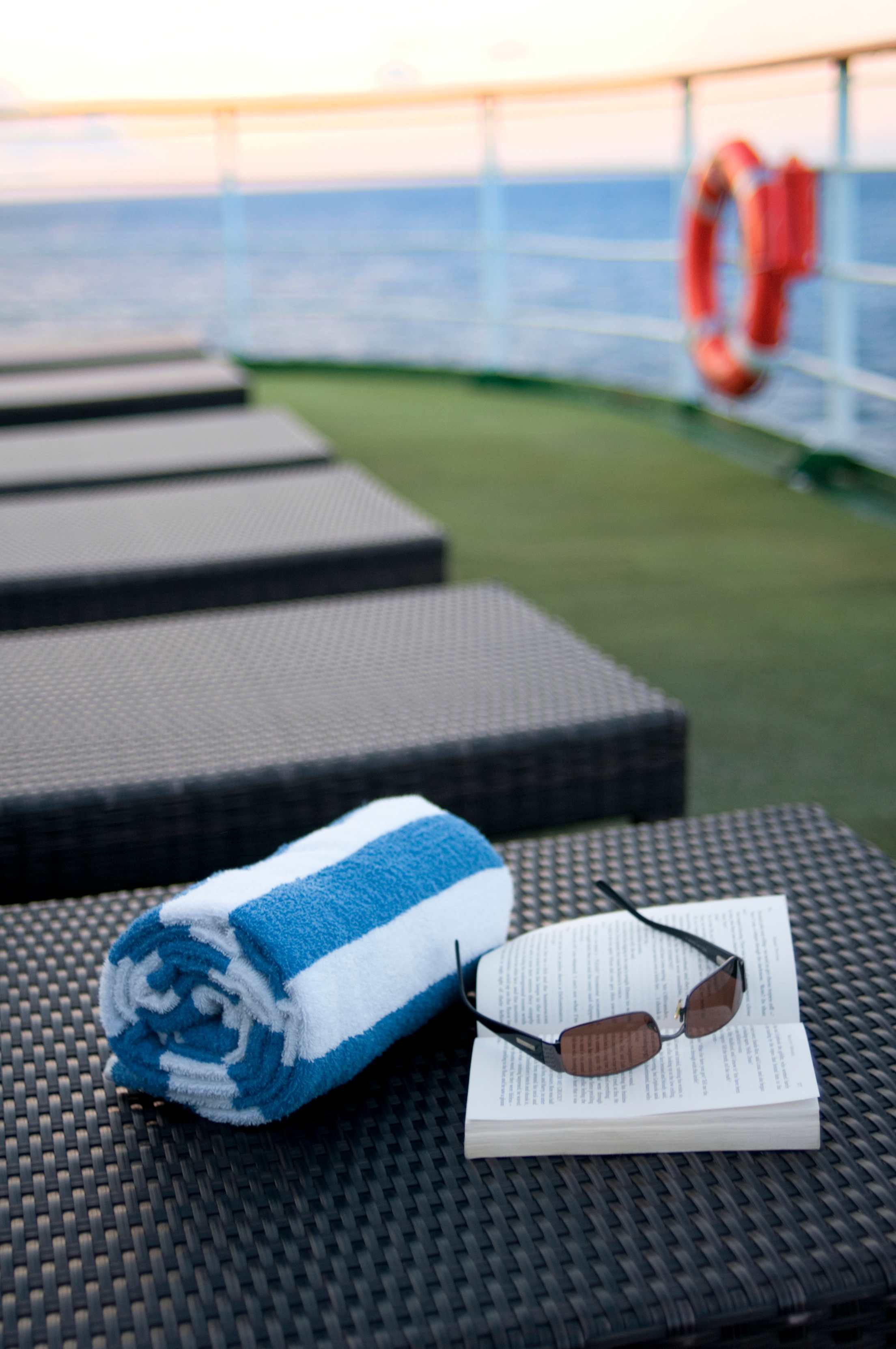
Don’t hog the deck chairs.
It’s a frustrating experience to walk by a row of empty deck chairs, each “claimed” by a tossed jacket or unused towel, while you’re relegated to one in a less prime location. Luckily, this situation is better than it used to be, as many cruise lines have instituted new rules against chair saving. Most now assign crew to monitor loungers and remove belongings left behind for more than 30–60 minutes for safekeeping.
So don’t bother getting up early to save a chair before going to breakfast or taking your morning yoga class. And if enforcement is lax, take it upon yourself to be generous.
Watch the volume.
Would you conduct a loud phone conversation in a restaurant or on a plane? Hopefully not, but it’s astonishing how many people do. Make your calls in private, and if you must answer while out and about, excuse yourself and find a private corner. Always pass through residential hallways as quietly as possible, especially in the mornings and evenings when others are trying to sleep. And remember that sound carries across water, so your poolside conversation might be broadcasting further than you think.
Navigate social conflicts with grace and support.
When you encounter a rude passenger, start by giving them the benefit of the doubt; it’s possible they were unaware of their impact on others. If needed, bring the situation to their attention with a civil reminder: “Excuse me, you might not have noticed we were in line already,” and give them a chance to set things right. If the situation escalates, bring it to a staff member’s attention and let them handle it as they are trained. This neutralizes the disagreement and makes the conflict less personal.
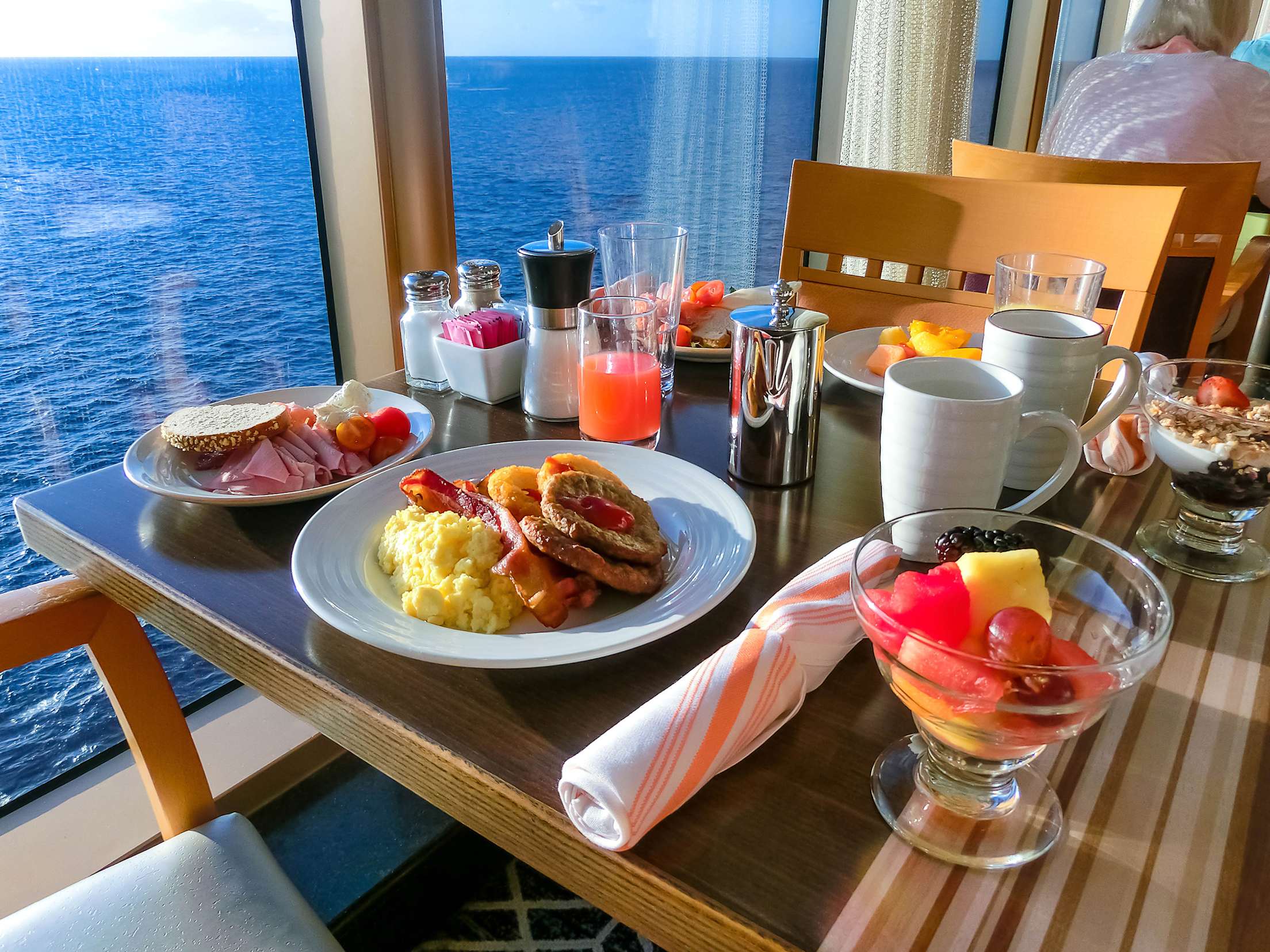
Don’t be a buffet blocker.
Cafeteria-style dining rooms are a prime area for grumpy encounters, with so many people making their way between multiple stations, and there always seems to be that passenger who takes twice as long as others in the omelet line, dictating picky specifics to the harried chef. The solution: Maintain awareness of those behind you, and if there are others waiting, keep your order as brief and simple as possible.
Other common violations include butting into a queue of diners to serve yourself a particular dish or, conversely, forming a long line for one dish while blocking access to others. If you need to pass through a long queue, politely ask someone to make space, and if you’re in line, allow others to pass through when needed so all passengers can serve themselves efficiently.
Stay safe and prevent holdups by washing your hands before meals, accepting a squirt of hand sanitizer from the attendant as you enter the dining room, and always using clean plates and glasses when refilling.
Be punctual for timed events.
Not only is it inconsiderate to keep other passengers waiting, but the crew members handling dining reservations, ushering theater shows, and organizing shore excursions have enough to do without having to track you down, rearrange schedules, or seat you when the show has already started. Speaking of shows, nothing interrupts the magic of a theatrical experience like having someone clamber over you during a key scene. Be seated before the curtain and be prepared to sit for the duration unless something really compels you to leave.
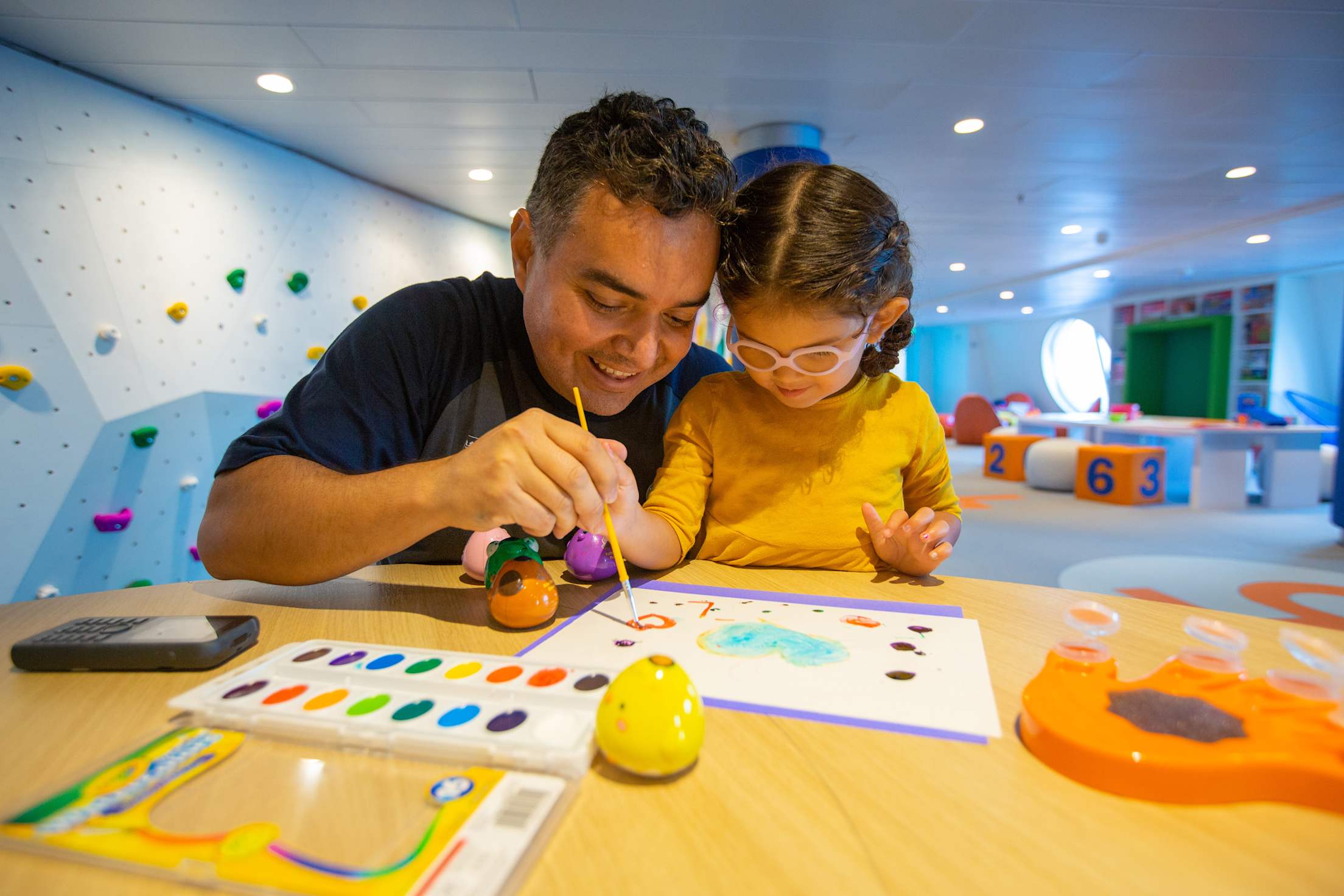
Set clear boundaries for kids.
Cruising has become increasingly popular with families in recent years, with data from AAA showing that 20 percent of American cruise travelers are bringing kids on board. If you’re traveling with kids, set some ground rules for behavior, with no running and no shouting at the top of the list. It’s natural for kids to be excited when they have a ship full of fun activities at their disposal, but it’s dangerous for everyone involved when kids tear down a hallway or leap down the stairs without watching for others along the way. Running on deck is particularly dangerous; even more so in wet or windy conditions. Splash fights and loud games of Marco Polo are likely to cause disgruntlement among your fellow swimmers, so instruct kids to save their antics for the kids’ pool, and even there to restrict them to one area and leave room for others.
Be gracious to crew members and express your appreciation.
Cringe-worthy behavior towards service personnel is unacceptable anywhere, including on cruise ships, where staff often work up to seven days a week and may go for long periods without seeing their families. Make requests politely, offer thanks plentifully, and think twice before criticizing or complaining; crew members are doing their best and there are likely good reasons for the rules and restrictions they are required to enforce. And tip generously, making sure you’re taking into account all those who have made your cruise a successful one and including them in the total amount.
AAA Travel Advisors can help you plan your next cruise, including helping you find the right cruise line that matches your travel style, shore excursions, and more.