
Car Engine Air Filter Replacement: DIY or Pro Service?
We answer reader questions about when and how to replace or clean this critical component.


Question: “Can air filters be changed by an amateur?” —Karen H.
Question: “Why don’t they clean air filters rather than replace them? (I often drive on dusty roads.)” —Dennis B.
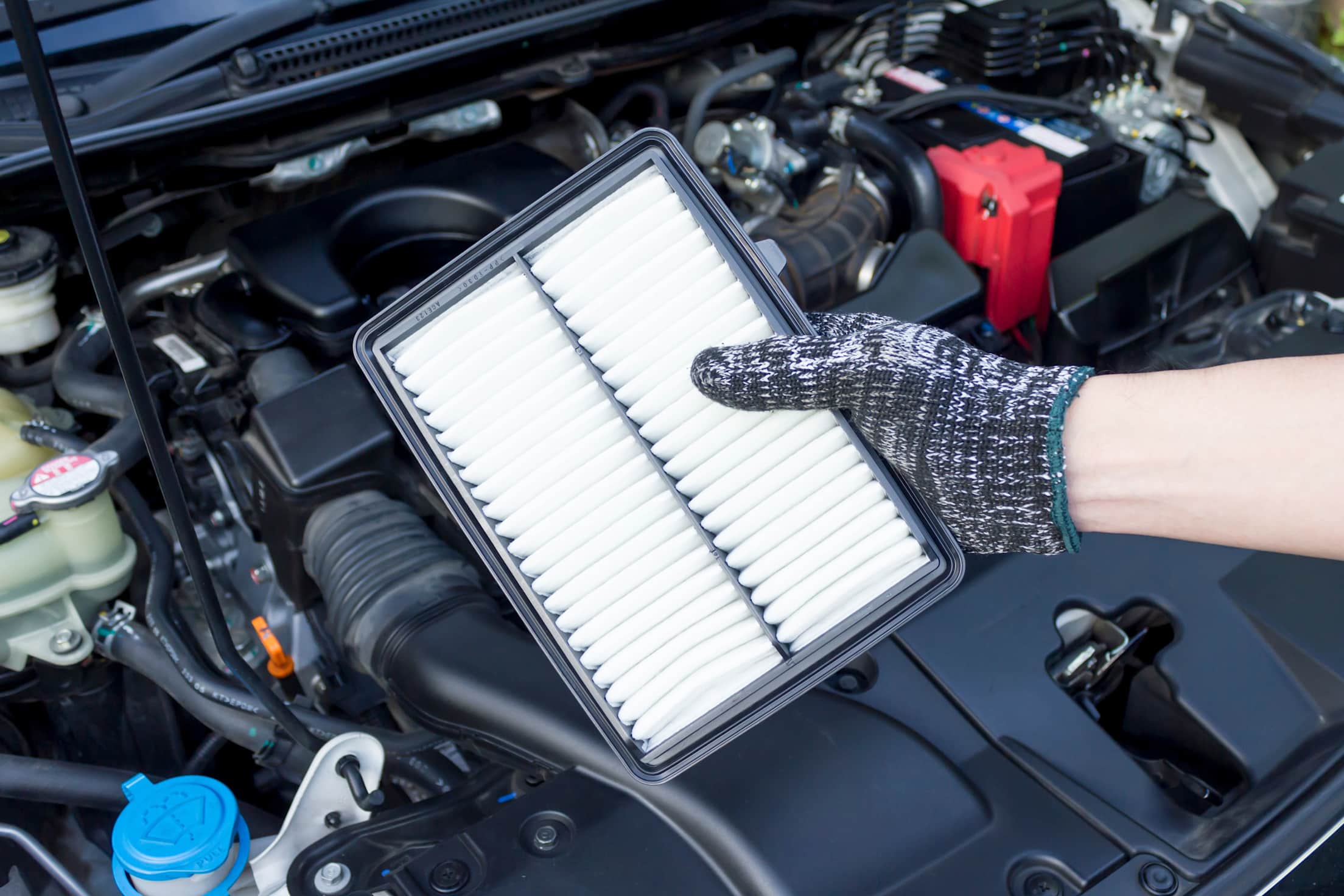
Answer: Back in the day, replacing your car’s engine air filter was a classic do-it-yourself chore: You would open the hood, spin a wing nut to unlock a big, round, metal enclosure atop the engine, and remove the doughnut-shaped air filter.
While engine air filters have evolved considerably, you can indeed still remove or replace yours yourself. (So, yes, Karen, they can be changed by amateurs.) The question is, should you? We asked Richard Martinez, a AAA Auto Repair service manager and mechanic with more than two decades of experience, for his advice.
The Evolution of the Engine Air Filter
The engine air filter’s basic function is the same as it’s always been, Martinez says: to prevent debris from being ingested into the engine. In modern vehicles, that job is more important than ever. The engine’s onboard computer has to assume that incoming air is clean when calculating the optimal air-fuel ratio for complete combustion. That mix, in turn, helps optimize fuel economy and engine performance.
What has changed over time is the filter’s form and placement. Instead of that old round air cleaner wing nutted to the top of the carburetor, modern filters come in many shapes and sizes. Hidden beneath engine covers and secured by a wide variety of clips, clamps, or screws, they can also be harder to find and remove.
Still, Martinez says, on most cars, the filter is accessible to determined DIYers. How you do so depends entirely on the make, model, trim, and year of the vehicle you’re working on. If you want to tackle the job yourself, the internet is your best resource. There, you can look up the instructions, correct parts, and necessary tools for your exact vehicle. Your local auto parts store or repair shop might also help.
The tool part can be surprisingly tricky, Martinez says. For example, the screws on many Honda models require a Japanese Industrial Standard (JIS) screwdriver to remove. Using a standard Phillips screwdriver (which looks like it should work) will strip the screw, turning a simple DIY job into a costly professional extraction. So do your research carefully.
Cleaning vs. Replacement
As for whether you can clean a filter instead of replacing it, Martinez says replacement is the only option for most original equipment and aftermarket filters. Attempting to clean a standard filter will likely damage its structure and compromise its ability to protect the engine.
High-performance engine air filters, used primarily in cold-air intake systems, are the exceptions. These specialty filters can be serviced, though it’s a complex process: You have to apply a special cleaner, rinse it off, let it dry completely, and then re-oil the filter. Fortunately, such filters are the exception; replaceables are the general rule.
Manufacturers typically suggest replacing the engine air filter every 15,000 to 30,000 miles. However, Martinez says that those numbers fail to account for environmental variables. Driving in dusty conditions can indeed (as Dennis intuits) clog a filter much faster.
The best approach? Have your engine and cabin air filters inspected at every oil change. Those typically occur every 5,000 to 7,500 miles, which should mean one or two inspection opportunities per year. That proactive approach is better than waiting for a drop in performance. Symptoms like the engine running or idling rough or stalling more frequently could indicate a clogged engine air filter—but you don’t want to wait that long.
Ultimately, in a time when even basic chores like checking transmission fluid can require a professional, the payoff for DIY air filter replacement is shrinking. Given that many repair centers charge no labor fee for servicing filters, taking your vehicle to a professional from the start remains the simplest and safest option.
Get your questions answered.
Have a question about maintaining or driving your car? Ask us.