
The West’s Best Botanical Gardens
These 6 spots will reconnect you with your ecosystem’s native plants.


It’s almost impossible to feel stressed when you’re visiting a botanical garden.
Outside, in the 21st-century world, you’re contending with AI, self-driving cars, and the sense of your life zooming by. Step inside a botanical garden, and the world becomes timeless. You’re embraced by the natural intelligence of trees and flowers. You take a deep breath and smell pine, sage, bay laurel, roses. You get to come back to your life.
“It’s proven that immersing ourselves in nature is soothing and relaxing,” says Susan Sharman, marketing manager for the University of California Botanical Garden at Berkeley. “It makes you feel good.”
Luckily, the West is rich in superb botanical gardens. They celebrate the botany of their native landscapes—California, the desert Southwest, the Rocky Mountains. Many also welcome carefully curated species from around the world. Some, such as UC Berkeley’s, also perform critical scientific work.
“One of our missions is conservation, and we do that with seed banking—collecting plants, collecting the seeds, preserving them,” says Sharman. “If a plant goes extinct in the wild, we can grow it in our nursery and reintroduce it.”
Botanical gardens also educate. “We’re both a living museum and a working lab,” says Chris Kline, president and CEO of Phoenix’s Desert Botanical Garden. “We help people better understand and live in desert environments.”
But for you, after a sunny weekend visit, the most important thing about these gardens is that they help make you and the world happier. Here are six botanical gardens that can do all of that.
Desert Botanical Garden in Phoenix, Arizona
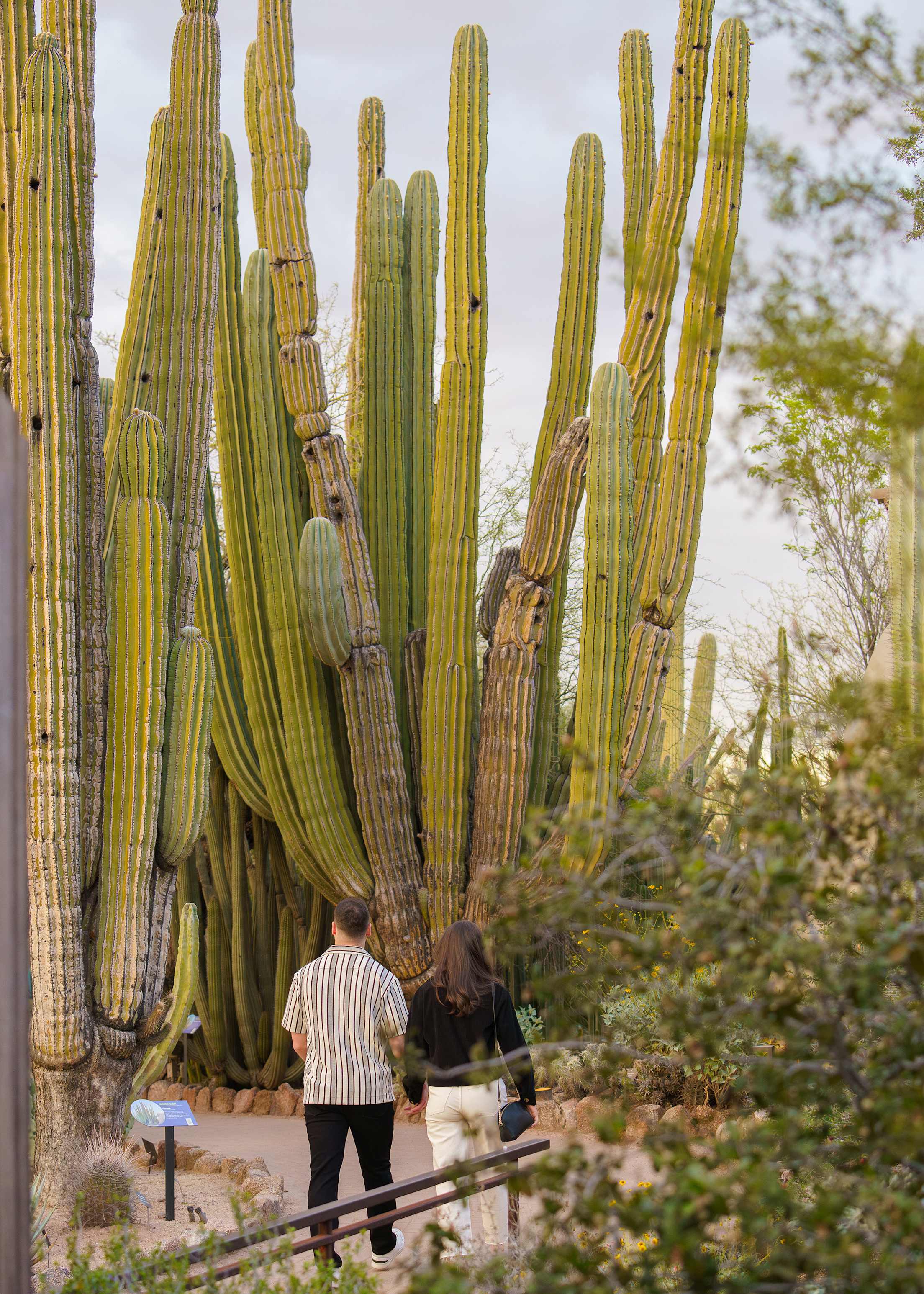
In Phoenix’s Papago Park, this 55-acre garden celebrates Arizona’s Sonoran Desert, one of the most biodiverse deserts in North America. The garden is organized around trails: The main walking route, the Desert Discovery Trail, shows off an extensive collection of cacti and succulents, including saguaros, ocotillos, and prickly pear. The Plants and People of the Sonoran Desert Trail explores the ways desert plants shaped the lives of Arizona’s Tohono O’odham and other native peoples. In winter and spring, the Harriet K. Maxwell Desert Wildflower Trail dazzles with blooms including larkspur, owl clover, and primrose. The garden’s innovative nighttime program, Garden After Dark, deploys dramatic lighting to transform the cacti and other plantings into brilliant desert dreamscapes.
The garden is also home to the Cohn Family Butterfly Pavillion, a 3,200-square-foot open-air structure that in winter and spring houses 2,000 butterflies native to the Southwest; a butterfly nursery lets you observe caterpillars and chrysalises before they emerge into butterflies. One additional bonus: The garden is has an unusually good restaurant, Gertrude’s by Tarbell’s, whose Southwest-influenced menu features items like green chile pork stew and charred street corn.
UC Botanical Garden in Berkeley, California
Tucked into the hills above the University of California campus, this 34-acre garden is an educational resource for Cal professors and students from botanists to artists. The rest of us can simply be enchanted by the setting—a pretty canyon bisected by burbling Strawberry Creek—and the plants.
The latter range geographically from California (one of the largest collections of California native plants in the world) to the rest of the Americas (sculptural cacti from Peru, Bolivia, and beyond), Asia, and southern Africa. The Garden of Old Roses features roses dating from the 19th century and earlier. In the newly restored Virginia Haldan Tropical House, you enter a lush world of ferns, water lilies, and other equatorial plants. A nearby plant house showcases an Addams Family-worthy collection of Venus flytraps and other carnivorous species. Finally, the Mather Redwood Grove’s five acres of lofty coast redwoods is such a serene, shady retreat you may find it hard to leave.
The Huntington in San Marino, California
The Huntington began life as the private estate of railroad tycoon Henry Huntington and his wife, Arabella. Opened to the public in 1928, it contains one of the grandest botanical gardens in the nation—a beautifully manicured showcase for flowers and trees from around the world.
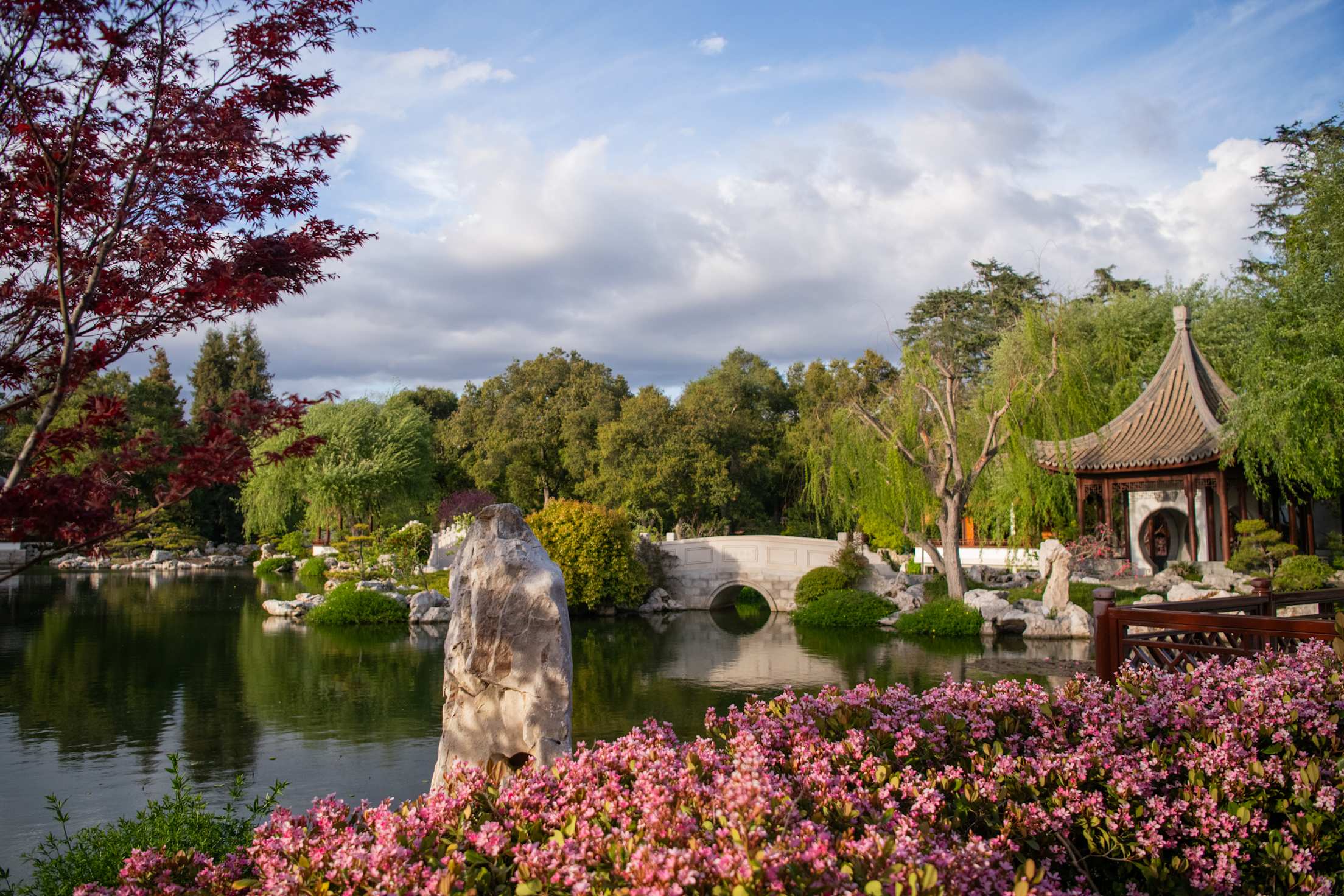
The facility’s 130 acres are divided into 16 different themed gardens. The Rose Garden contains more than 2,500 flowering plants, which bloom from late March into November. Inspired by gardens of Suzhou, China, the Chinese Garden features ornamental plants such as the tree peony and the Yulan magnolia. The Desert Garden has a superb collection of cacti and succulents.
Look for bloom updates on the garden website. Daily guided tours give a useful overview, as does the Huntington Digital Guide, also accessible on the website. And note: In addition to being aficionados of gardens, the Huntingtons were major patrons of art and literature. The Huntington Art Museum, adjacent to the gardens, is home to notable works by Thomas Gainsborough and Edward Hopper, among others.
Ethel M Botanical Cactus Garden in Henderson, Nevada
Cacti and fine chocolates don’t seem like an obvious pairing. But in Las Vegas, anything goes. That’s why, in suburban Henderson, you’ll find Nevada’s largest cactus garden right next to Ethel M Chocolates’ flagship candy factory.
Both the factory—which produces 8 million pieces of milk, dark, and liquor-filled chocolates a year—and the garden were the dreams of candy king Forrest Mars. Father of M&M’S and Milky Way bars, he launched Ethel M as his retirement project. Mars’ other passion was gardening: When he built the Henderson factory in 1981, he created the cactus garden, too.
Today, those three acres are home to 300 species of cacti and succulents from around the Southwest, along with trees from other desert regions, including Australia and South America. Standouts include a Boojum tree (a Baja California native that resembles an upside-down carrot) and dramatic Argentine saguaro. Come November and December, the cacti glimmer with a million lights for Ethel M’s annual Holiday Cactus Garden.
After your cacti gazing, there are some sweet options next door. You can watch the chocolates being made from a viewing aisle, cool off with a chocolate milkshake at the Cactus Garden Cafe, and, of course, buy a gift box of truffles and almond clusters.
Red Butte Garden & Arboretum in Salt Lake City, Utah
Stretching across the foothills above Salt Lake City, Red Butte has an unbeatable setting, with the Wasatch Mountains rising immediately to the east and the Great Salt Lake Basin spreading below you to the west. There are 21 acres of themed gardens. These include a Floral Walk leading through a shaded archway to a Cottage Garden blooming with peonies, lilacs, and roses; the Four Seasons Garden (daffodils in spring, daylilies in summer, maple trees in autumn, holly in winter); and a sweetly scented Fragrance Garden.
Adjacent to the themed gardens is a 75-acre Natural Area. Here, the Six Bridges Trail parallels Red Butte Creek, while other paths lead to meadows filled with spring and summer wildflowers. (You’ll find trail guides on the garden’s digital app, available via its website.) Red Butte is also a popular entertainment venue, with summer outdoor concerts staged at the 3,000-person Red Butte Amphitheatre; recent headliners have included the likes of Lyle Lovett and Alison Krauss.
Cheyenne Botanic Gardens in Cheyenne, Wyoming
This garden celebrates—and provides some respite from—Cheyenne’s challenging high altitude. On its nine acres, you can explore 27 specialty landscapes, including the Bedont Rose Garden (at its most spectacular in late June through mid-July), an herb garden featuring culinary and medicinal herbs, wetlands along Discovery Pond, and an English-style cottage garden.
Inside the elegant, three-story Shane Smith Grand Conservatory, you can take a trip to the warm, humid tropics. Standout displays here include a lofty Mexican fan palm and collections of orchids, succulents, and cacti. There’s also an orangerie filled with flowering citrus trees. If you have young ones in tow, you’ll want to stop by the Paul Smith Children’s Village. Its interactive landscapes include gravity-powered water works, a farmer’s windmill, and a sheepherder’s wagon.