
6 Unique Fall Experiences in the West
Go beyond pumpkin patches with autumn music festivals, wildlife spotting, and rare fall foliage.


While the West is filled with spots to pick apples, meander through pumpkin patches, and see the typical fall foliage, there’s more to the season here than the traditional standbys. Whether it’s catching the “false dawn” before sunrise from a high-alpine perch in Nevada or marveling at the bugling calls of bull elk in Wyoming, these six unique experiences invite you into another side of fall.
Witness Alaska’s bore tide during the fall equinox.
Wind along Alaska’s Seward Highway through spruce forests and past saltwater bays to Turnagain Arm: a roughly 45-mile-long waterway known for its dramatic bore tides. These powerful waves result from high tide rushing into a shallow, narrow channel and are a sight to behold. Extreme surfers take full advantage of this surge of incoming seawater, which usually occurs twice daily—usually one-to-three hours after low tide. The wave is at its strongest during full and new moons and around September’s fall equinox, when the powerful wall of water can reach up to 10 feet tall. The wave takes about 5 to 5.5 hours to travel the length of Turnagain Arm, and some surfers can ride it for up to an hour.
Beluga Point, at Seward Highway’s milepost 110.5, is a perfect spot to observe the bore tide, as well as its surfers (and possibly the point’s namesake cetaceans) in action. Just don’t forget to turn around: The Chugach Mountains’ bright crimson and orange foliage on the opposite side of the highway makes an incredible backdrop. Check the Alaska.org bore tide charts for the best viewing times.
Marvel at wildlife migrations and mating rituals.
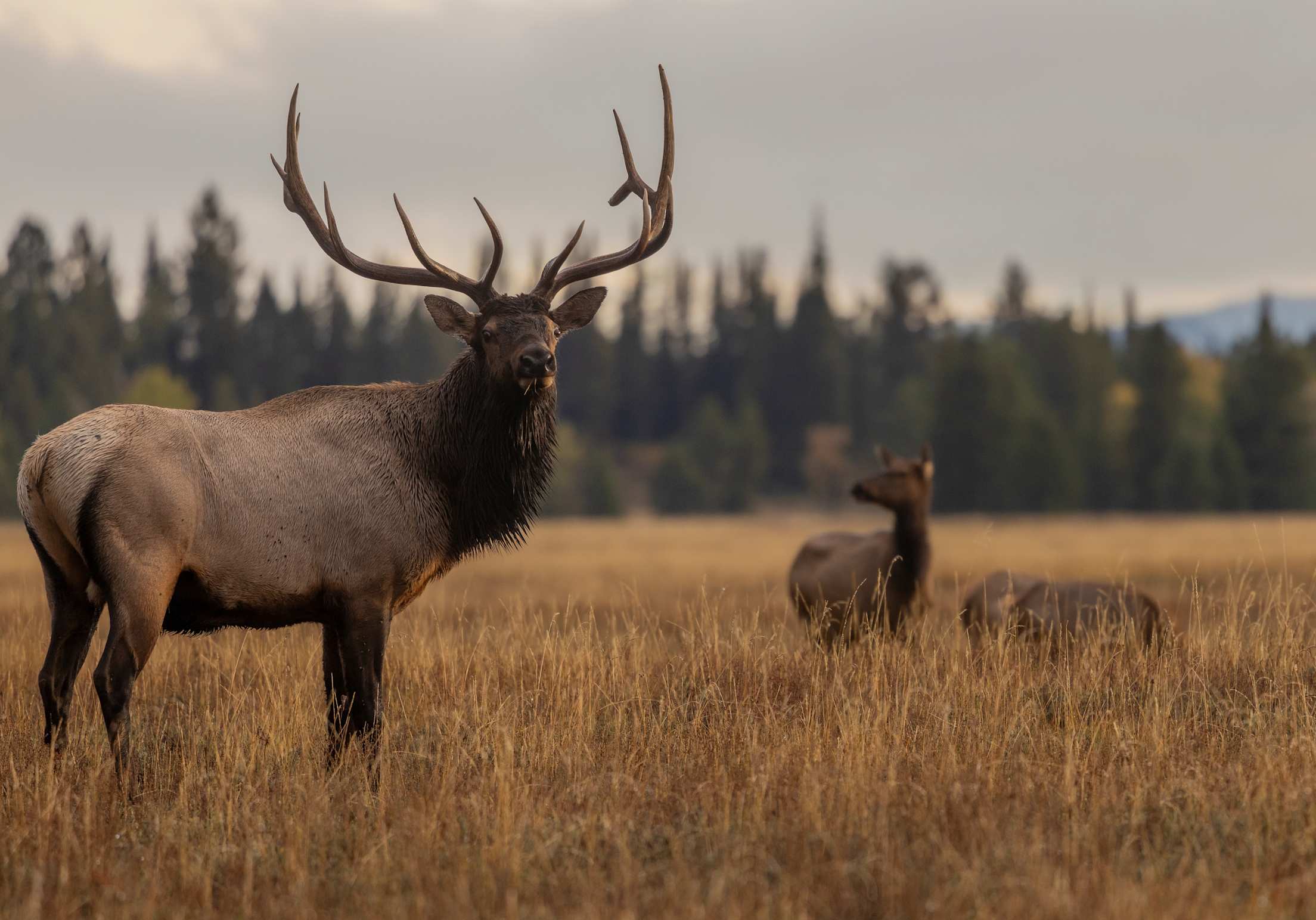
Wyoming’s elk mating season, which is best seen in both Grand Teton and Yellowstone national parks, occurs from early September to mid-October. Known as the “elk rut,” this annual ritual is marked by the sounds of bugling: a call by bull elk that starts as a low roar, climbs into a high-pitched scream, and ends with a deep grunt to attract female cow elk to their harem. It’s a true spectacle, especially when aggressive males with large antlers fight one another for dominance. The best places to hear and witness the rut are in open meadows like those at Grand Teton National Park’s White Grass Ranch and those in Yellowstone National Park’s Lamar and Hayden valleys, especially around dawn and dusk.
For another wildlife extravaganza, take in the trumpeting calls of sandhill cranes as they arrive in southeastern Arizona, starting in late September and October. Tens of thousands of these elegant wading birds winter in spots like the Whitewater Draw Wildlife Area, approximately 25 miles north of Bisbee, and Lake Cochise near Willcox.
Follow the “march” of tarantulas.
With their hairy bodies and prominent fangs, tarantulas aren’t everyone’s cup of tea. But spotting them on the search for love is a wonderfully eerie experience. Each fall in the West, male spiders emerge from their underground homes and take to grasslands, trails, and open roads just before dusk to find a still-burrowing mating partner. In places like California’s Henry W. Coe State Park, near Morgan Hill, and the San Francisco East Bay’s Mount Diablo, you might see anywhere from a few to a dozen wandering males on any given evening between September and October. They’re especially prevalent on cooler evenings following a light rain shower.
Gabbs, Nevada, has been called the epicenter of tarantula mating migration by KUNR, which occurs between late September and early November. Or look for these large arachnids through October in Arizona’s McDowell Sonoran Preserve and Saguaro National Park outside of Tucson.
Take to the mountains for a glimpse of much rarer fall foliage.
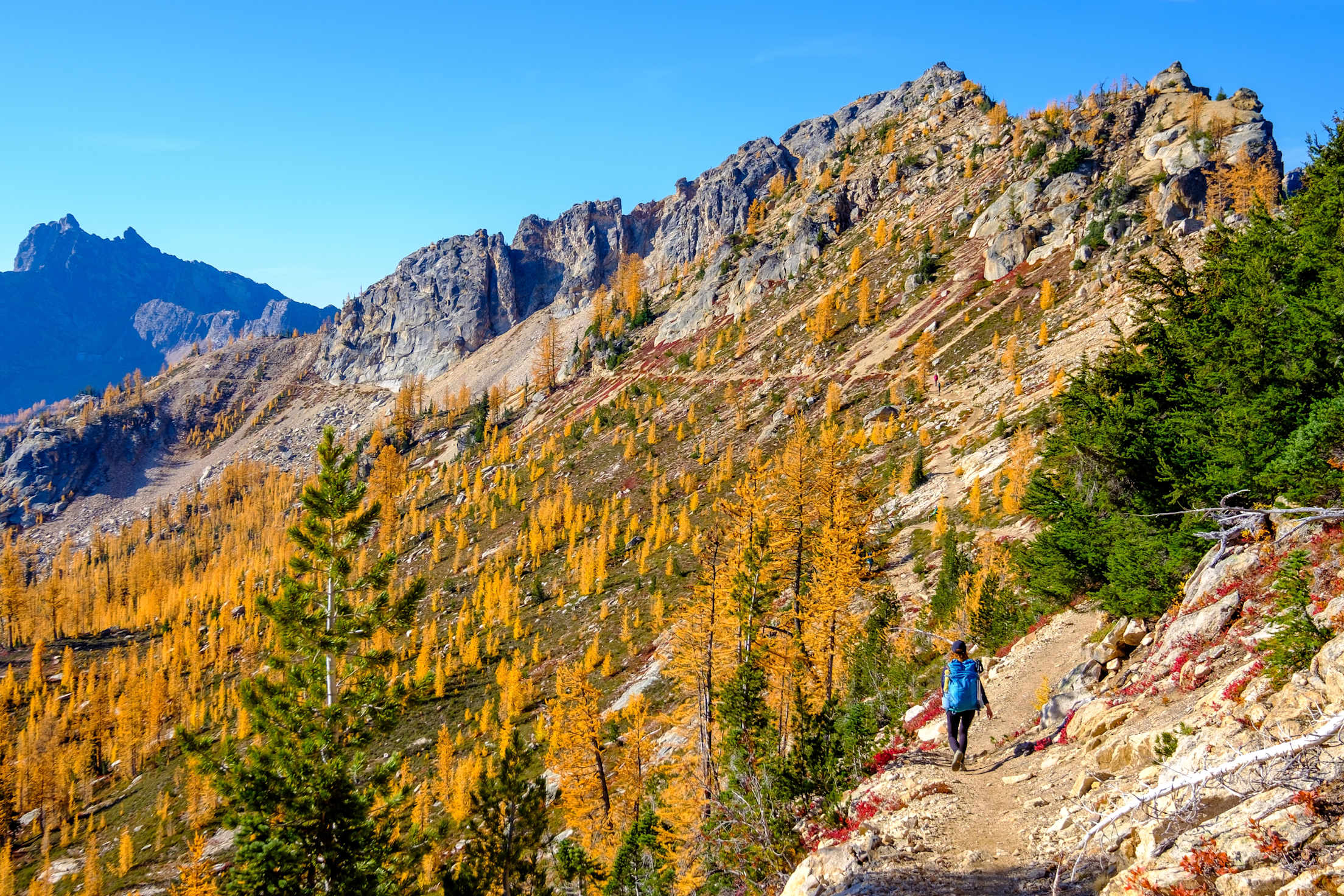
While the majority of conifer trees are evergreen—meaning they keep their leaves year-round—larch trees are an exception. This distinct type of conifer turns bright golden yellow each autumn before eventually shedding its needle-like leaves for winter. The vibrant transformation of these tall trees is especially spectacular in the Pacific Northwest, where their colorful displays offer a stunning contrast to the area’s lush greenery, granite mountainsides, and early snowfalls.
You can see western larches along Washington’s North Cascades Highway (Hwy 20)— specifically at spots like Blue Lake and Cutthroat Pass—and along the 7.2-mile Heather-Maple Pass Loop in Okanogan-Wenatchee National Forest. In Montana, Jim Girard Memorial Grove near Seeley Lake is home to a magnificent display of western larch trees, including “Gus,” an ancient, 1,000-year-old specimen that stands over 150 feet tall. You can also find them in the western side of Glacier National Park, around Lake McDonald.
Savor uniquely local festivals.
Since its debut in 2001, San Francisco’s annual Hardly Strictly Bluegrass music festival has been the gift that keeps giving. Three days, six stages, and around 70 to 80 musical acts play everything from bluegrass and rock to Americana and soul throughout Golden Gate Park. The real kicker? It’s all free. Investment banker Warren Hellman made good use of his fortune to establish and fund the festival, which has continued even after his death in 2011. Held annually around the first weekend of October, when SF weather is typically warm and skies are sunny, it’s the ultimate mass picnic—attracting hundreds of thousands of attendees.
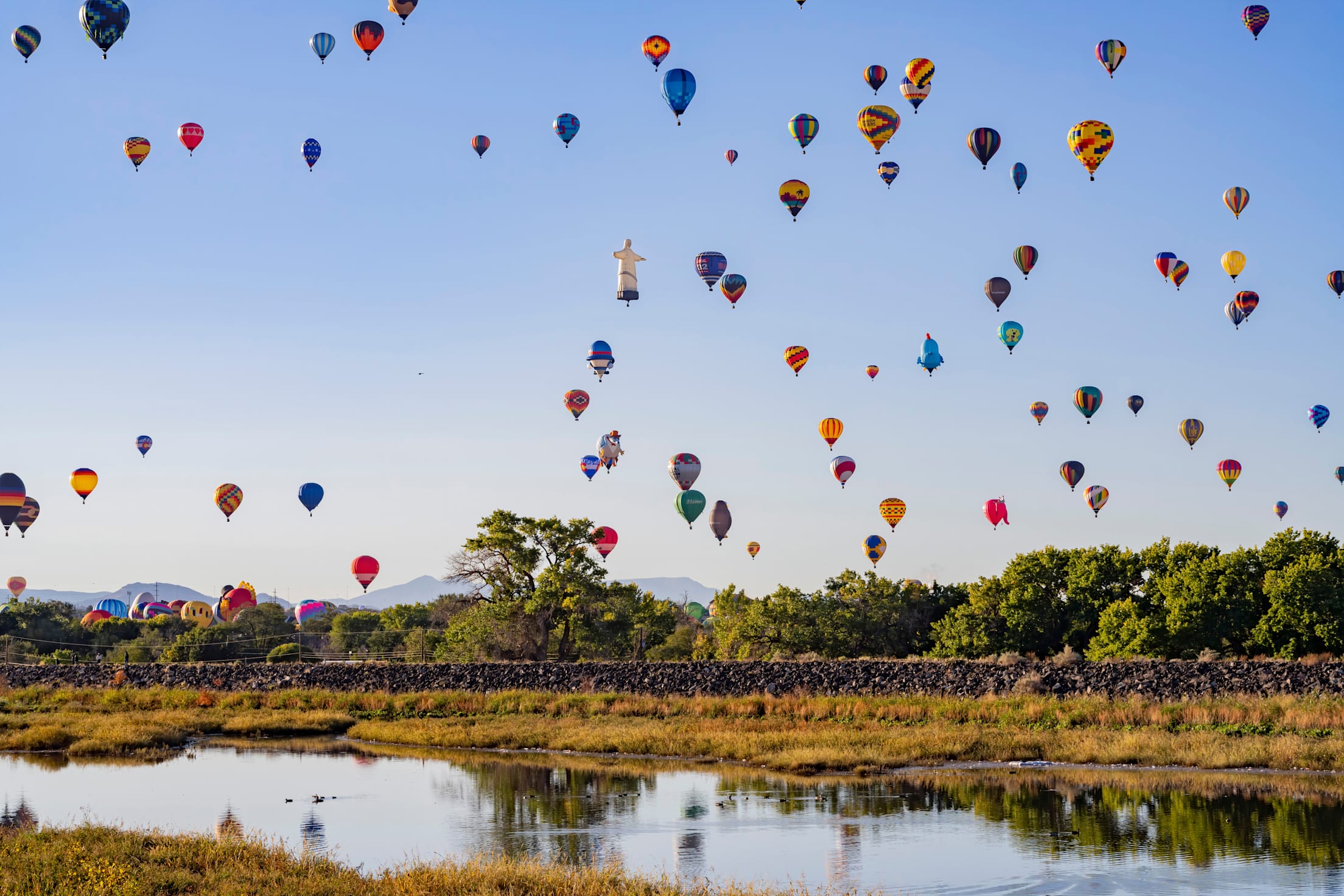
For over half a century, the Albuquerque International Balloon Fiesta in New Mexico (Oct. 3–11) has been delighting crowds with its iconic balloon displays. You can watch hundreds of hot air balloons launch in early morning ascensions; delight in a “Special Shape Rodeo,” where uniquely crafted balloons resembling everything from Looney Tunes characters to giant bumblebees take to the skies; and wind down with twilight balloon glows, featuring displays of tethered balloons lit up at dusk like giant lanterns. With over 500 hot-air balloons, it’s the largest balloon festival on the planet.
Oregon is home to September’s annual Bandon Cranberry Festival. This historic coastal event celebrates the local harvest season with a cranberry-eating contest, plenty of themed treats, and farming equipment. Between mid-October and early November farmers flood their cranberry fields to bring the berries to the surface to harvest. Drive Route 101, just south of Bandon, to see striking crimson seas. It’s well worth a drive.
Catch the autumn zodiacal light beneath a dark sky.
Sometimes called the “false dawn,” autumn zodiacal light is a faint, pyramid-shaped glow that often appears in eastern skies right before sunrise. This soft and hazy triangle is actually the sunlit reflection of cosmic dust drifting around in the inner solar system. The light traces the solar system’s ecliptic plane—an imaginary flat disc that contains the planets’ path as they orbit the sun and happens to hit the horizon at its steepest angle during autumn mornings. Due to this sharp tilt, the almost-ghostly light appears much more visible before dawn than at most other times of the year.
The best places to catch the West’s autumn zodiacal light are in remote, high-elevation dark sky locations with unobstructed views looking east, like Nevada’s Great Basin National Park and Canyonlands National Park in Utah. It’s most visible on or around the new moon during cool, dry mornings—about 80 to 120 minutes before daybreak.