
How to Survive a Flash Flood in a Car
Stay safe this monsoon season with our tips for identifying and avoiding the risks.


As we head into late spring and early summer, drivers across the West should be conscious of the dangers of flash floods. Floods are a leading cause of weather-related deaths in the United States, according to the National Weather Service.
Given these risks, it’s essential for drivers to prepare ahead of time—particularly in the summer, when flash floods occur most frequently. Here’s what to know and how to stay safe should a flash flood occur when you’re driving.
Understanding the Risk of Flash Floods
Flash flooding is typically caused by sudden, heavy rainfall. (Other causes include levee and dam failures, as well as water releases from ice jams.) Flash floods can develop within minutes or hours of intense rain, making them especially risky for drivers on the road. They differ from traditional floods in intensity and duration.
Flash flooding can occur in many locations, but certain topographies—in particular, streams, rivers, and depressions near mountains—are more prone than others. Water can flow quickly down from higher elevations to lower-lying areas. It can then collect faster than it can drain, especially if there are poor drainage systems.
Additionally, urban zones can be at higher risk because paved surfaces—such as parking lots and highways—don’t absorb water. Rooftops can also channel water directly to the ground, adding to the runoff.
The threat of flash flooding becomes especially serious during monsoon season in the Southwest. In Arizona, monsoon season typically occurs between June 15 and September 30 and often produces up to 50 percent of the state’s annual rainfall. The reason: The desert sun heats up the land, which causes the air to rise. Those updrafts lift moist air from the Pacific and the Gulf of Mexico, creating the perfect conditions for a monsoon. When this happens, heavy rains can trigger flash floods in a matter of minutes.
You could be out running errands and suddenly find yourself in a dangerous situation. Unanticipated floodwaters can suddenly make it impossible to drive, or worse, trap you inside your vehicle. It only takes six inches of water to knock you down; a foot of moving water can sweep your car away.
While you may not be able to control when or where a flash flood will hit, you can take steps to stay safe in case one does.
How to Prepare for a Flash Flood
Check the weather report.
Avoiding flash floods requires keeping an eye on weather reports, not only in your area but in surrounding areas, too.
“Especially in the Southwest, as we go into the monsoon season, you've got to watch the rain around you, because water moves,” says Jonathan Belles, senior meteorologist for weather.com. “It goes downhill, it goes down creek beds.”
You might think you’re safe if it isn’t raining where you are. But if it’s raining heavily nearby, that water can still cascade toward you. If the weather forecast is predicting that multiple inches of rain will fall in your area or nearby, you might want to revise your plans to avoid driving.
Plan alternate routes.
Before a potential flash flood, pay attention to areas that collect water while you’re driving. That could be valuable information in the future, helping you identify flood-prone areas.
“When you're driving through normal rainstorms, where do you see water collecting and puddling? Those might be your trouble areas if rain really starts coming down more,” says William Van Tassel, manager of driver training programs at AAA. “So now you've got a route that you might want to avoid.”
Have the right tools.
In a life-threatening situation, every second counts. Having the right tools can make all the difference. In the case of flash flooding, that tool could be something that’ll help you get out of your car in a hurry.
“I suggest a spring-loaded tool, something that you just put up against the window, and you hit it,” says Joe Bassett, founder and lead instructor for Valiant Outfitters and co-author of Emergency Communication 101. For example, the resqme car escape tool serves as both a window breaker and a seatbelt cutter.
How to Stay Safe During a Flash Flood
Don’t drive into water.
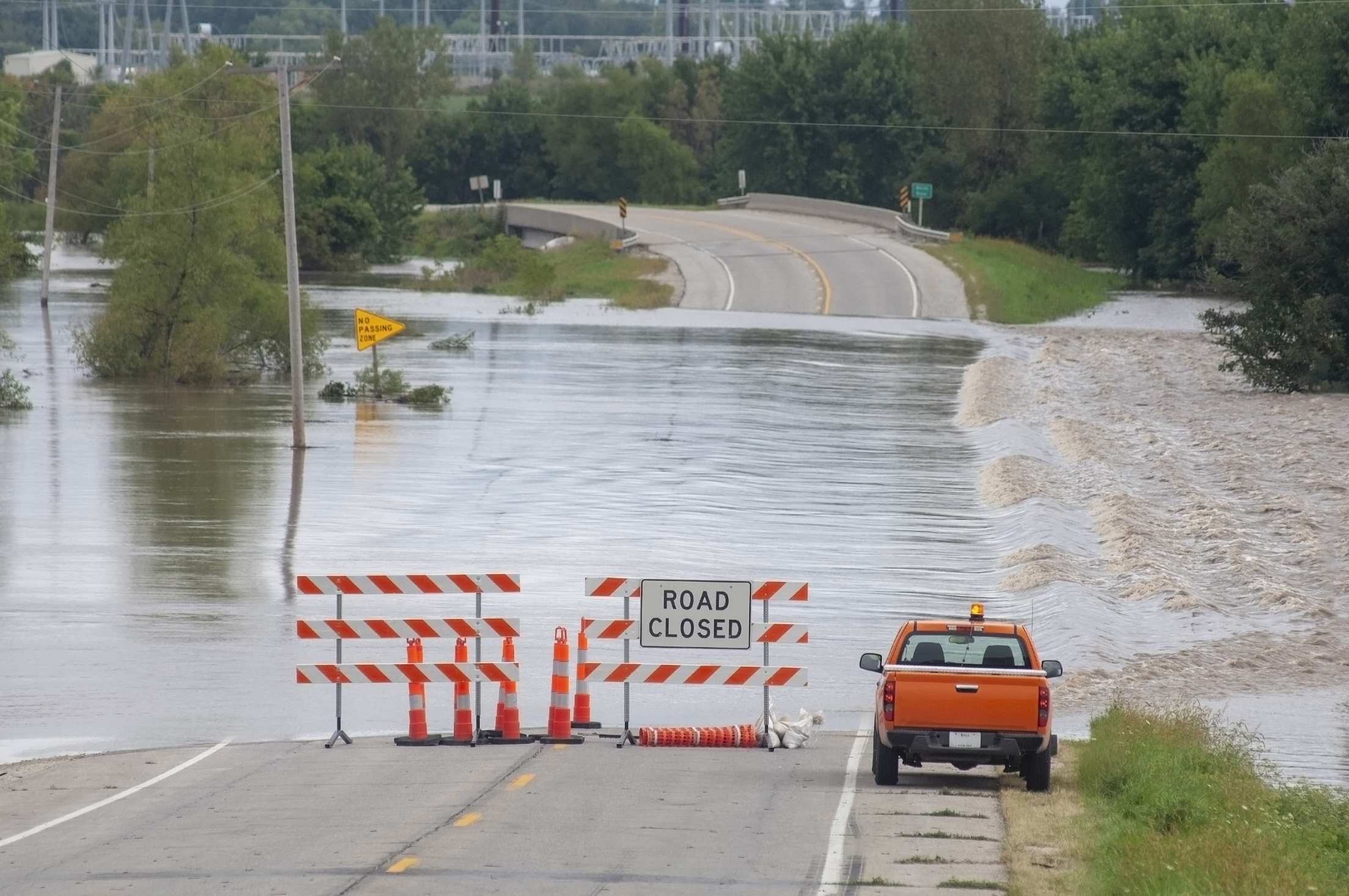
The best way to stay safe around floodwaters is to avoid them entirely. If you encounter a flood, do not try to drive through it.
“It comes down to avoiding any amount of water on the road where you can't see the road itself,” says Dr. Natalie Bonthius, emergency medicine physician at Dartmouth and founder of Survival Med. “It's very easy to underestimate the depth and speed. You have no idea what the stability of the ground is like under that water.”
If your tires can’t safely meet the road, your safety is in jeopardy. The stability of your vehicle is entirely based on the friction between the tires and the road; once they lose contact, you’re in danger.
“If you see that the road has been covered, go some other way,” says Belles.
Get out of your car.
If you do find yourself stuck in floodwaters, you need to take action quickly. Your first priority is to get out of the vehicle safely, avoiding fast-moving water if possible.
Van Tassel recommends getting the windows and the sunroof open as fast as possible. The weight and pressure of the floodwaters may make it dangerous or impossible to open your door.
“I apply the SURE method,” says Bassett:
- Stay calm
- Undo your seatbelt
- Roll down your windows
- Exit
If your car stops functioning properly, and you can’t open the windows, you may need to break them instead, and possibly cut your seatbelt. Having a tool like the resqme easily accessible in the glove compartment can help. However, it’s important to know whether your vehicle is equipped with tempered or laminated glass, as window-breaking tools have been found to be less effective on newer laminated glass windows. It’s essential to have a backup plan in case the escape tool doesn’t work, like exiting from the sunroof or hatchback.
Move to higher ground.
Getting out of your vehicle is the first challenge. Once you’re in the floodwaters, there are others. You don’t want to spend any more time in the water than is absolutely necessary. Bonthius notes that those waters may be carrying debris, sharp objects, animals, and pathogens.
“Getting to higher ground, maybe an overpass or a second story of a building, is really critical,” says Van Tassel.
Once you escape, move away from the vehicle quickly. “As the car continues to sink, it can take you down with it,” says Bassett, whether that’s from the vortex it creates in the water or your clothing getting snagged on something in the car.
What to Do After a Flash Flood
Schedule a vehicle inspection.
After a flash flood, when the water recedes, your vehicle may still not be safe. If your vehicle was submerged in water, its electronics may be damaged, impacting critical functions.
“There are lots of electronics in today's vehicles,” says Van Tassel. “None of them mix well with water, so they could be damaged, and the driver may not know it.” You might assume your automatic emergency braking or lane-keeping assistant system is working. But if it isn’t, it could be a big problem. It’s essential to take your car to the mechanic and have it checked, so you ensure it’s safe for you and others on the road.
Make smart choices, whether you’re buying, selling, insuring, maintaining, or repairing a vehicle.