
8 Best Campgrounds Within an Hour of a City
For last-minute camping plans, check out these nearby parks.


A weekend getaway usually comes with a long and laborious to-do list: pick a destination, pack the gear and snacks, and finally, make the trek out there (and hopefully avoid traffic while doing so). But escaping the city’s hustle and bustle doesn’t have to be complicated. Within an hour or so by car, these popular and lesser-known campgrounds feel a world away—where the air is fresh, the trees are tall, and the only thing on the agenda is spending time in nature.
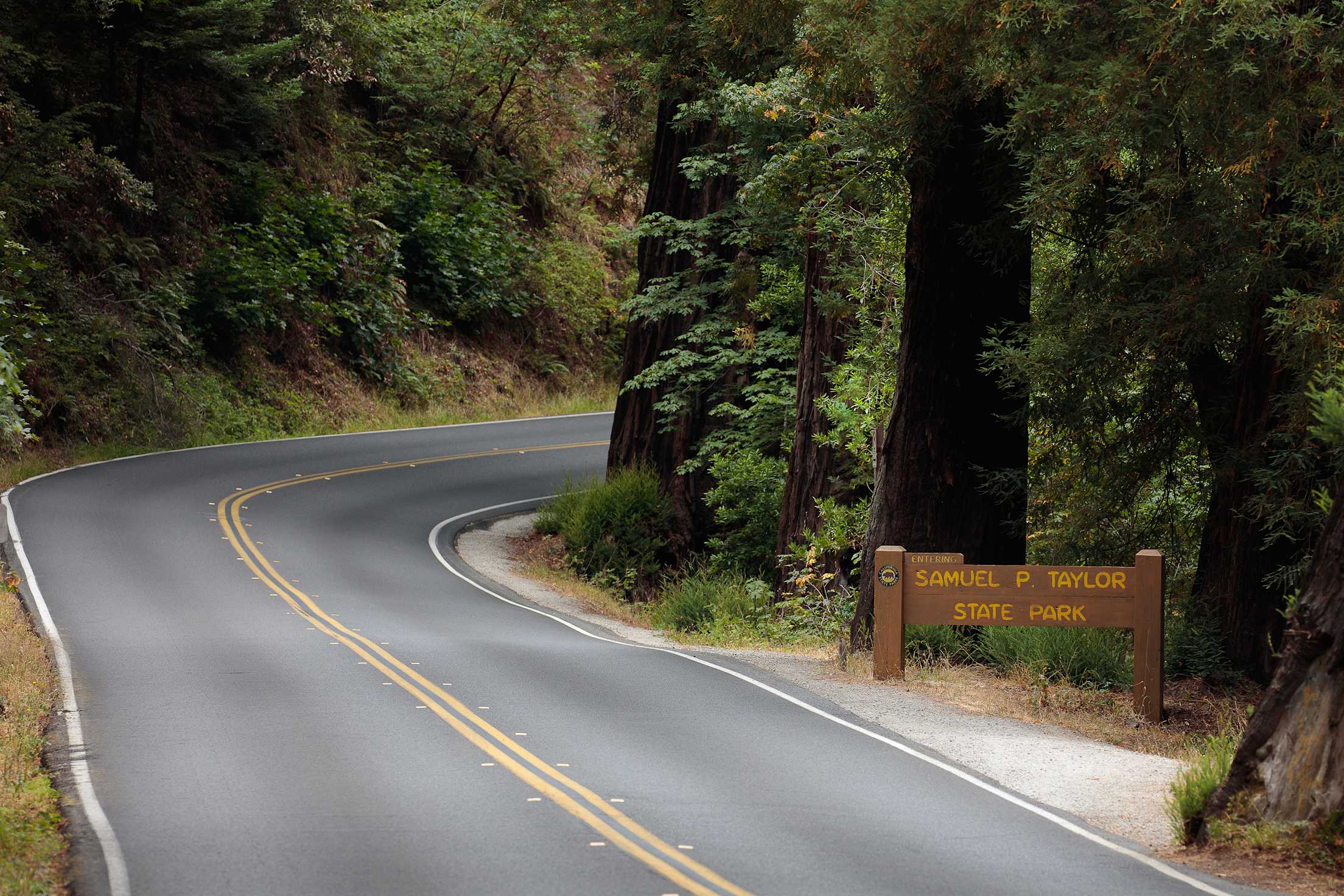
From San Francisco, California: Creekside Loop and Creekside Loop, Samuel P. Taylor State Park
Mount Tamalpais and Muir Woods get a lot of attention for their redwoods, but if you venture a little farther north you’ll find a quieter escape that’s tucked deep in the old-growth groves. Named after the man who established the first paper mill on the West Coast after the Gold Rush, Samuel P. Taylor State Park was once a late 1800s escape where San Franciscans vacationed, making it one of California’s earliest recreation campgrounds. Two main loops have 59 single-family campsites for tents and RVs, with access to restrooms, hot showers, and drinking water. Book at ReserveCalifornia.com from six months in advance to same-day reservations.
While there, hike the 2.7-mile Pioneer Tree Trail loop for a gentle and shady climb through the forest. Or, bike along the flat and paved Cross Marin Trail, which runs three miles through the park along the old North Pacific Coast Railroad path. Look for coho salmon or steelhead trout in Lagunitas Creek. If you have the time, it’s worth taking a day to explore nearby Point Reyes National Seashore.
From Sacramento, California: Beals Point and Peninsula Campgrounds, Folsom Lake State Recreation Area
Stargazing isn’t a fruitful hobby in a brightly lit city. But just 30 to 40 minutes outside Sacramento you can spot the Big Dipper—and maybe even a shooting star—above Folsom Lake on a clear night. Fed by the American River, this nine-mile-long reservoir sits at the base of the Sierra foothills and draws swimmers, paddlers, and campers to its sunlit shores. Near the Folsom Dam, Beals Point Campground offers 69 tent and RV sites, while the more secluded Peninsula Campground on the north end has around 90 sites without hookups. Save a spot up to six months in advance at ReserveCalifornia.com; sites fill up quickly, especially in the summer.
Cool off on a hot day at the Granite Bay sandy beach with a dip in the buoy-enclosed swim area. Rent paddleboards, kayaks, and massive lake floats from the Anchored Eats snack bar, which also runs a mobile boat cafe on the water. One hundred miles of hiking trails surround the lake, including the Pioneer Express Trail, which follows the lakeshore for nine miles. Or, bring your bike to ride the 32-mile, multi-use Jedediah Smith Memorial Trail to Old Sacramento.
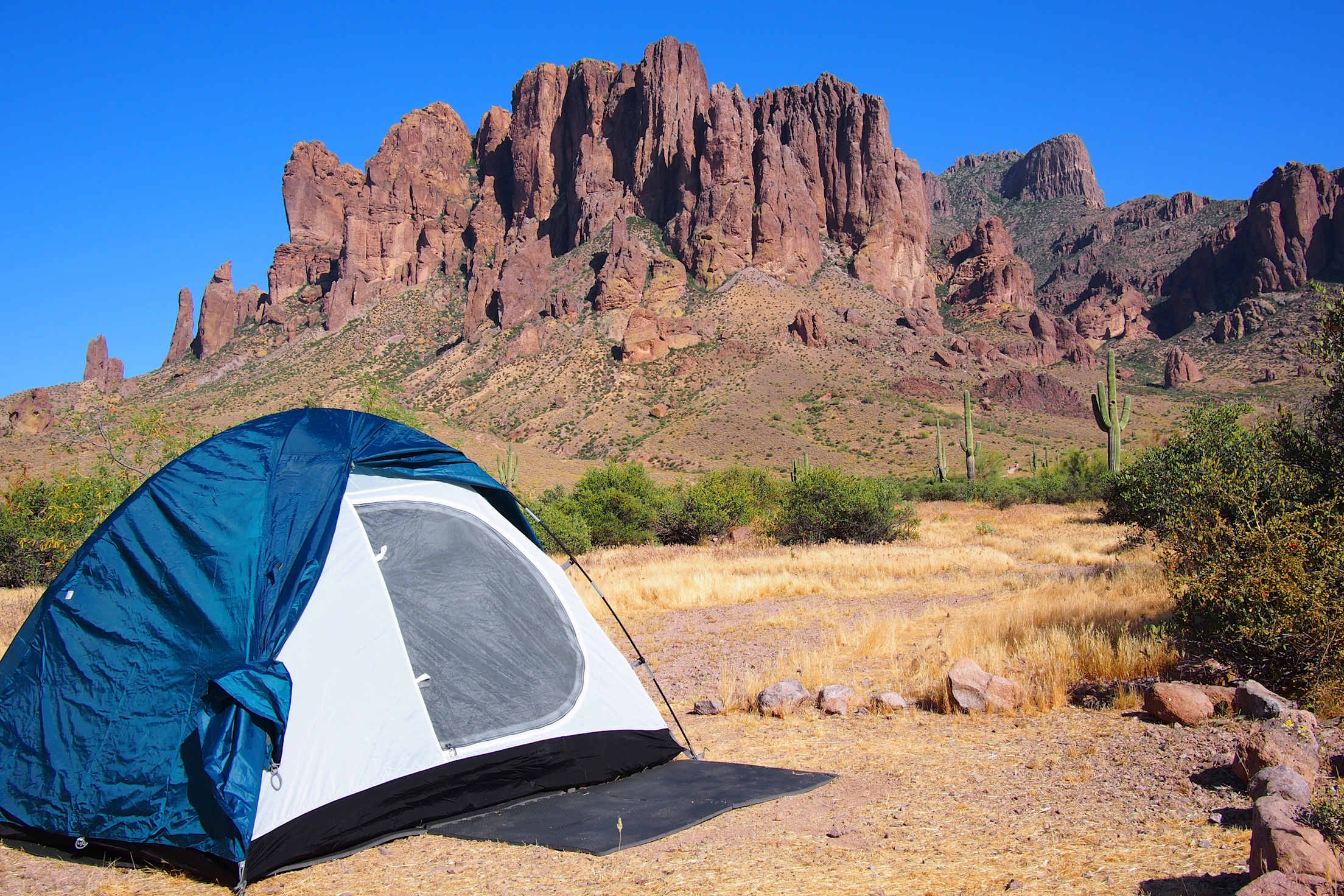
From Phoenix, Arizona: Main Campground, Lost Dutchman State Park
Among the most photographed sites in Arizona, the Superstition Mountains’ steep cliffs and jagged peaks rise 6,000 feet above the Sonoran Desert. Due east of Phoenix, Lost Dutchman State Park sits at their base, where a forgotten gold mine is rumored to be hidden. Spread across several loops, the campground here has 135 sites for tents and RVs, each with fire pits and picnic tables. The dramatic reddish-brown rock formations rise in the distance, but take note: Shade is scarce and temps exceed 100 degrees in the summer. Spring, fall, and even winter bring milder weather. Make reservations up to a year in advance at AZStateParks.com.
During your visit, don’t skip the nearly half-mile Discovery Trail, which runs between the day-use area and the campground. The path leads through native plants like towering saguaros, palo verde trees, creosote, and cholla, with interpretive signs highlighting desert wildlife and beautiful views of the mountains along the way.
From Las Vegas, Nevada: Red Rock Canyon Campground, Red Rock Canyon National Conservation Area
As the city of neon lights and magic shows, Las Vegas isn’t usually touted as a hub for the outdoors. Oh, but it is. Only 30 minutes outside of the Strip, Red Rock Canyon National Conservation Area features desert cliffs, buttes, and towers in a mesmerizing rust red. It’s easy to get there along Highway 159, and the campground makes it appealing to stay. Reserve one of 53 sites at Recreation.gov up to six months in advance. Visiting between October 1 and May 31? You’ll also want to snag a timed entry for each day you plan to drive the 13-mile scenic loop—unless you enter before 8 a.m. or after 5 p.m. Important note: The campground is closed during the summer due to heat.
Inside the park, choose from 26 different hikes that take you deep into the canyons, up close to petroglyphs, and onto peaks. Look for desert birds and flowers along the way. While there’s plenty to do throughout the park, you’ll want to be settled into camp for sunset so you can relax while the sky above the Mojave Desert turns every pastel shade.
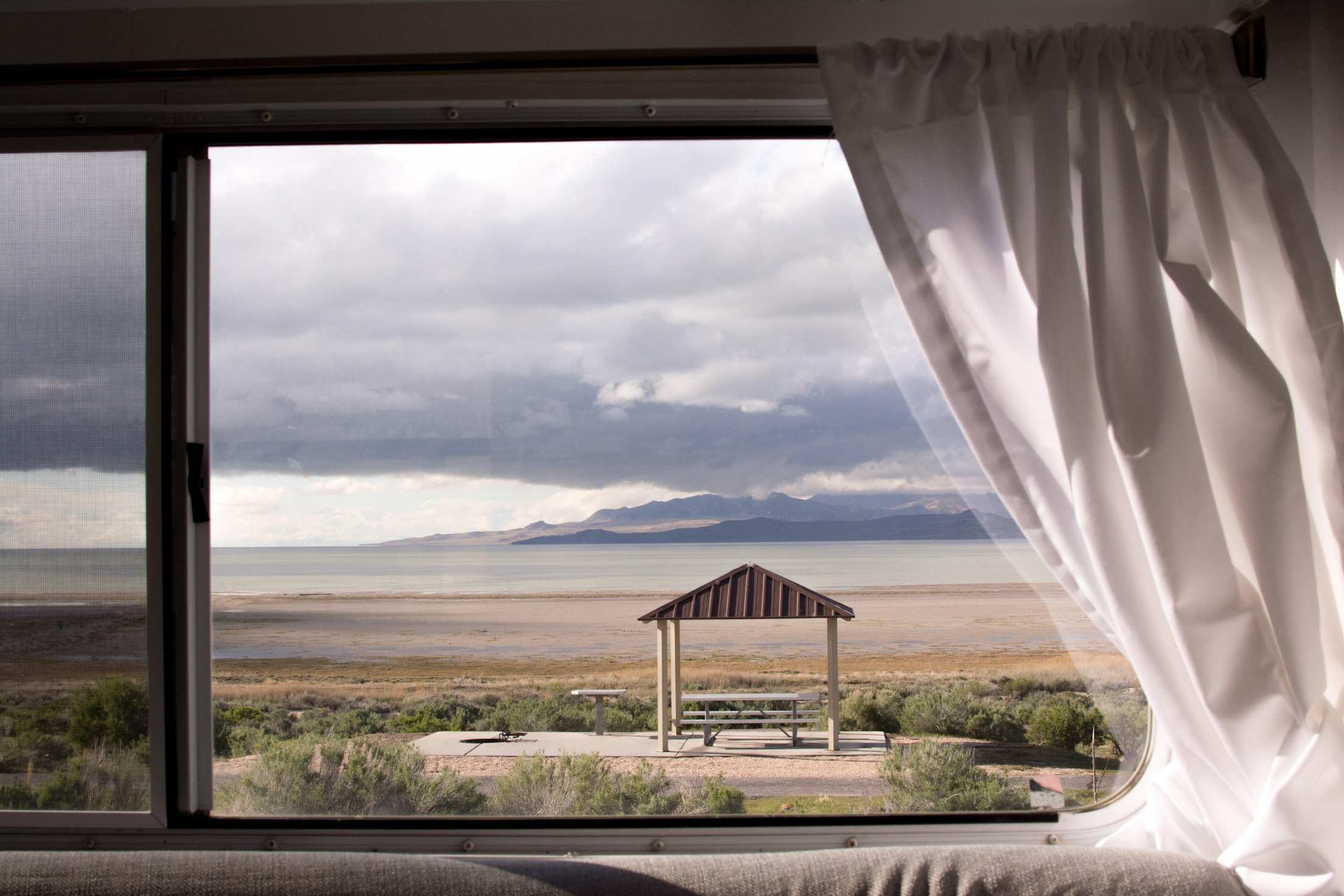
From Salt Lake City, Utah: Bridger Bay Campground, Antelope Island State Park
In 1893, ranchers relocated 12 bison to Antelope Island, the largest of the Great Salt Lake islands, to help preserve the species. The plan worked, and the herd has since grown to around 700. Alongside them, pronghorn antelope, mule deer, bighorn sheep, and migratory birds roam freely on dry lake bed and rolling grasslands. On the north side, Bridger Bay is the island’s main campground with more than 60 roomy sites for tents and RVs, each with a shade structure and view of the expansive prairie. Bison and deer often wander through the campground; give them space and they’ll move along. Reservations open on a four-month rolling basis through Utah State Parks and are strongly recommended, especially on weekends.
Arrive with a full tank of gas and enough food for your stay since there aren’t many amenities aside from the visitor center and the aptly named Island Buffalo Grill. You’re guaranteed to see bison without even trying, but you’ll get the best wildlife views at sunrise and sunset (when day-use visitors are less likely to be on the island). When you’re ready to explore further, swim or paddle from Bridger Bay Beach and take to the 45 miles of scenic trails, such as the roughly five-mile roundtrip Lakeside Trail along the shore.
From Billings, Montana: Emerald Lake Campground, Custer Gallatin National Forest
The 3-million-acre Custer Gallatin National Forest is only a slice of the Greater Yellowstone Ecosystem, spanning high alpine peaks to pine savannas to rolling badlands. Within its boundaries is Emerald Lake, a small natural body of alpine water at the end of a forest service road. Though isolated, its 32-site campground is popular in the summer for fishing, swimming, and paddling. Visit during the week to increase your chances of snagging one of the coveted first-come, first-served spots ($15 per night via a self-pay system).
At the campground, you’re near some of the state’s tallest peaks, including Tempest Mountain, Granite Peak, and Mount Hague; their snowmelt feeds West Rosebud Creek, which lulls you to sleep at night. While here, follow the road and creek west to West Rosebud Lake, or tackle the nearly six-mile moderately difficult, out-and-back trail to Mystic Lake for stunning views before cooling off with a float or quick dip in Emerald Lake.
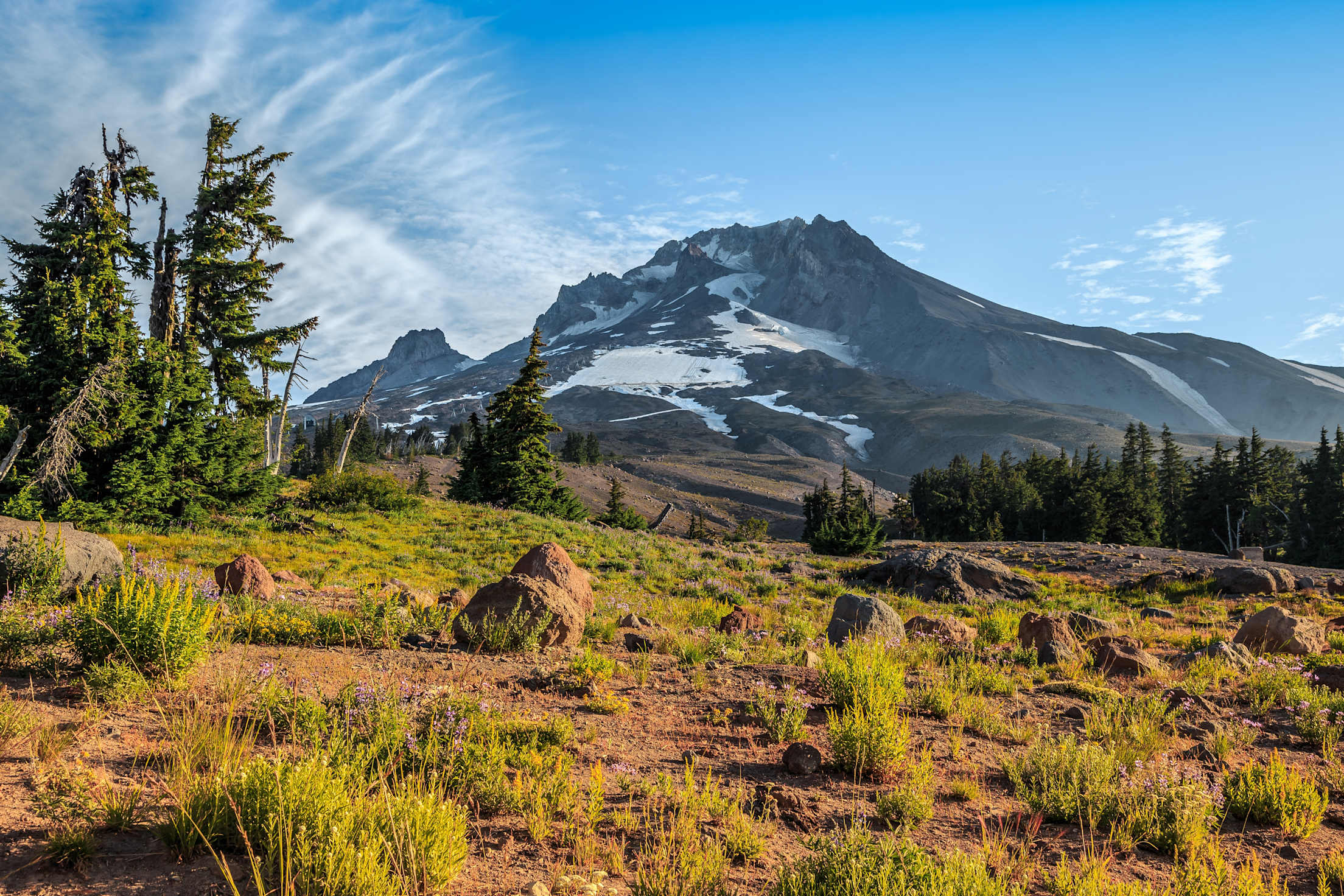
From Portland, Oregon: Tollgate Campground, Mount Hood National Forest
While there are ample places to camp in the abundant wilderness outside of Portland, it’s hard to ignore the call of snowcapped Mount Hood, which beckons from the eastern horizon on clear days. Set up your tent under the Douglas firs at the mountain’s base at Tollgate Campground in Rhododendron. With only 14 sites, it’s quite small, but its proximity to everything you want to do in the vicinity makes it a prime basecamp for exploring the area. Sites open for reservations at Recreation.gov up to six months in advance, and you’re allowed to stay for a maximum of 14 days.
Bask in the soothing sounds of the Zigzag River at the campground, or venture farther along Highway 26 to hike to several waterfalls. Little Zigzag Falls, Lower Zigzag Falls, Tamanawas Falls, and Umbrella Falls are all popular hikes of varying difficulty. Whether you’re summer skiing—lifts typically stay open June through August—or just looking for views of the summit, grab lunch at the historic Timberline Lodge.
From Cheyenne, Wyoming: Vedauwoo Campground, Vedauwoo Recreation Area
Driving along Interstate 80 between Laramie and Cheyenne, you can’t miss the gigantic pile of rocks. This is the Vedauwoo Recreation Area, a Sherman granite formation that rose to the Earth’s surface about 70 million years ago during the Precambrian period when magma cooled deep underground. Today it’s a popular site for rock climbing, amateur geology, hiking, and camping. This spot has two popular campgrounds connected by a paved road: one with 20 tent-only sites and another with 28 non-electric sites for tent or RV camping and walk-in sites, half of which operate on a first-come, first-served basis. Free dispersed camping is also available in the surrounding Medicine Bow National Forest.
Limber pine, Engelmann spruce, Douglas fir, and aspen trees provide a welcome amount of shade and cool spots during the camping season. For 360-degree views of the rock formation, follow the Turtle Rock Trail (accessible via the lower parking lot below Walt’s Wall) around the boulders along a level gravel path for nearly three miles.