Emilia-Romagna: Slow Food, Fast Cars
In Italy’s Motor Valley, world-class meals and supercars share the same stretch of road.


The red wall outside Ristorante Cavallino in Maranello, Italy, is emblazoned with a large black horse rising up on its hind legs. Any auto enthusiast would immediately recognize the iconic logo for Ferrari, and it’s obvious why it’s here: Cavallino is directly across the street from the Ferrari factory. In fact, the building once housed the company canteen. A bit after noon, the street is crowded with factory workers in racing-red coveralls taking their lunch breaks. I don’t see any of those coveralls inside. Cavallino is an upscale place, crowded with men wearing suits and blazers; many, I assume, are Ferrari executives. The decor is replete with company memorabilia: photos of founder Enzo Ferrari, the nose of a Formula 1 race car, a V-12 engine from a 1947 125 S. But it’s still elegant, with brick archways, yellow banquettes, and white tablecloths.
The menu comes from Massimo Bottura, better known as the chef-owner of Osteria Francescana in nearby Modena, which has twice taken the top spot on The World’s 50 Best Restaurants list; he took over Cavallino in 2021. My meal there is easily one of the highlights of my trip: tortellini in Parmigiano-Reggiano cream sauce, cotechino (pork sausage) with sour cherry and black truffle, and creme caramel made with 36-month-aged Parmesan and balsamic vinegar. Each dish is deeply rich, with alternating pops of acid and fruity sweetness. That meal and the restaurant where I ate it embody the juxtaposition of slow food and fast cars, of craft and speed, for which Emilia-Romagna—the region in northern Italy just south of Milan thatstretches 200 miles from the Apennines to the Adriatic Sea—is justly famous.
The roughly 60 miles between Parma and Bologna, with Modena in the middle, are home to some of the world’s best-known car companies: Ferrari, Lamborghini, and Maserati, along with racing specialists Dallara and motorcycle maker Ducati. Appropriately, the region is known as “Motor Valley.” But it’s just as well-known for its signature foods: Parmesan cheese, prosciutto, balsamic vinegar, and mortadella were all either born or achieved their most superlative expressions in this same small area. I’ve come here to experience them all.
Parma: The Best Ham and Cheese
My Motor Valley journey begins in Milan. In my humble rental car—a decidedly unglamorous Fiat—I leave Italy’s fashion capital behind and descend into a long, low valley. I wind through small towns, cross rivers on stone bridges, and pass one green farm plot after another.
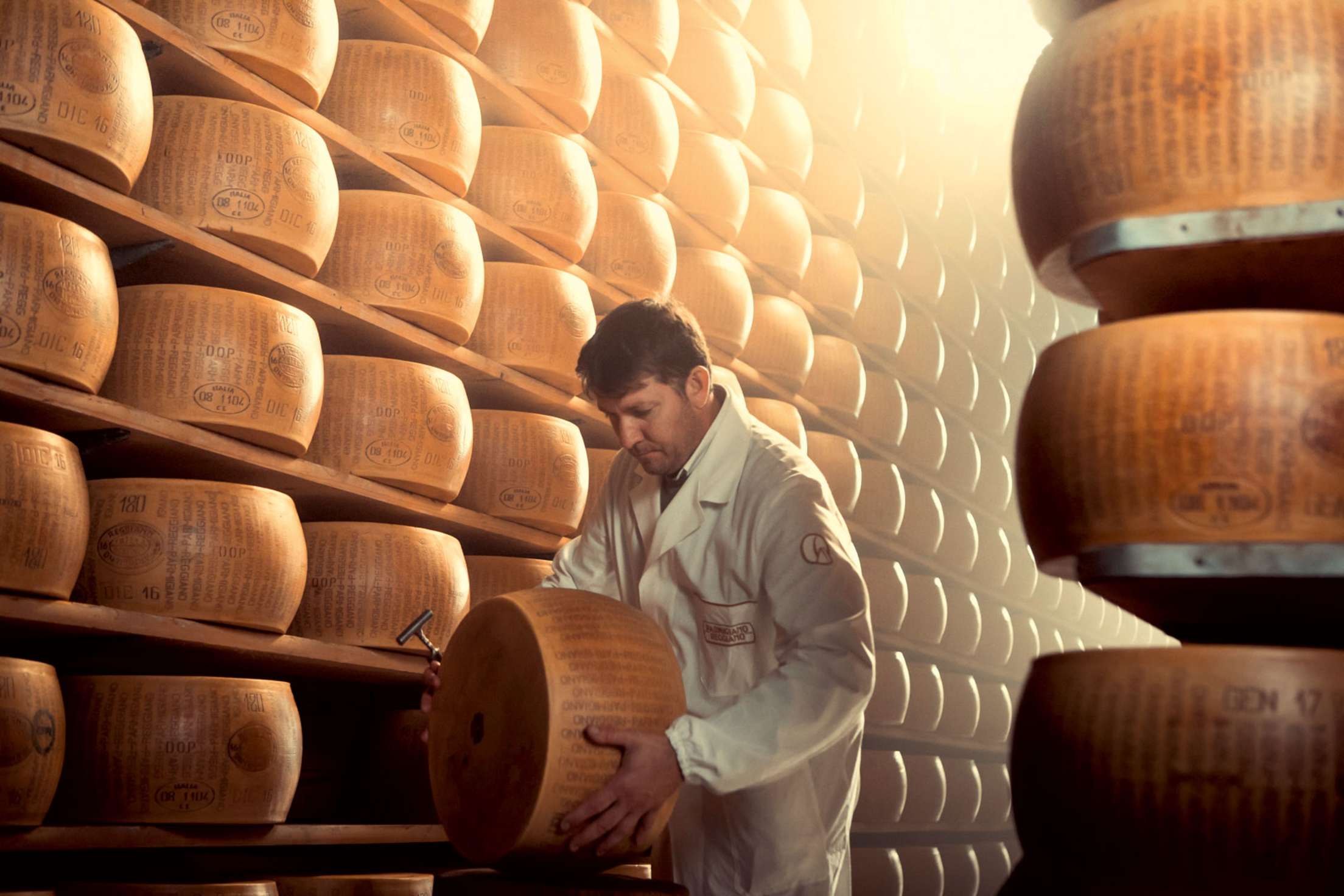
I’ve come hungry, and my first stop is the Consorzio Produttori Latte, a nearly 100-year-old cooperative dairy and cheese factory just outside Parma. I’ve arranged for a tour to see how Parmigiano-Reggiano is made.
“Parmigiano was invented in the Middle Ages by Benedictine monks,” says Sara Dallacasagrande, a local guide, as we watch workers in hospital-style scrubs carefully sift through vats of whey to check the masses of cheese. “They created farmhouses structured as small industries.”
In the factory’s aging cellar, I crane my neck to look up at hundreds of finished wheels of cheese, stacked to await maturity. Dallacasagrande shows me how the experts evaluate each and every wheel, tapping on the sides of one with a special hammer to find inconsistencies. At the end of the tour, we’re given samples of cheese aged 12, 24, and 36 months. As the chunks get older, they get drier and more crumbly, and the flavor grows more intense, the aroma more pungent.
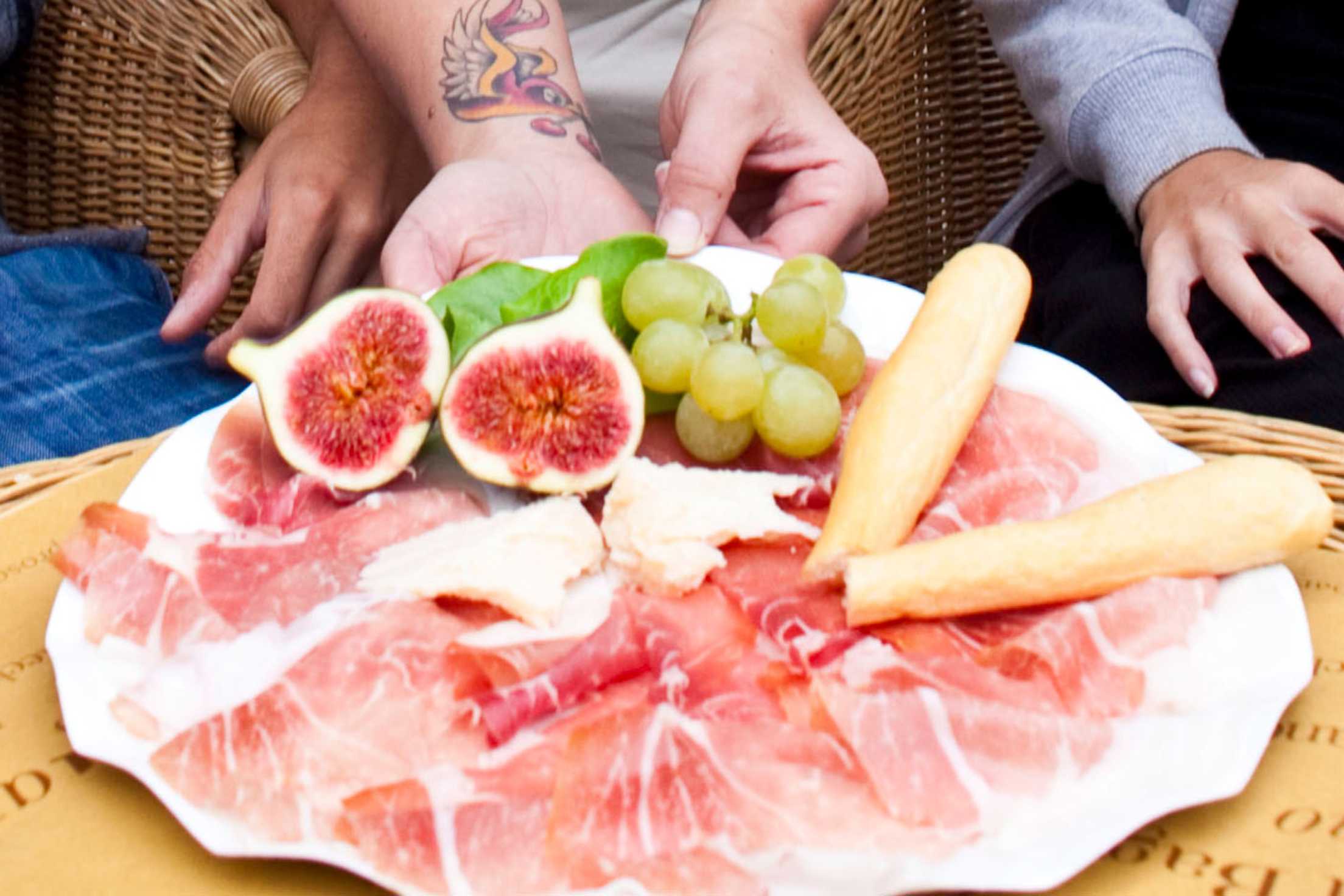
We have lunch at the rooftop restaurant of the Fratelli Galloni prosciutto factory in Langhirano. I look out at the verdant valley and up at the rolling Apennines, then down at my plate of impossibly thin slices of ham. Dallacasagrande explains why Emilia-Romagna became home to some of Italy’s most beloved foods.
“Western Emilia was initially a difficult land— humid marshes along the Po River, thick forests in the hills, no seaports,” she says. “The locals had to modify the environment to our benefit. The engineering and mechanical skills of the Emilian people enabled the switch from family-run production to artisanal industry.”
It’s all very interesting, but I lose the thread when I put that first slice of prosciutto on my tongue. “It melts in your mouth,” she says, completely correct. My mom taught me not to speak with my mouth full, and I’ve already forked in a second slice, so I simply nod.
Hunger sated for now, I’m ready for a taste of Emilia-Romagna’s automotive achievements. Less than an hour away, in a peaceful gully near the village of Varano de’ Melegari, stands the Dallara Academy museum. Giampaolo Dallara founded his company in 1972, after working for Ferrari, Maserati, and Lamborghini. On his own, he focused on race cars, with great success: Since 2008, Dallara has been the sole provider of chassis for the IndyCar series.
The academy’s exhibition space displays many of Dallara’s designs, parked on a ramp that curves like a banked racetrack, alongside picture windows that look out over a babbling river. There are IndyCar and Formula 3 racers, which sit so low to the ground they look like overgrown go-karts; a 1966 Lamborghini Miura, the graceful midengine V-12 that Dallara himself helped design; and the Stradale, the company’s lone street model, a carbon-fiber missile that goes from zero to 60 in 3.2 seconds. The racing version of this car, an employee tells me, generates more downforce than the car weighs—meaning that at speed it could theoretically drive on the ceiling. Sadly, though, test drives aren’t on offer.
After the short drive back up the valley to Parma, I leave my rental at the hotel and go for a walk in the historic Parco Ducale. The region’s erstwhile rulers, the House of Farnese, commissioned these stately gardens more than 450 years ago. I stroll past shade trees, ponds, statuary, and the Palazzo Ducale (Ducal Palace) itself before crossing the river into the city center.
I continue along tightly winding cobblestone streets, past Renaissance churches, piazzas, and tourists lapping up Aperol Spritzes at outdoor tables, to Borgo 20. This cute, contemporary bistro offers me my second platter of prosciutto of the day, which I happily accept. It’s followed by a risotto garnished with more pork (this time, crumbled speck, the lightly smoked ham from South Tyrol). After that, I worry I might be too heavy for any sports car to carry me down the road. I’ll find out tomorrow.
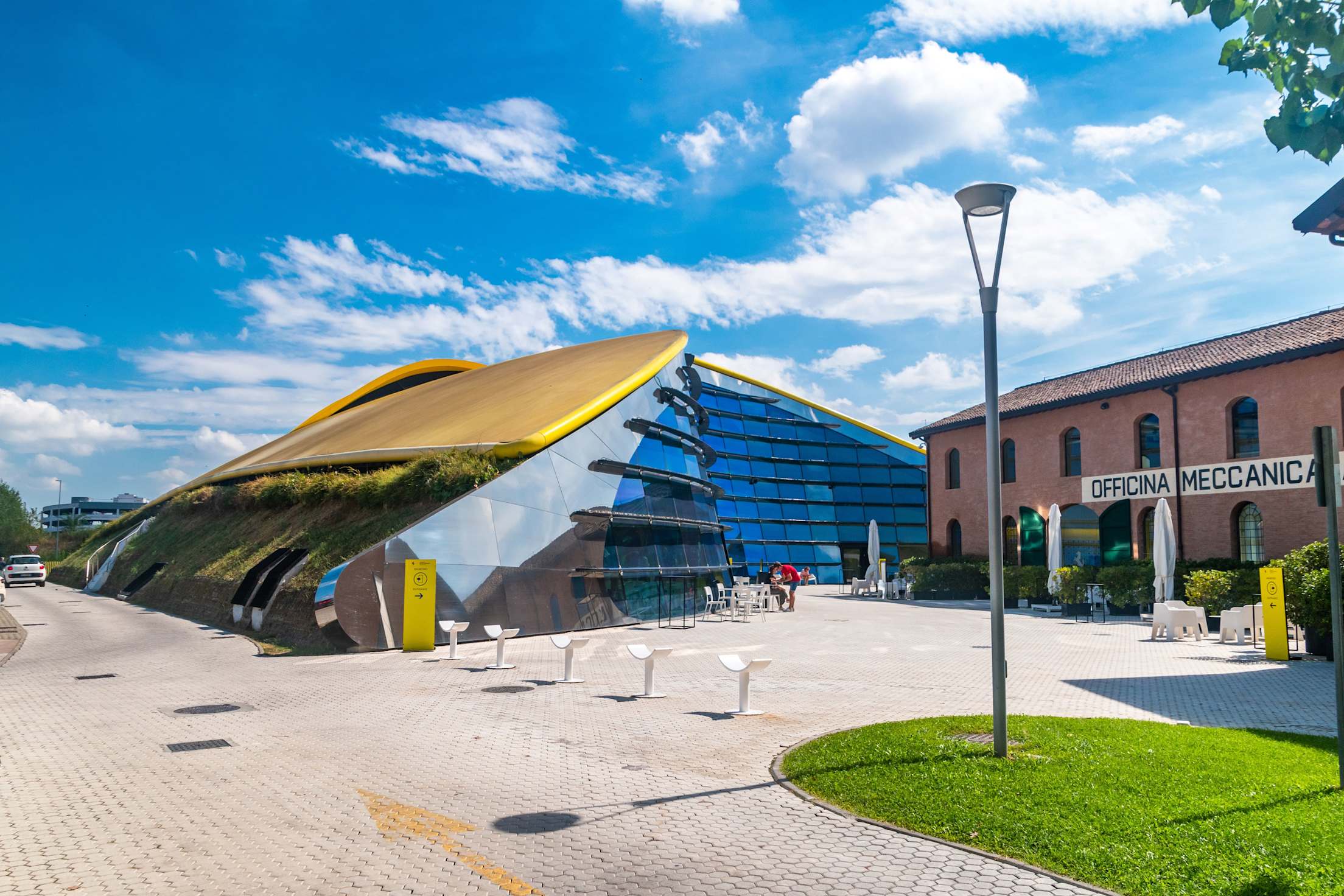
Between Parma and Modena—about 45 minutes on the highway—the landscape is agricultural, flat, and green. The city center here looks much like Parma’s, but my destination lies just outside the old town.
The Museo Enzo Ferrari is housed in the nearly 200-year-old brick building where the Ferrari founder himself was born. It’s encircled, seemingly embraced, by an arching, very 21st-century exhibition space. Both structures contain cars that illustrate how Ferrari became one of the most legendary brands in automotive history.
The highlight, for me, is seeing an F40 up close. Released in 1987, the near-mythic super car had a top speed of 201 mph. Only 213 were imported into the U.S., and I never thought I’d encounter one in person. Yet here I am, looking down at the long nose, the giant rear spoiler, the air intakes flanking its doors, the almost impossibly low profile, and the bright-red paint job. Through the slatted rear window, I can see the turbocharged V-8 engine. I feel my foot trying to press an illusive throttle, but there’s no taking this museum piece offsite.
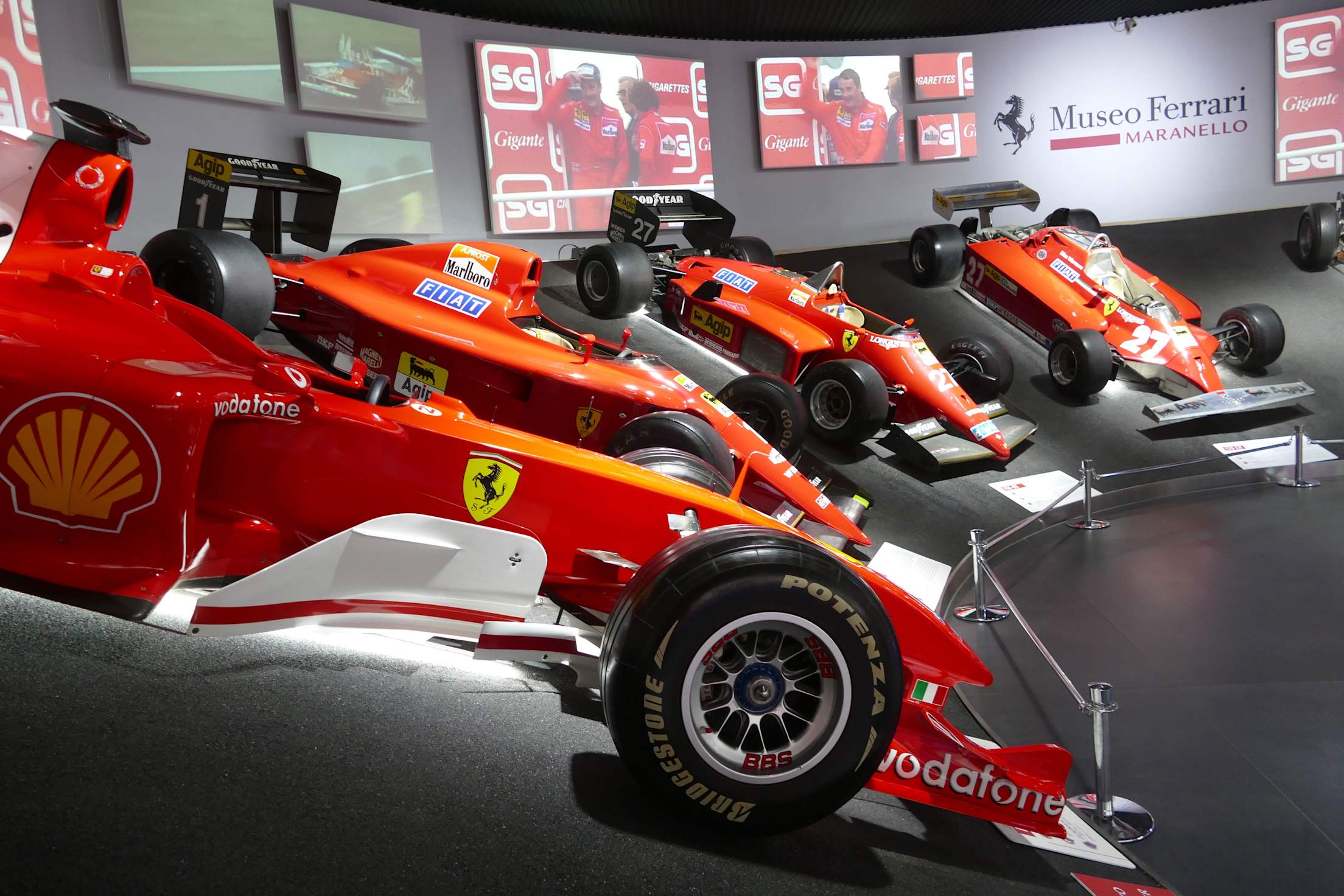
That’s just the start of my Ferrari-themed day. I drive about 12 miles south to Maranello, the company’s base of operations since World War II. As I approach a roundabout encircling a statue of the prancing horse logo—an emblem which, I learned at the museum, was gifted to Enzo by a countess whose son had used it on his fighter plane in World War I—a red Ferrari zooms past my humble rental.
Ferrari offers a factory tour by bus—it’s a big factory—but I elect to skip it in favor of the Museo Ferrari Maranello. The main exhibit here focuses on the history of the racing team, Scuderia Ferrari. They include several cars that Michael Schumacher drove during his dominant early-2000s run of five straight Formula 1 championships. There’s also a 1967 330 P4, the tubular model that finished first and second at the 1967 24 Hours of Daytona race. (A Ferrari 412 P finished third, for a clean sweep of the podium.) That right foot of mine is twitching again.
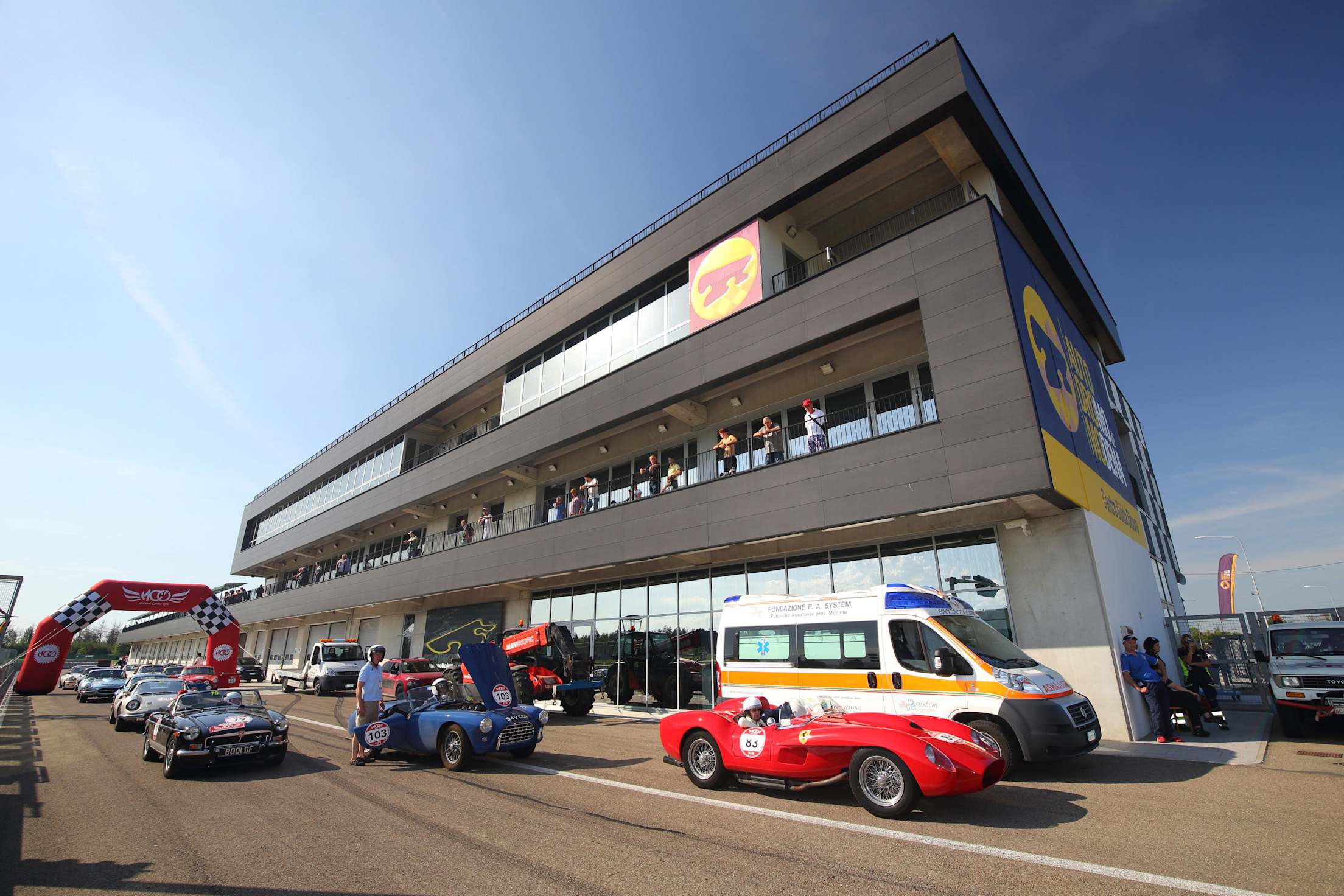
After my lunch at Cavallino, it’s time to give that foot something to do. I’ve booked an Emotions on Track session at the Autodromo di Modena, where I’ll be taking a few laps in a Ferrari—specifically, a 670-horsepower 488 Challenge, which looks like an F40 but slightly curvier and much faster. First, there’s an orientation from an instructor, Pietro, who provides an overview of the course and a few tips. “With the brake, be rude,” he advises.
Then, helmet on, I’m in the driver’s seat, slung so low I’m nearly sitting on the ground. Even at idle, the turbocharged V-8 growls like it’s about to tear itself from the engine bay. Another instructor sits next to me in the passenger seat; when he gives me the thumbs-up, my foot hits the floor.
I’ve driven on tracks before, but something about driving a Ferrari in Italy has me nervous; my first lap is littered with missed braking points and poor lines. By the time I’m on the back straight, though, I’ve collected myself, and I go howling across the finish line and into a smoother second lap. As I pull back into the pit lane, my instructor gives me another thumbs-up.
Modena: From Maserati to Lamborghini
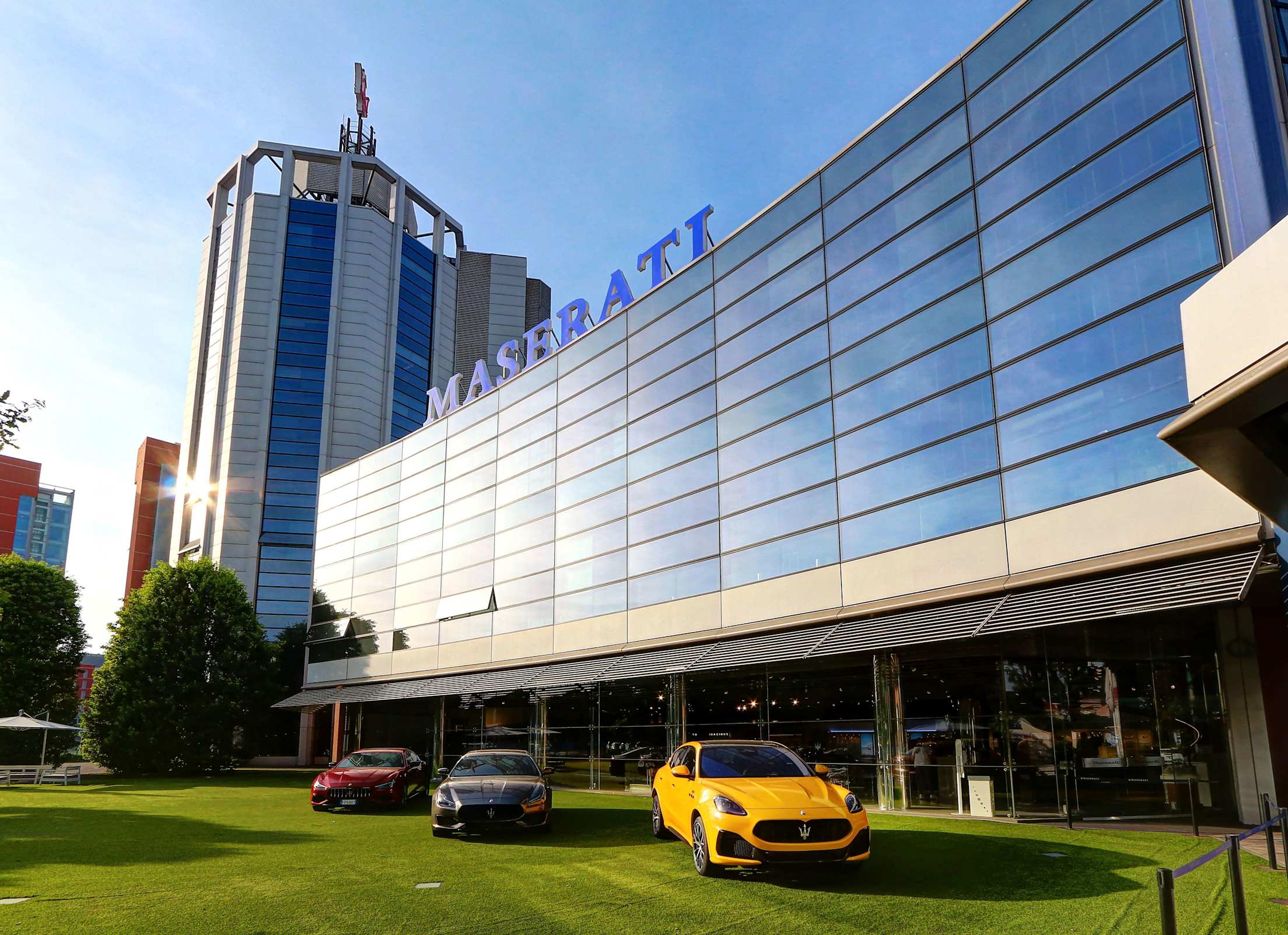
That track session merely whets my need for speed, and the next day is full of fast cars. Just blocks from the Ferrari museum is the Maserati factory, where I’ve signed up for a tour.
On my 90-minute guided walk, I watch workers put together the company’s flagship model, the MCPura. To say that the standards here are exacting is an understatement: The doors to one workshop are pressurized to keep out dirt. Watching two workers install a windshield, my tour guide Alessandro says, “It’s a metaphor for the human body. We build the skeleton, then we add the organs, and finally we apply the skin.” Maserati produces about six MCPuras a day, but to my eyes, the attention to detail is worth it: With its impeccably smooth lines, this 621-horsepower arrowhead could be the most beautiful car on the road today.
Having seen the peak of futuristic automotive technology, I walk a few blocks back into Modena’s old town, passing its Palazzo Ducale (constructed starting in 1634) and the Romanesque Modena cathedral (which dates to 1184). My destination for lunch isn’t quite so venerable: The Art Nouveau Mercato Albinelli, which has served the city only since 1931.
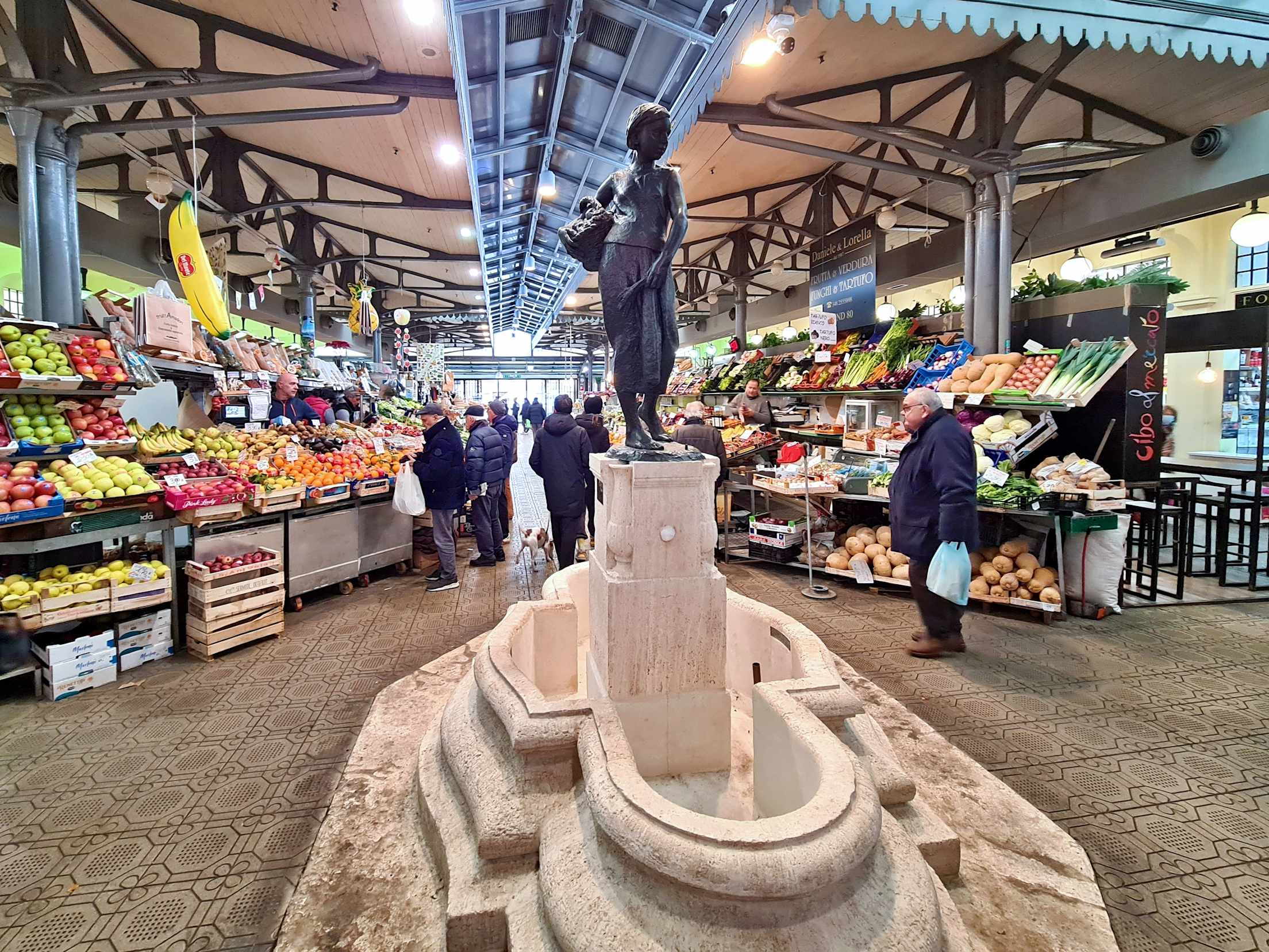
The covered market is jammed with counters selling fruits and vegetables, salumi and cheeses, fresh fish, breads, and pastries, which the Modenese transform into the slow, sensual meals for which their country is so famous. I’m not here for groceries, though; I seek Bar Schiavoni.
This sandwich shop, on the edge of the marketplace, had a brief moment of pop culture fame when Aziz Ansari visited for a 2017 episode of his show, Master of None. I get the house specialty, a sandwich of cotechino sausage and pesto on ciabatta bread. It’s hot, spicy, crunchy, and greasy— and possibly the best thing I’ve eaten so far.
After that sandwich, I could probably use a nap, but I opt instead for another jolt of speed. Just 25 minutes down the Via Aemilia—a historic road built by the Romans that today looks like just another byway—in the village of Sant’Agata Bolognese is the Lamborghini museum and factory.
Ferruccio Lamborghini, who made his fortune building tractors, started assembling sports cars in the 1960s. The story is that he’d bought a Ferrari 250 GT and thought he could do better. Did he achieve his goal? That depends on the eye of the beholder. Walking through the museum, I’m struck by how distinct his company’s cars appear from their rivals.
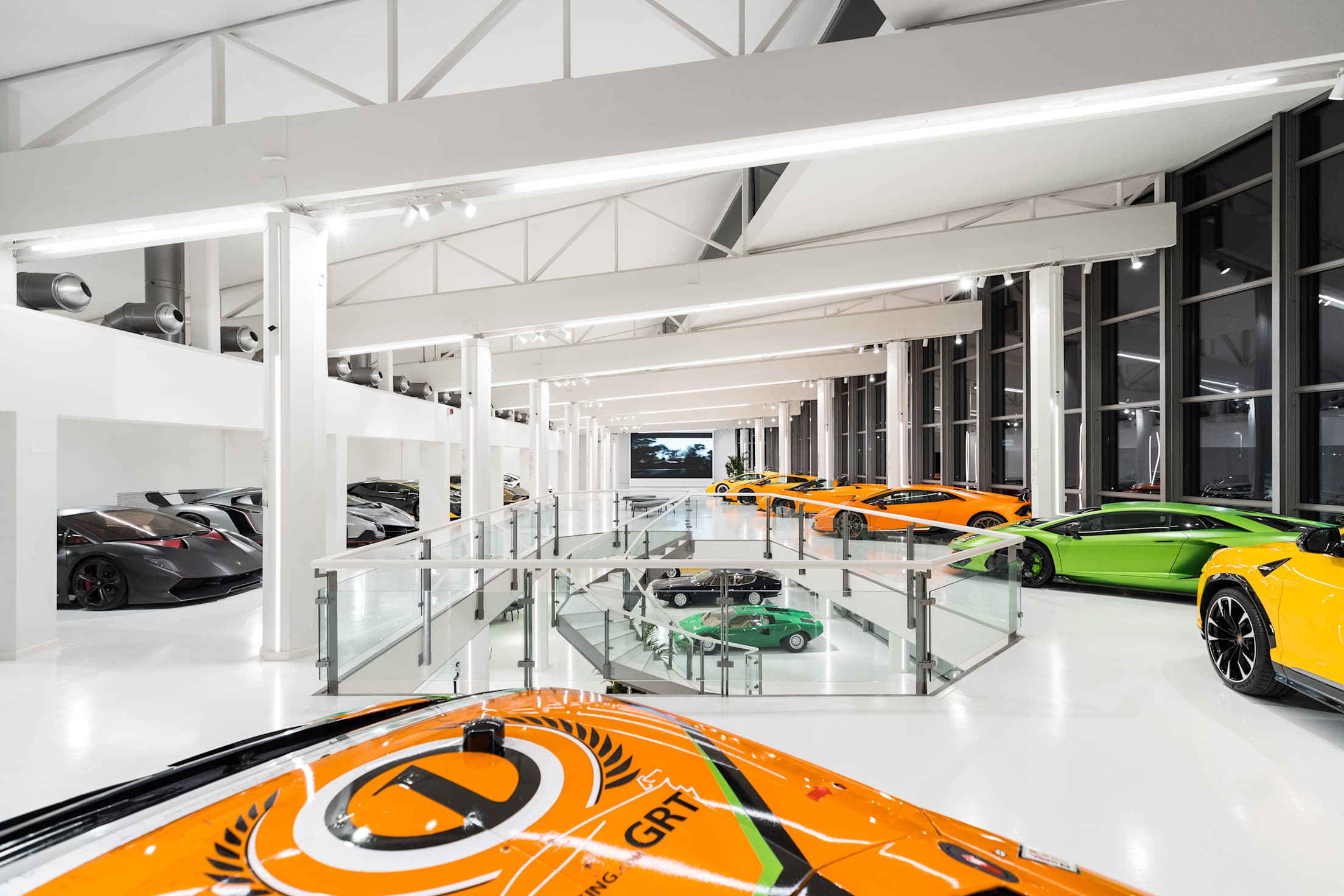
While Ferraris are all sexy curves, Lamborghinis sport sharper angles, more muscularity. (Appropriate, I suppose, given that most models get their names from the world of Spanish bull fighting—hence the bull statue on the road into town.) As a child, I loved the spaceship-like Countach and Diablo; as an adult, walking the floor of the museum, I’m drawn more to the company’s first great achievement, the Miura. With its sleek, aerodynamic lines, it has appeared in exhibits all over the world. It truly is a work of art.
The afternoon waning, I speed the 25 miles to Bologna as quickly as my Fiat can manage. The regional capital is rich with history: Its university opened in 1088, its giant basilica dates to 1390, and UNESCO has designated its porticoes a World Heritage Site. The city feels both aged and young at the same time. I pass by the stout Porta San Felice, one of the 10 gates that are the last remnants of the once-mighty medieval walls, on my way to the Piazza Maggiore. Then I wander the pedestrian-clogged streets, beneath all manner of stone archways and battlements. The youth of the people everywhere, though, reminds me that this is also still a college town.
On the slow-versus-fast spectrum of Emilia-Romagna, Bologna leans toward the speedy, thanks in part to its larger size, its student population, and its status as the home of Ducati, the Ferrari of motorcycle-makers. Its CEO, Claudio Domenicali, has acknowledged that duality: “This combination of art and performance, emotion and technology, is what makes Ducati special,” he said at a Motor Valley media event in 2022. “Emilia-Romagna is about being dedicated to working, but when you finish working, try to enjoy yourself.”
I’m aiming to do just that tonight at Trattoria Da Me. Opened in 1937, it has long been one of the city’s most beloved restaurants, thanks to updated, creative takes on traditional regional dishes. I endeavor to order as much as I can: a platter of mortadella and crescentine (crisp flatbreads spread with pork lard), a tomato salad that pops in the way only the freshest tomatoes can, tortellini in brodo (broth), and osso buco (veal shank) with a saffron sauce. It’s one of the best meals of my life.
Seated at a rustic wooden table in the dimly lit yet buzzy dining room, my stomach digesting, I finally feel myself slowing all the way down.
Let AAA Travel Advisors plan your trip. It's an exclusive benefit for AAA Members.