
10 Best Winter Hikes in the West
These easy trails shine when the mercury falls.


The first time I went hiking in winter, I was sure my friends had lost their minds. This was Montana, not Florida. The thermometer hovered around 20 degrees with snow piled up around our Bozeman rental. Heading into the wild felt like a recipe for a rescue.
I was wrong. At Fairy Lake, we wandered in regular hiking boots on a snow-packed trail through a world of sky, ice, and a hush so deep it felt physical. We had extra clothes and snacks—and even a fire starter, just in case—but nothing had prepared me for the grandeur. We had been invited behind the curtain to see nature at its best.
Decades later, I still chase that feeling. I bet you will, too. To get you started, here are some easy winter hikes where the magic shines as bright as the snow. You’ll need warm clothes, sturdy boots, and a willingness to be wowed.
Rim Trail in Grand Canyon National Park, Arizona
Compared with the boom days of summer, winter reveals one of the Grand Canyon’s most treasured gifts: silence. During the cooler months, the Rim Trail becomes a peaceful promenade along the South Rim, offering huge views for minimal effort. A short section—say, from Mather Point to Yavapai Point—gives you a mile or two of big-sky drama where snow clings to ledges and the canyon’s layers glow under crisp light. The trail tends to be paved or well-packed for easier navigation. Be on the lookout for mule deer that often wander through the forest atop the rim.
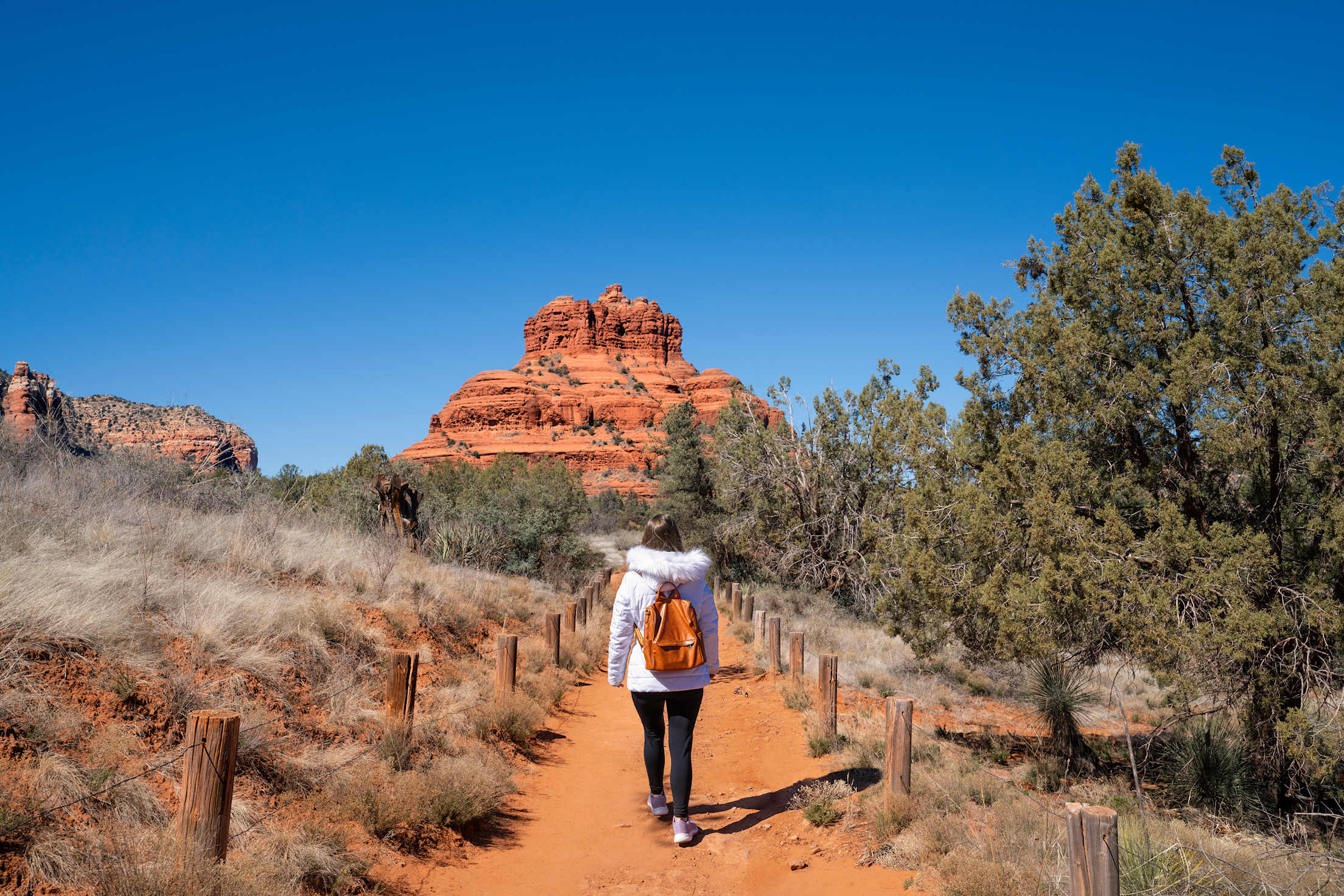
Bell Rock Pathway in Sedona, Arizona
Sedona’s jaw-dropping red rock country trades summer’s furnace and springtime crowds for cool air and quiet trails, making winter an ideal time to set off on the 3.5-mile-long, out-and-back Bell Rock Pathway. This wide, gently rolling route is mostly flat until the end as it skirts the base of Bell Rock near Courthouse Butte, where even a dusting of snow makes the sandstone pop in neon contrast. Storms clear quickly, leaving blue skies and long-reach views across a fairy-tale landscape studded with buttes.
Trillium Falls Trail in Redwood National and State Parks, California
Winter might be a redwood’s favorite season, a time when these coastal giants turn a dark mahogany, and the forest erupts in a perfume of wet humus, peppery bay laurel, and spicy cedar. In short, this is the best time to see the trees in their full rainforest mode with fewer people. The easy 2.7-mile Trillium Falls loop, about 3 miles north of Orick, California delivers that misty Endor vibe. The trail winds beneath towering old-growth, past sword ferns dripping with rain, and over mossy footbridges that feel lifted from a storybook. You can reach the relatively short but lovely Trillium Falls (around 10 feet high) in about half a mile, but continue on for more rainforest wonder.
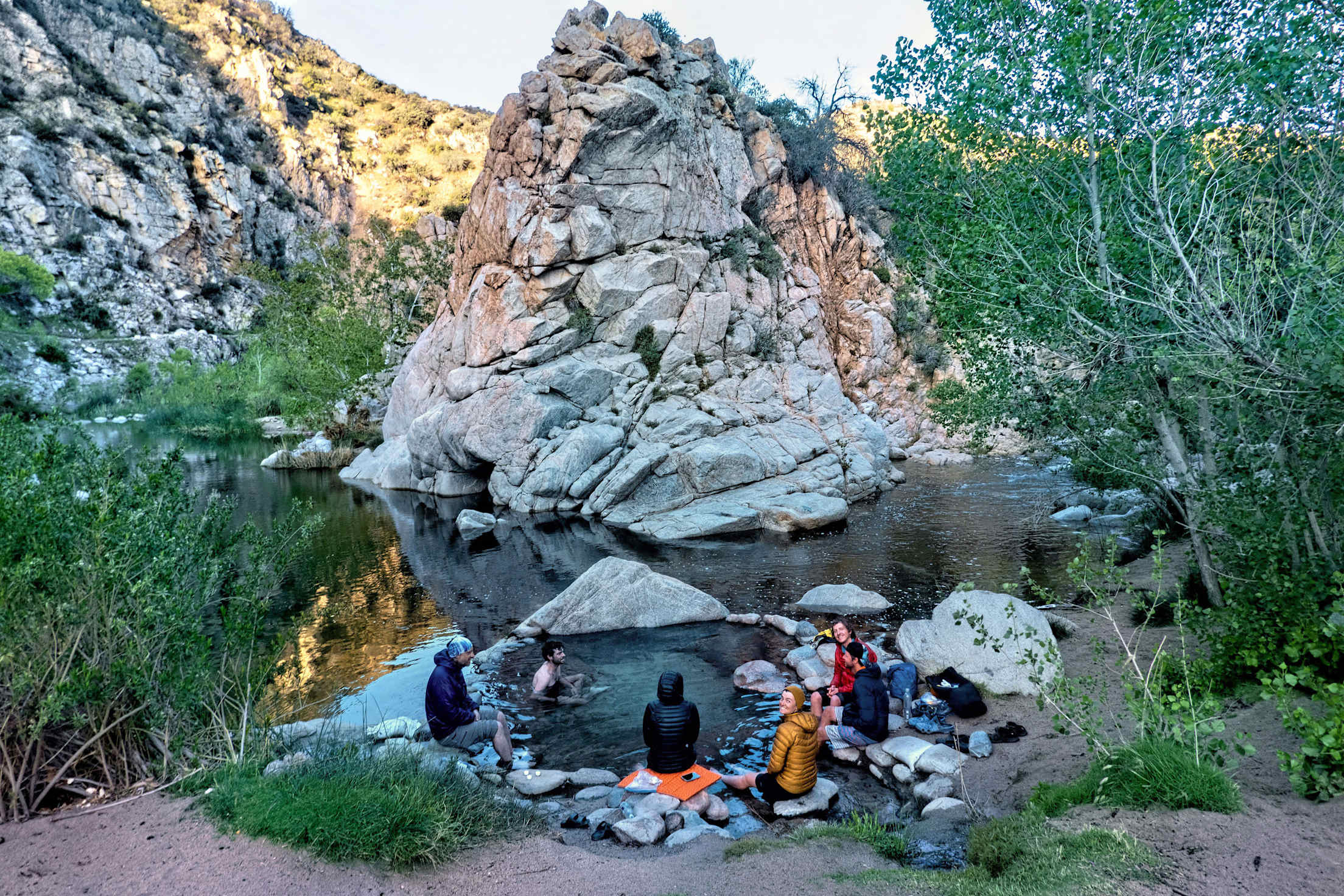
Deep Creek Hot Springs Near Hesperia, California
Tucked in a rugged desert canyon in the San Bernardino National Forest about two hours east of Los Angeles, Deep Creek Hot Springs consists of a string of steaming pools accessible via a moderate 5-mile round-trip hike from Bowen Ranch (on private land; bring cash to pay an access fee). Cool air makes the hike comfortable, and the vegetation—from creosote to oak and pinyon—ranks as some of the area’s most diverse. The soaking pools range from about 100 degrees to a steamy 105 degrees. If you dip, be careful not to drink the water or dunk your head: the pools contain a rare and sometimes fatal disease called primary amoebic meningoencephalitis. The trail is well-traveled, and you may see a few nude slackers.
Bannack State Park Near Dillon, Montana
In a state as winter-kissed as Montana, hiking in the colder months means hunting for the Goldilocks of trails: not too snowy, not too long, and with an effort-to-reward factor that feels just right. Bannack State Park, with its well-preserved ghost town, ticks those boxes. Located in southwest Montana about 25 miles from Dillon, the park was the site of Montana’s first major gold discovery in the early 1860s. Today, it feels like a frontier time capsule preserved in frost. The easy 0.6-mile self-guided Bannack walking tour winds past a weathered church, a courthouse, and a schoolhouse dusted with snow to offer an atmospheric stroll that’s more about mood than mileage. When you want to stretch your legs, the Birds Eye View Loop climbs above town for wide-open prairie panoramas and a look at Bannack’s mining-era layout from above. Don’t leave without wandering into the park’s warming house on weekends for hot chocolate or to check out free loaner ice skates to glide your way around the park’s frozen pond.
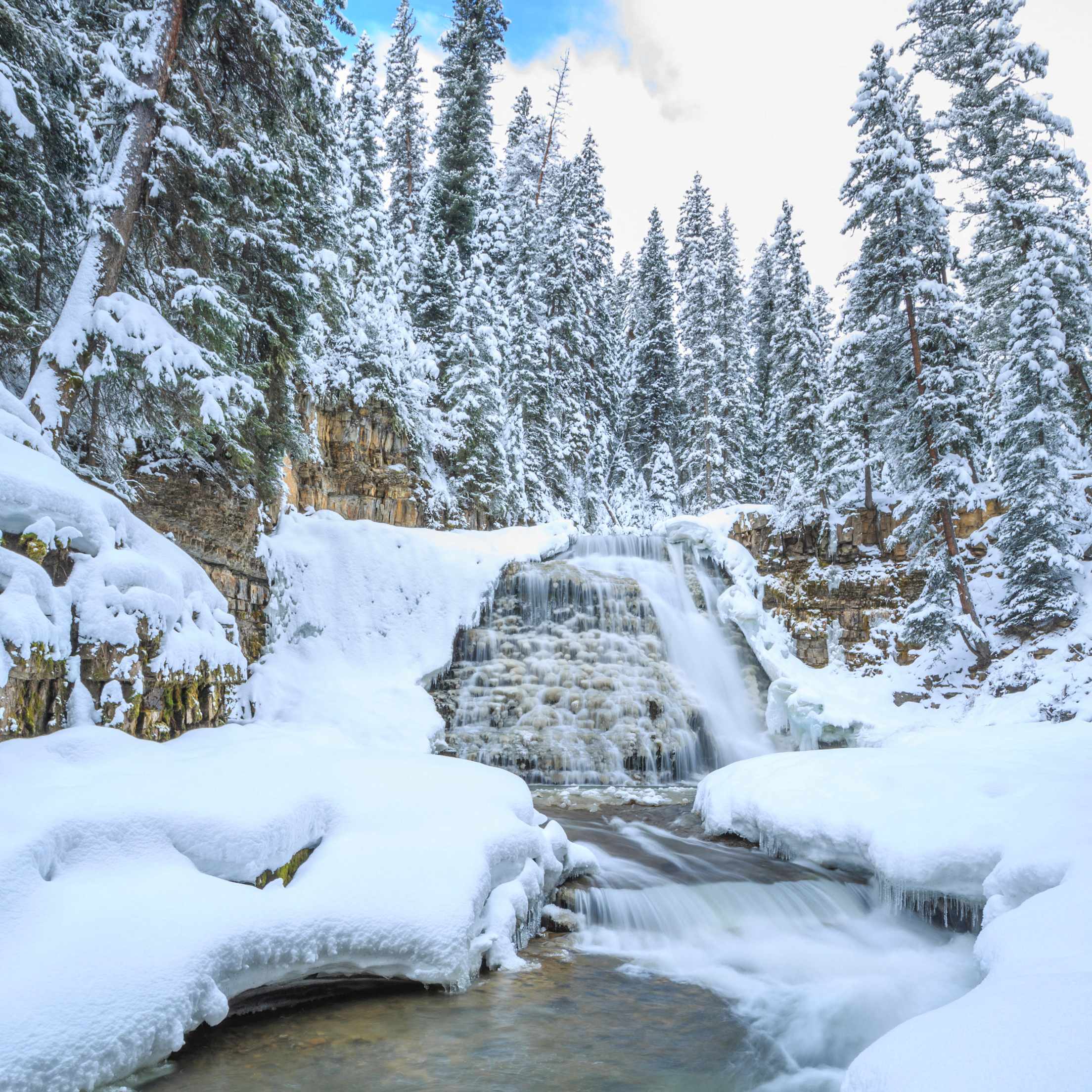
Ousel Falls Near Big Sky, Montana
Just outside Big Sky along the Gallatin Canyon, the hike to Ousel Falls delivers a big scenic payoff for modest effort. This 1.6-mile round-trip trail follows the South Fork and the West Fork of the Gallatin River through a deep, quiet forest where winter softens everything. Think bridges rimmed in frost, the river muffled under ice, and mist rising from open water. The 100-foot falls often freeze into sculpted blue curtains. The path is popular enough to stay packed down, making it typically manageable in boots with microspikes. Go early for alpenglow and a chance to spot elk tracks along the way. To see snow-dusted bison, try the half-mile Bison Range Grassland Loop trail about 50 miles north of Missoula. Come back in summer to explore the 19-mile Red Sleep scenic drive that takes you through the heart of the preserve.
Black Canyon Trail in Pahranagat National Wildlife Refuge, Nevada
Opened in October 2024, the Black Canyon Trail near the Mount Irish Petroglyph Site threads along a tableau of contrasts with a stark, sun-seared desert abutting rich wetlands. A short but deeply evocative hike, the 1.4-mile trail winds through Mojave Desert uplands and washes etched with ancient rock art panels, including famed petroglyphs like the stylized figure known as “Pahranagat Man,” left by prehistoric Native Americans. The rugged basalt walls and open desert floor give way to wetlands and lakes within the refuge, where winter brings migrating birds and often a handful of majestic tundra swans gliding across the water.
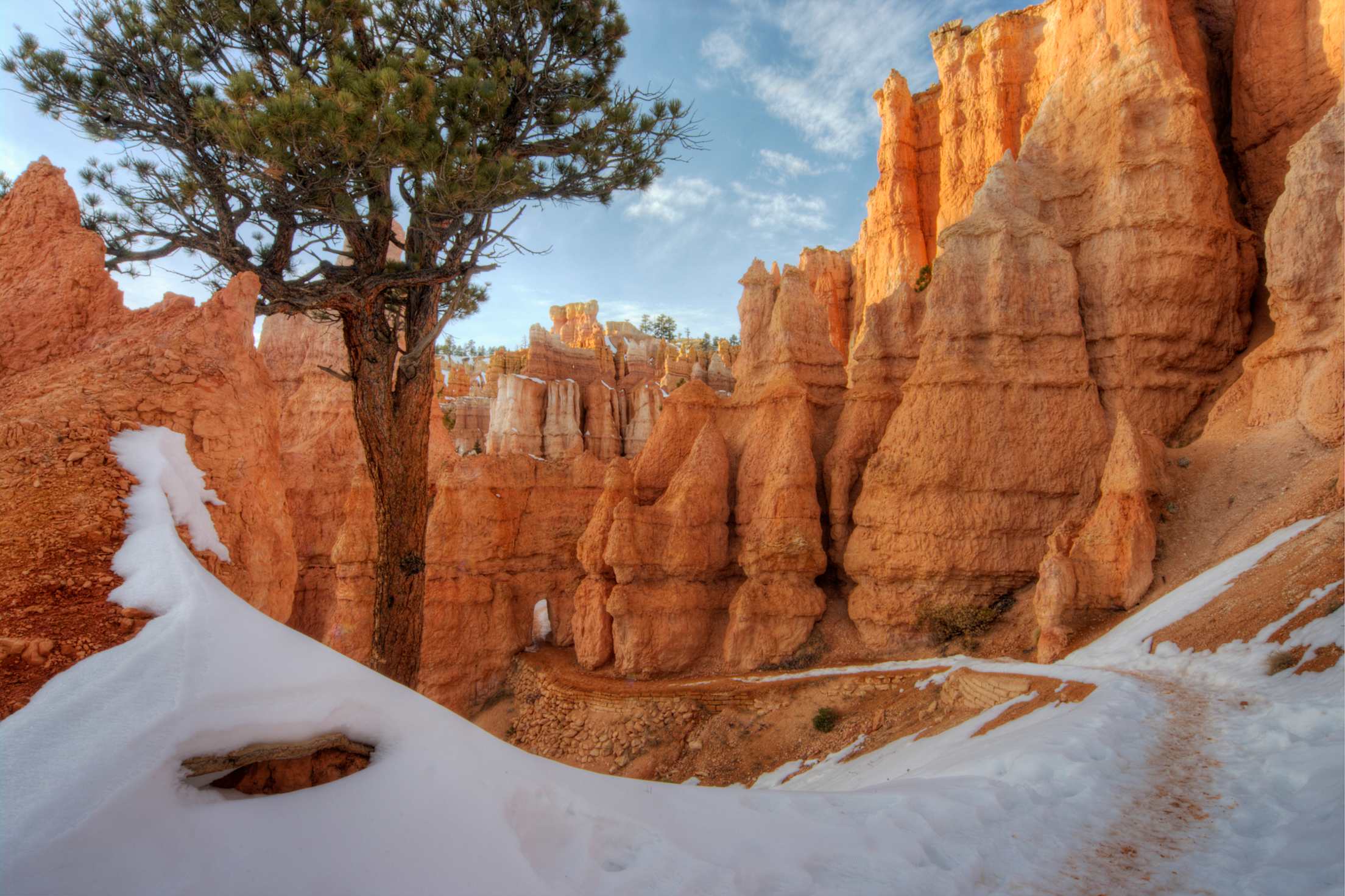
Queen’s Garden and Navajo Combination Loop in Bryce Canyon National Park, Utah
One of Bryce Canyon’s most iconic hikes, the Queen’s Garden and Navajo Combination Loop, becomes pure awe in winter, when snow settles onto the hoodoos like powdered sugar and the slanted winter light washes the amphitheater in orange and pink. This 2.9-mile combo, often billed as the park’s best introductory hike, drops gently from Sunrise Point into the whimsical spires of Queen’s Garden before climbing back up through the narrow switchbacks of the Navajo Loop. Crowds are thin, silence is deep, and the contrast of red rock and white snow is surreal.
Watchman Trail in Zion National Park, Utah
Jack Frost transforms Zion’s Watchman Trail into a quieter, softer version of the park’s classic red-rock drama. This 3.2-mile round-trip climb begins at the visitor center and winds above the canyon floor to a broad viewpoint facing the Watchman, a jagged sandstone peak that looks even sharper with snow dusting its upper ridges. Cool temperatures make the moderate ascent more comfortable than in summer, and the lower sun paints the cliffs in warm rose and gold. Crowds thin dramatically this time of year, making this a winner.
Taggart Lake Trail in Grand Teton National Park, Wyoming
The Grand Tetons are a spectacle to behold any time of year, but the winter light and snowy makeup on the toothy spires transform them into something even sharper and more dramatic than the 13,775-foot peaks already are. To feel like you’re wandering through a postcard, set off on the 3-mile round-trip Taggart Lake Trail on snowshoes or cross-country skis through quiet forests and open meadows with the Tetons rising like ice-carved fangs above you. The trailhead sits just off a plowed stretch of Teton Park Road, making this one of the park’s easiest winter-access hikes with a massive visual payoff.